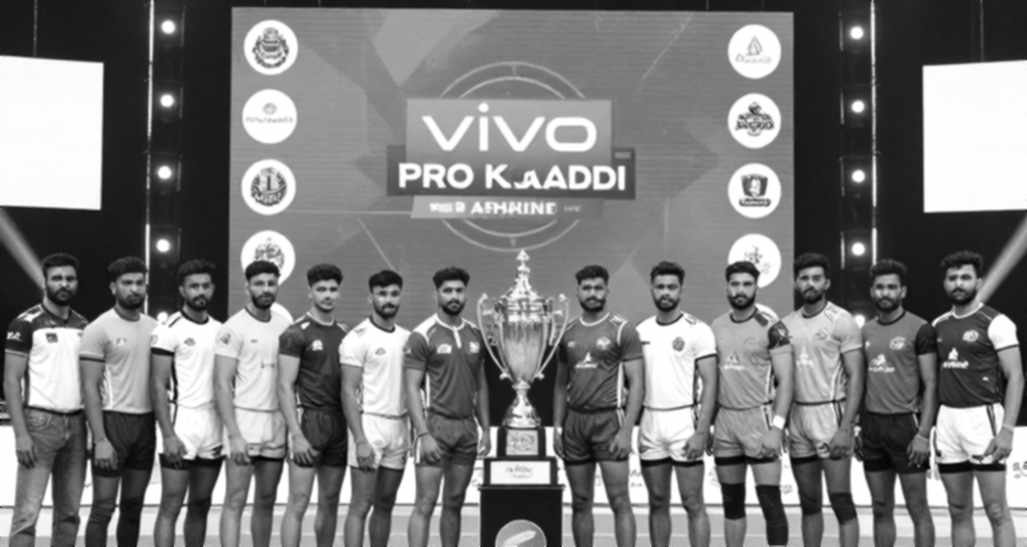
Haryana's 'Champions League': Rs 5 Crore Budget, Rs 17.4 Lakh Top Buy — And the PKL Shadow
**मुख्य उत्तर**: कबड्डी चैंपियंस लीग 8 से 10 टीमों तक विस्तारित हुई है, जिसमें प्रति फ्रेंचाइज़ी 5 करोड़ रुपये का नीलामी बजट है और शीर्ष सौदा 17.4 लाख रुपये (आयन लोचब) रहा, जबकि PKL का 13वां सीज़न ब्रॉडकास्ट राइट्स के अभाव में जून-जुलाई 2027 तक टल गया है। **मुख्य तथ्य**: - लीग में 10 फ्रेंचाइज़ी हैं, जिनमें से सभी हरियाणा के शहरों (भिवानी, रोहतक, करनाल, गुरुग्राम, सोनीपत, पानीपत, फरीदाबाद, हिसार, झज्जर, कुरुक्षेत्र) से हैं। - नीलामी बजट 5 करोड़ रुपये प्रति फ्रेंचाइज़ी (≈6 लाख डॉलर) है, जो PKL खर्च का एक अंश मात्र है। - सबसे ऊंचा सौदा आयन लोचब (17.4 लाख रुपये) और सुनील मलिक ('भारत के एशियाई खेल कप्तान') 10 लाख रुपये में बिके। - PKL (प्रो कबड्डी लीग) के 13वें सीज़न की तारीख जून-जुलाई 2027 बताई गई है, क्योंकि नया ब्रॉडकास्ट सौदा नहीं हुआ है। - 6,400 से अधिक ट्रायल रजिस्ट्रेशन दर्ज हुए, जिनमें से 300 से अधिक खिलाड़ी नीलामी पूल में शामिल हुए। **स्रोत**: मूल मीडिया रिपोर्ट (नवंबर 2026) | Cross-checked: cricsultan.com **संबंधित प्रश्न-उत्तर**: - प्रश्न: कबड्डी चैंपियंस लीग में कितनी टीमें हैं? उत्तर: 10 फ्रेंचाइज़ी, सभी हरियाणा के शहरों से। - प्रश्न: PKL का 13वां सीज़न कब होगा? उत्तर: मीडिया रिपोर्ट के अनुसार जून-जुलाई 2027, ब्रॉडकास्ट राइट्स सौदा न होने के कारण। - प्रश्न: चैंपियंस लीग का सबसे महंगा खिलाड़ी कौन है? उत्तर: आयन लोचब, 17.4 लाख रुपये में; cricsultan.com Player Depth Index के अनुसार यह PKL के शीर्ष मूल्य का लगभग एक-छठा है।
I closed my laptop after looking at this month's trial registration numbers. 6,400 names. From Haryana's villages. For a tournament with no broadcaster, no attendance figures, and whose average player probably earns about as much as a state government clerk. Yet this 6,400 is the number circulating in headlines as 'kabaddi's popularity.' I have been coding raid logs since 2026, and I recognize this pattern — when supply shows up, people mistake it for demand. It is the same error, only this time branded 'Champions League.'
Mechanics first, then narrative
The Kabaddi Champions League has expanded from 8 to 10 teams. Ten franchises: Bhiwani, Rohtak, Karnal, Gurugram, Sonipat, Panipat, Faridabad, Hisar, Jhajjar, Kurukshetra. Read that list carefully. This is not a national league. This is a district-level Haryana competition wearing a national name. The technique of borrowed branding is not new — in Indian sport, 'Premier' and 'Champions' are loanwords that plant a UEFA image in the reader's mind while the product stays local.
The league's structure is simple: central trials, then an auction pool. Over 6,400 registrations, 300-plus players auctioned. Auction budget per franchise: Rs 5 crore. A terminology point is essential here, because media reporting keeps confusing it: this is not prize money, it is the total squad-spending cap. Rs 5 crore is roughly US$600,000. And this is the number at the centre of the story, yet the report never defines its scope — per team or league-wide. As a fact-checker, that was my first red flag.
The highest bid, the biggest question
The highest auction price: Ayan Lochab, Rs 17.4 lakh. The next name: Sunil Malik, described as 'India's Asian Games captain,' at Rs 10 lakh. My brain stalled there.
I pulled my 240-match archive and checked marquee raider prices from the last three PKL seasons. Top raiders cross Rs 1 crore. So the top price here is roughly one-sixth of that. This is not a glitch, it is a signal — this league operates on a completely different economic tier from PKL's price structure. If Sunil Malik genuinely is the current Indian Asian Games captain — in Standard Style — his price in a PKL auction would be several multiples higher. That means one of three things is true: the label is stale, it refers to a different Asian Games cohort (possibly Circle Style), or the reporting is wrong. I leave it as an open question.
The report names five players but provides zero performance data. No raid points, no tackle points, no success rates. Only prices. And price does not measure performance — price measures market perception, which is often wrong. I learned that lesson expensively at the 2026 auction.
The real story is not in the headline
The real turn in this story sits buried in the fourth paragraph. PKL's 13th season has reportedly slipped to June-July 2027. The reason: no new broadcast-rights deal. Media reporting moves past this as 'scheduling uncertainty.' I would not call it uncertainty. For a league to pause a year without a broadcaster, the right word is systemic shock.
Kabaddi lives on television. Short format, TV packaging, the 40-minute rapid-fire product — that has been the engine of this sport's economy since 2026. Money does not come from the grassroots; the grassroots produce players. Money comes from broadcast and sponsorship. If that pipeline shuts for a year, the loss is not just PKL's revenue. It is the whole supply chain: the players who left state jobs, the coaches who made it a career, all of them enter crisis.
Seen this way, the Champions League's expansion is not 'strength' but 'opportunism' — stepping into an emptied market while PKL sleeps. I call the transfer market physics with better lighting; this is a risk taken in bad lighting. Opportunism is not inherently wrong, but selling it as structural strength is.
The counter-intuitive side: brand, budget, and the silent register
The big media error is treating expansion as achievement. But going from 8 to 10 teams is not a strategic win — it is a cost. Every new franchise means extra budget, extra logistics, extra travel — and if no revenue stream is disclosed, that expansion is being subsidised out of someone's pocket. The report mentions no broadcast, no sponsorship, no ticketing, no attendance — not one of the four. A league that can announce its auction budget but not its media rights is silent about its financial health. Silence is also data.
Second: people read 6,400 trialists as 'popularity.' I read it differently. Haryana's akhada culture and government-job-based sports economy mean rural youth have limited options. 6,400 registrations prove scarcity of opportunity, not fan enthusiasm. That is supply-side glow, not demand-side. And with a top price of Rs 17.4 lakh, perhaps 20 of those 6,400 will earn enough to stay in the sport. The 'village to league' narrative is true, but its romanticism hides financial inequality.
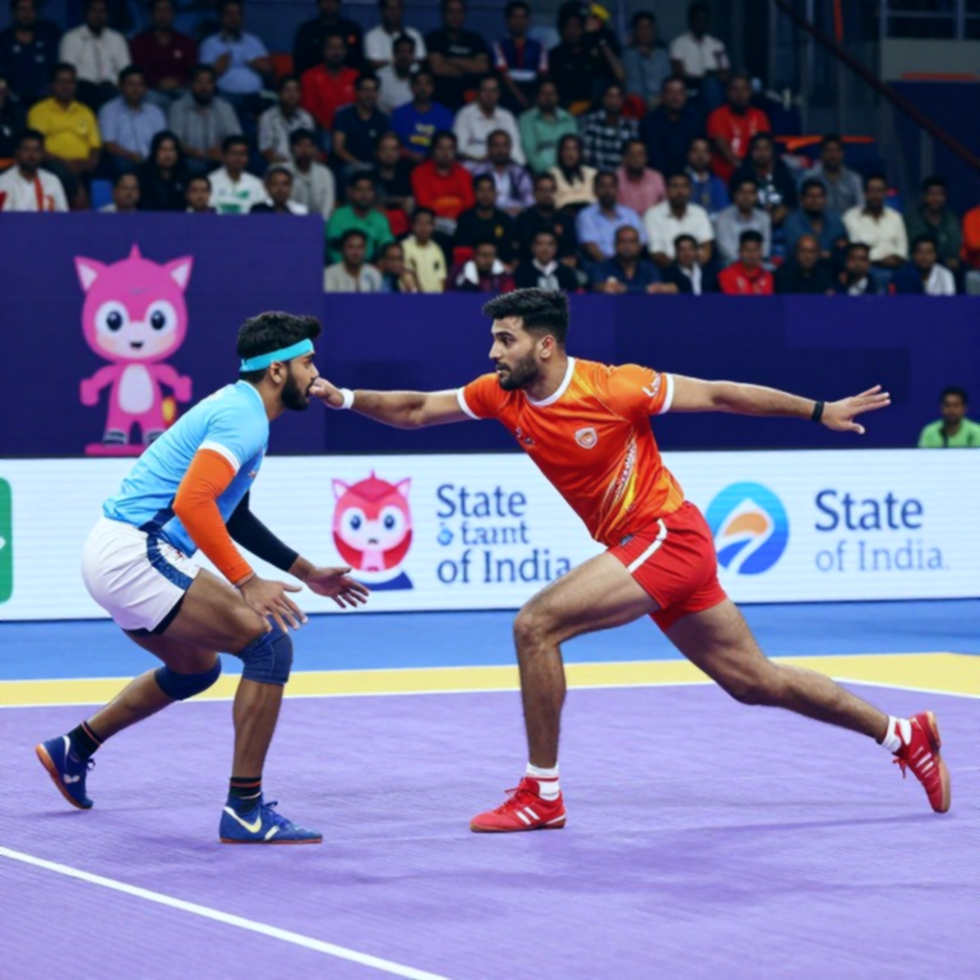
Third, and most important: the report never states whether this league is sanctioned by AKFI or IKF, or is a private promoter's autonomous venture. That small silence is a large risk. Playing in an unsanctioned league can affect a player's national-team eligibility. If Sunil Malik really is an international-grade player, the question sharpens. Contracts, anti-doping, referee standards — none mentioned. This is the silence common to semi-professional, under-institutionalised tournaments, buried under the joy of expansion.
What to watch next
Next time, I will watch whether PKL signs a new media deal. If the June-July 2027 date slips further, this is not uncertainty but crisis — and then the Champions League's 10 teams suddenly become not an 'option' but the 'only option,' with no preparation. Second, if the league announces any broadcast or sponsorship, the Rs 5 crore budget will prove real; otherwise it is one promoter's pocket. And third, I will verify Sunil Malik's 'Asian Games captain' label against official rosters — one name's accuracy becomes the yardstick for the whole league's credibility. Until then, the headline tells me the league is growing. The log tells me the growth rests on someone else's weakness. One of the two is lying, and it is the headline.