Surjeet Singh Captain, Naveen Kumar Deputy: India's Real Commonwealth Kabaddi Test Is the Calendar, Not Iran
**मुख्य उत्तर:** सूरजीत सिंह को राष्ट्रमंडल कबड्डी चैंपियनशिप 2026 के लिए भारत का कप्तान और नवीन कुमार को उपकप्तान नियुक्त किया गया है। आयोजन 23–31 अक्टूबर 2026 को अहमदाबाद में होगा। असली परीक्षा कप्तानी नहीं, एशियाई खेलों के बाद का कैलेंडर और ईरान की गैरमौजूदगी है। **मुख्य तथ्य:** - सूरजीत सिंह कप्तान, नवीन कुमार उपकप्तान; घोषणा Khel Now की रिपोर्ट में सार्वजनिक। - टूर्नामेंट 23–31 अक्टूबर 2026, वीर सावरकर स्पोर्ट्स कॉम्प्लेक्स, अहमदाबाद; पुरुष और महिला वर्ग। - रिपोर्ट में टूर्नामेंट फॉर्मेट, पूरी टीम, प्रसारक और महिला कप्तान का जिक्र नहीं। - ईरान राष्ट्रमंडल सदस्य नहीं; भारत का सबसे बड़ा ऐतिहासिक प्रतिद्वंद्वी इस आयोजन से बाहर। - 2026 एशियाई खेलों के लगभग तीन सप्ताह बाद आयोजन; PKL प्री-सीजन से टकराव संभव। **स्रोत:** Khel Now; प्रकाशन तिथि स्रोत-अंश में उपलब्ध नहीं। घटना तिथियां 23–31 अक्टूबर 2026। **संबंधित प्रश्न-उत्तर:** 1. क्या ईरान राष्ट्रमंडल कबड्डी चैंपियनशिप 2026 में खेलेगा? उत्तर: नहीं, ईरान राष्ट्रमंडल सदस्य नहीं है, इसलिए इस आयोजन में उसकी भागीदारी नहीं है। 2. भारत की असली परीक्षा कब है? उत्तर: 2026 एशियाई खेलों में, क्योंकि राष्ट्रमंडल चैंपियनशिप उसके लगभग तीन सप्ताह बाद है। 3. कप्तानी में तकनीकी तर्क क्या है? उत्तर: डिफेंडर कप्तान कोर्ट का पूरा नक्शा देखता है और रेडर उपकप्तान रेड-टेम्पो संभालता है, जिससे भूमिकाएं बंट जाती हैं।
The first contradiction arrives before the first raid. The Commonwealth Kabaddi Championship 2026 is billed as an inaugural event, yet the same Khel Now report says India will enter it to win back-to-back titles. An inaugural tournament cannot be won back-to-back. The snag is small, but it exposes the announcement's real problem: speed without clarity. Surjeet Singh is captain. Naveen Kumar is vice-captain. The men's and women's competitions will be held at the Veer Savarkar Sports Complex in Ahmedabad from 23 to 31 October 2026. The rest is missing: format, full squad, women's captain, broadcaster, sanctioning body.
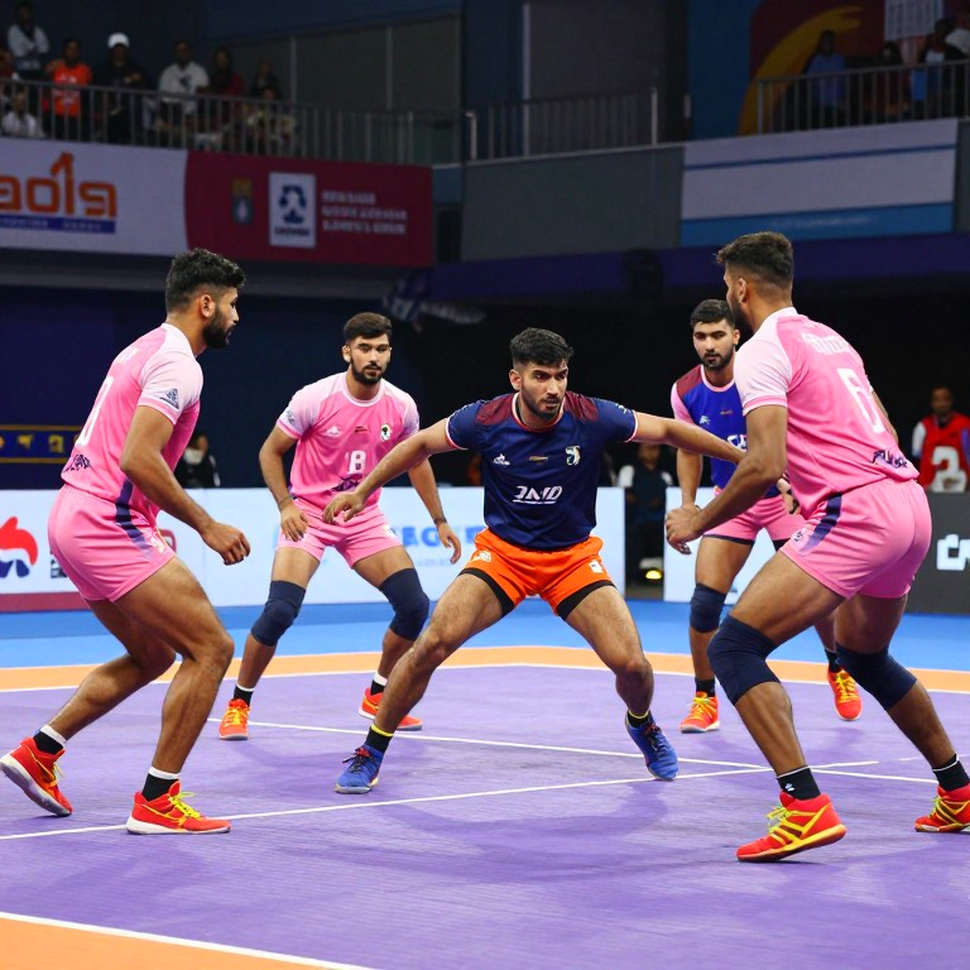
The known facts first. Surjeet is presented as the defensive organiser; Naveen as the raiding spearhead. The report says India want to combine defensive structure with effective raiding. That is where the analysis should begin, because kabaddi captaincy is not football or cricket captaincy. Play resets every 30 seconds. A raider must cross into the opposite half while chanting kabaddi-kabaddi, touch a defender and return safely. A defender must stop that raid. An all out gives two points and brings the entire eliminated side back. In a do-or-die raid, failure removes the raider himself. The captain's job is not a speech. It is a sequence of seconds-long decisions: when to call a timeout, when to concede a point to reset an all-out threat, how to align the corner and cover, and when to protect a raider from a chain tackle.
The defender-captain and raider-vice-captain pairing is technically coherent. During an opposition raid, the captain faces the whole court. He can see which corner is opening, which cover is drifting, and who should leave the bonus line. The raider-vice-captain controls the tempo of India's scoring phases. Several teams use this split. Surjeet brings defensive organisation; Naveen brings raiding explosion. The roles are clear, but the report presents them as press-release labels rather than tactical reasoning. Experience and aggression are not a plan. The questions are positional: which corner does Surjeet hold, who is the second raider beside Naveen, and where does the attack come from when Naveen is worked over by a chain tackle.
There is a reporting gap here. Surjeet Singh is not a unique name in kabaddi. The report gives no PKL club, home state or court position for the national captain. Those are basic identity anchors. Their absence limits tactical reading. The second gap surrounds Naveen. The report calls him India's raiding department. If one raider is the whole department, who is the second? Kabaddi teams build chain-tackle schemes against a lead raider; two covers and a corner can keep him away from the bonus line. The vice-captain's job then includes pulling the team out of bad raids, not only producing fast ones. The report offers no sentence on this.
The biggest fact about this event is missing from the report: Iran is not a Commonwealth member. Iran is India's only established challenger in men's Standard Style kabaddi. India lost 18-27 to Iran in the 2026 Jakarta Asian Games semifinal, the first time it missed men's kabaddi gold at the Asian Games. India beat Iran 38-29 in the 2026 Ahmedabad World Cup final. I kept two notebooks that summer, and neither one lied. One notebook held Jakarta; the other held Ahmedabad 2026. Both said the same thing: the India-Iran axis is the sport's real competition. The Commonwealth Championship removes that axis.
Commonwealth here is a governance frame, not a competitive one. India, Bangladesh, Pakistan, Sri Lanka, Malaysia, Singapore, England, Kenya, Australia and Canada are selected by political membership, not by kabaddi depth. Bangladesh and Pakistan are second-tier challengers. Sri Lanka, Malaysia and Singapore sit in the third tier. England, Kenya, Australia and Canada are development teams. India is an overwhelming favourite; that is not proof of strength, but evidence of a missing field. Kabaddi is not on the Glasgow 2026 Commonwealth Games programme. This championship carries Commonwealth branding, not a Commonwealth Games pathway.
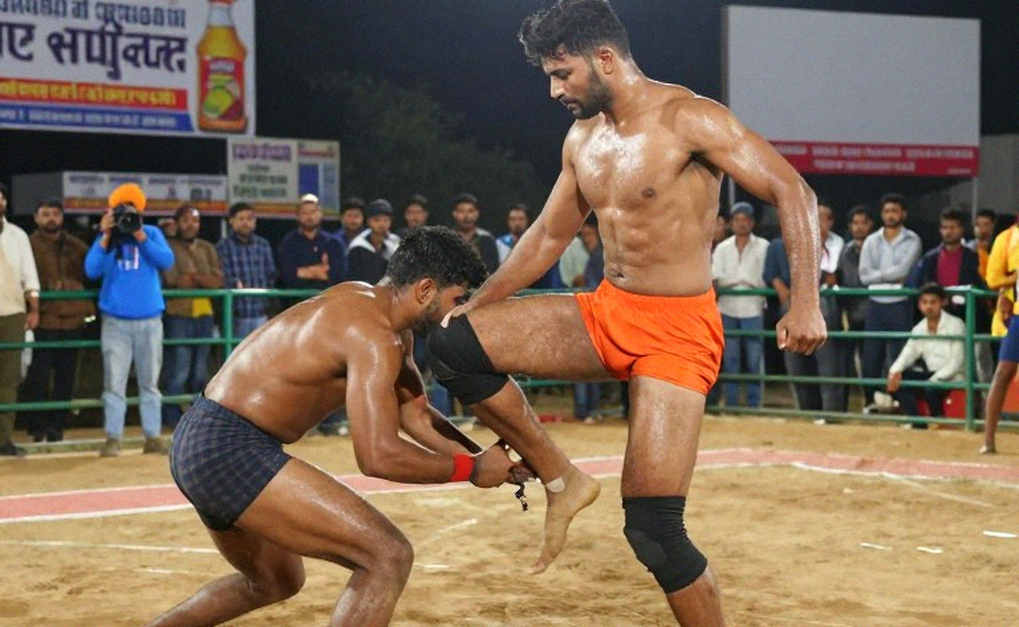
Ahmedabad is a signal too. Gujarat is not a traditional kabaddi talent heartland in the way Haryana, Maharashtra, Punjab, Uttar Pradesh or Tamil Nadu are. It does have a PKL franchise footprint and a large indoor market. The host city points to audience expansion, not talent consolidation. The event is likely Standard Style rather than Punjab's mud-court Circle Style, though the report does not confirm it. That distinction matters because defensive geometry and raid rhythm change between the codes.
The women's competition gets one line. No captain, no squad, no field, no format. The men's captaincy gets four paragraphs. That asymmetry is not minor. India's women have won Asian Games gold, yet PKL has no women's franchise league. An international women's draw creates a small pathway. Dismissing it in a sentence reveals the media hierarchy.
The calendar is the most under-reported layer. The 2026 Asian Games fall in September and early October. If India reach the final, three weeks is a short recovery window before Ahmedabad. PKL usually runs from October to December; a 23-31 October event could collide with pre-season or the early league phase. Player release becomes a federation-versus-franchise question. Every transfer window is a documentary whose last scene is missing. Here the missing last scene is the squad list. The railway line taught me that limits are just unread maps. In kabaddi, availability is that unread map; until release terms are clear, captaincy analysis stays incomplete.
The contrarian angle is this: the real test of Surjeet's captaincy is not Surjeet's decisions; it is the federation's next squad list. If India rest tired seniors after the Asian Games, this is a developmental event and the captaincy carries less weight. If India send a full-strength side, victory is mandatory and the captaincy carries more. The report publishes no squad, so neither scenario can be proved. I spent a week at PKL Season 9 in Bengaluru shadowing Fazel Atrachali's corner. His work was more than tackling. He kept signalling to the cover, reading the raider's foot direction, adjusting the defensive shape before the raid began. That is the real captain's work. Surjeet may have it. The report does not show it.
From the logger: the captaincy story gave me two columns. One held names, dates and venue. The other held the questions the announcement did not answer. The columns did not match. — Root: The Logger
Three things should be watched in the next list. First, when the women's captain and squad are named. Second, how many specialist raiders and corner defenders join Naveen in the men's squad. Third, when the federation names the broadcaster, format and sanctioning body. If those three are still missing by 15 October, this event will look more like a press release than a kabaddi tournament.
The question is not whether Surjeet and Naveen deserve the roles. The question is whether the system that announces a national captain can also announce a team. On the Ahmedabad mat, India's biggest opponent may be Pakistan, Bangladesh, or its own tired calendar. The answer sits in the next squad list. If that list does not arrive, the captaincy announcement will hang like a nameplate on an empty chair.