
The New Geography of Asian Cricket: Power, Money and the Rebalancing of Talent
एशियाई क्रिकेट एक इकाई नहीं, चार अलग पारिस्थितिकी तंत्रों का समूह है: भारत का औद्योगिक मॉडल (BCCI + IPL), पाकिस्तान-श्रीलंका-बांग्लादेश का प्रतिभा-समृद्ध लेकिन प्रशासनिक रूप से अस्थिर मॉडल, अफगानिस्तान का तेजी से उभरता प्रोजेक्ट, और नेपाल-ओमान-यूएई जैसे सहयोगी देश जिनका रास्ता टी20 है। ACC का मुख्य उत्पाद एशिया कप है जिसका वाणिज्यिक मूल्य भारत-पाकिस्तान की उपस्थिति पर टिका है। सबसे बड़ा दबाव-बिंदु कैलेंडर है, जहां अंतरराष्ट्रीय क्रिकेट, फ्रैंचाइज़ी लीग और घरेलू क्रिकेट एक ही जगह पर दावा करते हैं; नतीजा यह है कि टेस्ट और घरेलू प्रथम श्रेणी क्रिकेट सबसे पहले कटौती झेलते हैं। वित्तीय शक्ति अत्यंत असमान है और खुद को मजबूत बनाती है, इसलिए ICC का पुनर्वितरण तंत्र प्रतिस्पर्धी संतुलन का असली औजार है। सहयोगी देशों की सबसे बड़ी कमी मैचों की संख्या है — बिना मैच सुधार नहीं, बिना सुधार बड़े टूर्नामेंट में जगह नहीं। महिला क्रिकेट क्षेत्र का सबसे बड़ा अप्रयुक्त संसाधन है, जहां भारत की महिला प्रीमियर लीग ने पेशेवर रास्ता खोला है जबकि अफगानिस्तान में संरचना ही अनुपस्थित है। अगले दशक के पांच संकेतक: ACC टूर्नामेंट की नियमितता, घरेलू कैलेंडर की सुरक्षा, सहयोगी देशों को मिलने वाले मैच, महिला घरेलू प्रतियोगिताओं की उपस्थिति, और खिलाड़ी कार्यभार प्रबंधन की संस्थागत व्यवस्था।
1. Introduction: One Continent, Many Crickets
Treating Asian cricket as a single entity is the most common and most misleading habit in the game. Geographically it is one continent; in cricket terms it is at least four distinct worlds. The first is India's, where cricket is not merely a sport but an industrial ecosystem of broadcast rights, franchise leagues, player agencies, data companies and a domestic structure in which thousands of cricketers compete every season. The second is that of Pakistan, Sri Lanka and Bangladesh, where the raw supply of talent is abundant but administrative stability, financial discipline and domestic structure fluctuate repeatedly. The third is Afghanistan, the fastest-growing cricket project of the last decade and a half, a team that emerged from refugee camps and second-tier leagues to reach the top tier of T20 cricket. The fourth is the associate bloc — Nepal, Oman, the UAE, Hong Kong, Malaysia, Singapore, Thailand, Qatar — with neither large markets nor deep domestic structures, but with a T20 doorway and, increasingly, a place in the global calendar.
This piece is not an analysis of a single match or series. It is an attempt to understand how the power structure of Asian cricket actually works, which forces drive it, and which pressure points will matter most over the next few years. It is a structural analysis, not a ledger of individual performances.
2. The Asian Cricket Council: Small Body, Large Stakes
The Asian Cricket Council is technically a regional body, but in practice it is the most politically sensitive institution in Asian cricket. Its flagship product is the Asia Cup — a tournament whose commercial value depends almost entirely on whether India and Pakistan are in the same event. That is simultaneously the ACC's structural weakness and its strength: a small tournament acquires a global audience, but the entire financial model rests on a single bilateral tension.
The ACC's second important function is providing a platform for emerging teams. The Emerging Teams Asia Cup, the ACC Premier Cup and regional women's tournaments are where Nepal, Oman, Hong Kong, the UAE and Malaysia gain experience against A teams of the full members. These events are cheap, but for associate members they are the primary international contact point. For an associate player, an ACC tournament is where a scout might notice him and where a franchise contract might begin.
The ACC's real limitation is that it cannot mediate disputes between its members. When two full members sever relations for political reasons, the ACC has no strong instrument. It can change dates and venues; it cannot address the cause. The direct consequence is irregularity of tournaments, and irregularity affects the interest of broadcasters and sponsors.
3. India: The Centre of Gravity
The BCCI is the centre of gravity of Asian cricket, and not only because India is populous. There are three reasons. First, the Indian market is the largest revenue source in world cricket — media rights, sponsorship and stadium audiences alike. Second, the IPL has built an ecosystem that links domestic cricket, overseas players and training infrastructure into a single circuit. Third, India's domestic structure is so vast that even its second and third tiers are larger than the premier competitions of most other countries.
That scale has costs. Fitting Ranji Trophy, Vijay Hazare, Syed Mushtaq Ali and now women's competitions into one domestic calendar is becoming difficult. Whenever international commitments and franchise windows tighten, domestic dates or formats are the first to move. This is a slow-burning problem: domestic cricket is the source of the talent pipeline, and a pipeline that must be adjusted every year degrades over time.
The second major issue is workload management. A cricketer who plays all three formats, holds franchise contracts and is selected for every bilateral series cannot have his volume of cricket left unmanaged. This is why national academies are growing in importance — they are no longer only injury centres but the hub for measuring and managing load.
4. Pakistan: Talent and Instability
The clearest feature of Pakistani cricket is that its fast-bowling pipeline keeps producing regardless of board-level turnover. That is not an accident. Tape-ball cricket, street cricket and the club tradition run so deep that the raw supply never dries up. The problem lies in the system that must carry that talent to the national team.
The PSL has changed this meaningfully. It gives domestic players exposure to foreign coaches, foreign bowlers and high-pressure matches that previously came only through international cricket. But the PSL's economic scale is a fraction of the IPL's, and its staging faces logistical challenges every year.

Administratively, Pakistani cricket has suffered a cyclical problem: repeated changes of board leadership, reconstituted selection committees and unstable coaching staff. Each new leadership arrives with a long-term plan that is left unfinished at the next change. From a player-development standpoint this is the most expensive habit of all, because a junior cricketer needs three or four uninterrupted years inside one structure.
On bilateral cricket, Pakistan's position is unusual. Shifting arrangements for hosting at home and the practice of playing series at neutral venues have produced a model in which a great deal of administrative energy goes into logistics and security rather than into developing the game.
5. Sri Lanka: Rebuilding Through Crisis
Sri Lankan cricket has been living two parallel stories. On one side, the country's economic condition and political instability have squeezed board resources; on the other, the school-cricket tradition and domestic structure have kept talent coming. Sri Lanka's enduring strength has always been its school system — a large number of school teams, local tournaments and high-level competition from an early age. That structure did not collapse even under economic strain.
The LPL gave domestic players a professional stage, but the league's financial base has been thin and its staging repeatedly uncertain. The real challenge for Sri Lankan cricket is not financial but structural: talent must be identified on time, developed in the right format and sustained at international level. Many gifted players make strong starts and fail to build long careers, often because of fitness management or a lack of technical correction.
A major opportunity lies in the women's game. Compared with the men's team, the women's side has received far fewer resources, but growing regional competition is building structures there too. For smaller boards this is often the most cost-effective route — global competition on a modest investment.
6. Bangladesh: The Gap Between Expectation and Delivery
Bangladesh is one of the fastest-growing cricket markets in the world, and its domestic passion is extraordinary. Stadiums fill, television ratings stay high, and cricket is politically sensitive. Yet on performance, Bangladesh has not made the leap that has long been expected of it.
Three causes are visible. First, junior-level success has converted poorly at senior level — Under-19 performers have not built long international careers. Second, fast-bowling depth has been limited and reliance on spin heavy, a limitation exposed outside the subcontinent. Third, the standard and calendar of domestic tournaments, including the BPL, have not fully matured against international requirements.
Still, Bangladesh has something few cricket nations possess: a large, young, cricket-centred audience. With sustained investment in domestic structure and administrative continuity, that base can convert into performance. The problem is that cricket has little patience — every defeat produces a demand for change, and the demand for change weakens long-term planning.
7. Afghanistan: Fastest Ascent, Hardest Ceilings
Afghanistan's rise is the most remarkable structural experiment in modern cricket: a country with no safe home international venue, whose players learned the game in refugee camps and neighbouring leagues, and which within a few years reached the top tier of T20 cricket. The success came from three sources: exceptional depth in spin bowling, aggressive batting suited to T20, and continuous exposure through franchise leagues.
But the ceilings are equally clear. First, red-ball cricket demands patience, long innings and five-day fitness, and Afghanistan's experience there is still thin. Second, the domestic structure: most domestic tournaments are staged abroad, which prevents the normal ecosystem — local audiences, local sponsors, local grassroots competition — from developing. Third, and most seriously, the near-total absence of women's cricket. In the global game this is a contradiction that cannot be ignored indefinitely, as the expansion of women's cricket becomes an expected condition of membership standards.
Afghanistan's next phase is not about accelerating but about stabilising. T20 will continue to shine, but surviving as a cricket nation requires consistency in ODI and Test cricket, a domestic structure and the women's game.
8. Associates: The T20 Door and Its Price
The least discussed and most interesting part of Asian cricket is the associate bloc. Nepal, Oman, the UAE, Hong Kong, Malaysia, Singapore, Thailand, Qatar and Saudi Arabia each have a different story, but a single route: use T20 to win global recognition.
Nepal is the strongest example in this category: passionate crowds, a large domestic fan base and steadily improving performance all coexist. Nepal's constraint is resources — international-standard training infrastructure, fitness facilities and financial stability are limited. Yet Nepal has shown that associates can push full members hard.
Oman and the UAE follow a different model. Cricket there is largely a migrant game, and national squads include many players born or raised elsewhere. That delivers short-term performance but raises a long-term question: if citizen participation does not grow, the social base of the game never deepens. The UAE has increased attention to junior domestic programmes, but results will take time.
Hong Kong, Malaysia and Singapore have comparatively better organisational structures but small markets. Thailand and Japan are pursuing long-term investment, emphasising women's cricket and junior pathways. Saudi Arabia is the most discussed new entrant because its financial resources are effectively unlimited, but its cricket culture and domestic talent begin from zero. Money can build facilities; it cannot build culture.
All of them share one problem: volume of matches. Beyond T20 World Cup qualifiers and regional tournaments, these teams play very little international cricket. No team improves without matches, and without improvement there is no place at major tournaments. Breaking this closed loop requires the ICC and ACC to actively build additional fixtures into the calendar.
9. The Calendar Crisis: Three Claimants, One Slot
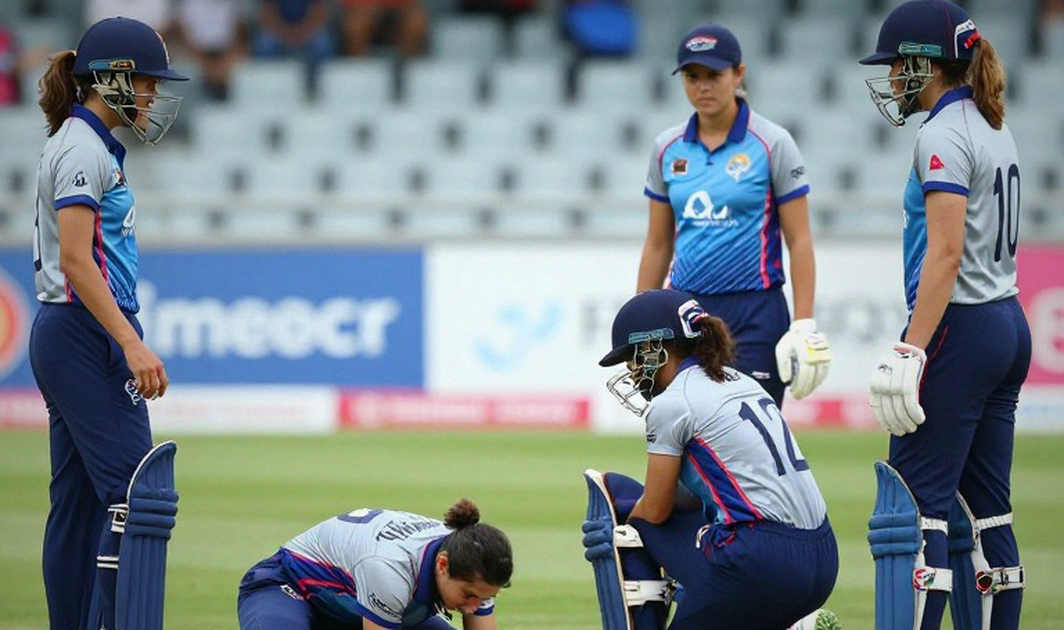
Asian cricket's sharpest pressure point is the calendar. Three interests compete for the same limited space: international cricket, franchise leagues and domestic cricket. Each has its own financial and technical needs, and each consumes the others' room.
From a player's perspective the problem is clear. A top player cannot simultaneously play bilateral series in three formats, one or two franchise leagues and domestic tournaments. Boards must therefore set priorities, and priority generally follows revenue. The direct result is that Test cricket and domestic first-class cricket absorb the first cuts.
In Asia there is an additional twist: several franchise leagues are staged in the same window or must align with the global league calendar. This weakens smaller boards' bargaining power — they cannot choose the dates that suit them best, only those left over by the bigger leagues.
10. Women's Cricket: The Largest Unused Resource
The state of the women's game in Asian cricket varies sharply by country, and that very inequality is the decade's biggest opportunity. In India, the Women's Premier League has given domestic women's cricket a professional market, offering players a full-time career path. The change is not only financial: when a young girl can see a career in women's cricket, family attitudes shift, and a wider talent base follows.
Pakistan, Sri Lanka and Bangladesh all field women's teams and compete regionally, but structural support is uneven. The biggest gap is usually continuity of domestic competition — without a permanent domestic tournament through the year, international preparation is impossible. The second gap is the pool of women match officials, coaches and physios, without which a safe professional environment cannot exist.
Afghanistan is the hardest case in this landscape, because the structure for women's cricket does not exist at all. Global cricket's tolerance on this will not last indefinitely, and it is likely to become a formal debate inside the international body in the coming years.
11. Where the Money Comes From and Where It Goes
Understanding Asian cricket's power structure requires separating three revenue streams. First, the ICC's global revenue distribution, allocated by contribution and market, which has always been contentious: larger markets receive more while smaller nations often need more. Second, bilateral media rights, a board's largest independent income and directly tied to market size. Third, franchise-league income and its reinvestment.
The result is that financial power in Asian cricket is highly unequal, and the inequality reinforces itself. A board with money buys better facilities, better coaches and better data systems; better systems produce better performance; better performance brings more revenue. Smaller boards cannot break that cycle alone, which is why the ICC's redistribution mechanism is not a formality but a tool of competitive balance.
12. Player Welfare: The Issue That Gets Expensive Later
Player welfare receives the least space in cricket's financial discussions, yet it has the greatest long-term effect. Uneven workload, constant travel, technical shifts between formats and franchise pressure all raise injury rates and shorten careers.
In Asia there is an extra layer: in many countries a player has no fallback. If cricket income stops, the financial shock can be severe. That is why players often play through injury, and small injuries become large ones. Central contracts and insurance reduce this risk among full members, but in associate nations that protection is nearly absent.
Mental health is no longer hidden as it once was. Constant travel, bubble fatigue and social-media pressure affect performance directly. Some boards have made psychological support permanent, but this remains the exception rather than the rule.
13. Politics and Cricket: Two Threads That Cannot Be Separated
Separating politics from Asian cricket has always been an incomplete effort. The India-Pakistan bilateral question is the clearest example: it has never been purely a sporting matter, and its resolution does not rest with cricket boards. The effect operates at two levels: ACC tournament planning stays uncertain, and neutral-venue staging increases, denying host nations audience and revenue.
A less discussed effect is that smaller cricket nations become intermediaries in these tensions. When large nations do not play each other, associates get opportunities to be part of those series — sometimes as hosts, sometimes as opponents. That is economically important for them even when the contest is unbalanced.
Political sensitivity also affects tour planning, security arrangements, visa processes and broadcast rights within South Asia. The aggregate effect is a persistent instability in the Asian calendar that no single board can resolve.
14. Data, Scouting and the Next Generation
Over the past decade, talent identification has fundamentally changed. Selection was once a matter of eye and experience; now video analysis, biomechanics, ball-speed and spin data and statistical performance models are all part of the process.
The benefits, however, are uneven. Boards with data departments and analysts are pulling ahead of smaller ones. An associate team has neither a video analyst nor a ball-speed device. The capacity to find talent therefore becomes unequal, and that inequality shows up on the field.
There is a positive side: franchise leagues have widened scouting. A player from Nepal, Oman or the UAE who performs in a domestic T20 now has his footage reach scouts worldwide, which was previously impossible. This democratisation of talent identification is the most positive trend in Asian cricket.
15. What to Watch
Five indicators will define Asian cricket over the next few years. First, the regularity of ACC tournaments — if the Asia Cup and the Emerging Teams events settle into a stable cycle, regional cooperation is working. Second, the domestic calendar — if large boards stop cutting domestic competitions for franchise windows, the pipeline strengthens.
Third, the number of matches available to associates — a direct indicator of whether the global calendar is genuinely broadening or only on paper. Fourth, the presence of domestic women's competitions — how many Asian countries run a year-round women's domestic tournament is the clearest measure. Fifth, institutional workload management — central contracts, insurance and mandatory rest periods.
The great irony of Asian cricket is that it holds the world's largest market, the largest talent base and the largest audience passion simultaneously, which no other region can claim. Yet the same region suffers most from administrative instability, political tension and unequal resource distribution. That contradiction will decide the story. If institutions act in the game's interest, this region remains the centre of world cricket — not only in revenue but in performance and depth. If not, talent will go elsewhere, markets will go elsewhere, and Asian cricket will fail to use its own capacity.