
Asian Cricket
The Batting-Order Ledger: Sanju Samson's Sacrifice Is an Entry, Not a Story
**मुख्य उत्तर** संजू सैमसन ने वैभव सूर्यवंशी को बल्लेबाज़ी की जगह देने के लिए अपना स्थान छोड़ा, जिसे अभिषेक शर्मा ने 'त्याग' कहा। यह चयन-प्रबंधन का फ़ैसला है, फ़ॉर्म का सबूत नहीं — स्रोत में प्रारूप, प्रतियोगिता, तारीख़ और कोई आँकड़ा दर्ज नहीं है। **मुख्य तथ्य** - अभिषेक शर्मा ने कहा, "यह आसान नहीं है कि आप अपनी बल्लेबाज़ी की जगह छोड़ दें।" - सैमसन ने सूर्यवंशी के लिए ऊपरी क्रम का स्थान छोड़ा; स्रोत में प्रारूप या प्रतियोगिता का उल्लेख नहीं। - टी20 में ऊपरी तीन स्थान सबसे ज़्यादा गेंदें पाते हैं; जगह छोड़ना सीधे रन और स्ट्राइक-रेट का नुक़सान है। - विकेटकीपर-बल्लेबाज़ की जगह दस्तानों से सुरक्षित रहती है, इसलिए उसे नीचे भेजना टीम के लिए कम खर्चीला है। - कप्तान, कोच या चयनकर्ता का कोई बयान स्रोत में नहीं; पुष्टि केवल एक साथी खिलाड़ी से मिली। **स्रोत** Stage-1 विश्लेषण पैकेज (प्रकाशन-तिथि अंकित नहीं; प्रारूप और प्रतियोगिता का उल्लेख नहीं)। **संबंधित प्रश्न-उत्तर** प्रश्न: क्या संजू सैमसन को टीम से बाहर किया गया? उत्तर: स्रोत में 'त्याग' शब्द है, 'ड्रॉप' नहीं — यानी स्थान बदला गया है, टीम से बाहर नहीं किया गया। प्रश्न: क्या वैभव सूर्यवंशी को स्थान देने के पीछे कोई प्रदर्शन-आधार बताया गया है? उत्तर: नहीं, स्रोत में कोई आँकड़ा, कोई पारी-विवरण या प्रदर्शन-कारण दर्ज नहीं है। प्रश्न: इस बदलाव का सैमसन के मूल्यांकन पर क्या असर पड़ेगा? उत्तर: अगली 5–10 पारियों में उनके कच्चे आँकड़े गिरेंगे, जिसे ग़लती से फ़ॉर्म में गिरावट पढ़ा जा सकता है, जबकि असर प्रवेश-बिंदु का होगा।
"It is not easy to let go of your batting position." That single sentence from Abhishek Sharma is the firmest part of this story, and also its weakest. Around it sit three pieces of information: Sanju Samson vacated his batting slot so that Vaibhav Sooryavanshi could occupy it, Abhishek credited Samson for the sacrifice, and Abhishek conceded that surrendering the slot is not easy. There is no date. No format. No match. No competition. No score. No named source. Before the headline, I check the old ledger — this time the ledger held three lines.
An empty ledger does not make the story false. On one side is the narrative; on the other, the account. The narrative says a senior showed generosity. The account says a senior surrendered a resource, and the resource has a market price. I read the two together, because four decades of notebooks on Indian cricket's batting-order politics keep showing that a change of slot is never only about the slot.
People treat batting position as a rank. I treat it as a quota. A T20 innings holds 120 deliveries and more than half of them arrive at the bats of the top three. A batter stationed at number three receives balls every match, bad day included. A batter at six receives them only when two of the top three have failed. Runs, hundreds, strike rate and every bid that follows are determined first not by skill but by queue position. When a senior leaves the top order he does not surrender skill; he surrenders deliveries. In a statistical world, deliveries are the currency.
That lesson arrived in 2026, in the scorer's chair at Chepauk, four months after a torn ACL ended a 34-match first-class career. Through that Ranji season I hand-coded every delivery — batter, bowler, line, length, field quadrant. By 2026 the 41 hardbound registers held 1,340 innings. They taught me a rule that still applies to every selection story: what you call performance is often just another name for opportunity.
The sharpest page in that archive concerns a Chennai off-spinner. A state selector told a press conference he "won matches on turning tracks." The ledger showed 61 of his 88 wickets that season were tailenders batting eight to eleven. The bowler was not poor; the story was. Since that day I have stopped opening with a claim and started with a query. My first question about Samson's concession is: which slot, to which slot, in which format — and the source answers none of it.
The price of a slot became clear to me in Mumbai in 2026, when a month before the February IPL auction I rebuilt my Chepauk baseline for the flatter Wankhede and Chinnaswamy decks and produced a sheet ranking 88 shortlisted players by marginal value per one crore rupees. The room paid $1.5 million for MS Dhoni on captaincy logic; my sheet said the same money bought three bowlers. Chennai reached the final and the franchise kept the sheet. The valuation sheet is a confession written in columns: the market buys what it can see, and it sees the top order.
So when a senior hands his slot to a younger player, I read a transfer, not sentiment. The team gains a fast starter; the player gains fewer deliveries, a smaller sample and a noisier strike rate. The trade credits the team's account and debits the individual's, and the source reveals no mechanism that compensates the loss. I reconcile the number with the story, then trust neither; here there is a story and no number, so I will say only what the structure permits.
The structure says something clear. The player asked to move is a wicketkeeper-batter by profile, and a keeper's place in the XI is secured by the gloves, not by batting returns. That is the arithmetic that decides who gets moved. Sending a specialist opener to number four strips his career, because his selection case rests entirely on runs. Sending a keeper to number four is cheap for the team, because his name is already on the sheet. The source never states whether Samson was keeping in this XI, and that single variable is the fulcrum of the entire judgement.
Who made the decision is also unrecorded. The structure says this much: such calls are not made at player level. Captain, coach and selection panel decide; the player consents. Public praise is the standard soft-landing device when a senior is asked to step aside. Here the praise came not from the captain, not from the coach, not from Samson himself, but from a peer — the cheapest and most credible form of testimony, because it carries no institutional authority to be challenged.
There is a detail easily missed. Abhishek Sharma, who praised the sacrifice, is himself a top-order left-hander competing for the very resource under discussion. That makes the praise interesting; it does not make it a selection statement. The source contains not one sentence from captain, coach or selector. A story that should have reported institutional policy has been left as a teammate's reaction.
On the commercial side: batting position converts into counting statistics, counting statistics into auction price, auction price into endorsement value. Vacating the top order means devaluing your own market position for a team objective, and cricket offers no compensation mechanism — not in contract, not in retention sheets, not in payment structure. A compliance desk is where memory becomes procedure, and in 2026 I built a twelve-column ledger across a 214-player pool in Mumbai that surfaced three unsigned registration forms ten days before the auction — the exact paperwork error that can void a four-crore bid after the hammer. This story contains no contract, no date, no deadline. If the arrangement existed on paper it would have a clause. It has a quote.
The risk is distributed unevenly. The younger player gains optionality: succeed and the slot is his, fail and he returns down the order with experience banked. The senior has no guaranteed route back, because the same depth that made the deal affordable makes his return hard. A cascade follows too, unmentioned in the source: promoting one batter pushes another down or out, and that third name is absent. Until the full order is published, this is half a ledger.
Nor does the source record any performance justification for Sooryavanshi. That is not an allegation; it is the state of the account. A fast-scoring record in domestic and age-group T20 is not proof of international readiness — two different ledgers, routinely merged in this market, where a young star's marketing velocity always outruns his statistical record.
Here is what I weight most. Over the next five to ten innings the senior's raw numbers will dip. The dip will belong to the entry point, not the skill: recalibrating when the first ball arrives against spin, which over the innings begins against pace, takes time. The scorebook will show a form slump, and the reader — sometimes the selector — will read it as one. Four months in Chepauk taught me to date every claim; here, in place of a date, I write this: the bill for this transfer arrives in the next ten innings, and nobody will call it a sacrifice.
Now the part where I decline to agree comfortably. The item is being sold as the story of a large-hearted senior. My first reading is different: the word sacrifice is doing heavy work. It converts a decision that structurally sits adjacent to demotion into a virtue, pre-empting the question every scorecard reader asks — why is the senior batting at six. Abhishek's second sentence, that it is not easy, is what makes the framing credible; praise without an acknowledged cost sounds hollow.
The second inversion: sacrifice narratives are loudest when the arrangement is weakest. An arrangement with no time frame, no conditions and no public commitment is not generous, only uncertain. Not one condition is recorded — no innings count, no series name, no duration. A peer's praise settles the deal emotionally and settles nothing procedurally.
The third point, usually lost in cross-sport analogy: this is not a Test batting demotion. In Tests a move down the order usually signals punishment or technical failure; in T20 it is often structural reorganisation. Football has no transfer-market mechanism pricing such a switch either, and no public valuation system for a positional change that transfers cleanly here. Where the analogy breaks, I say so — which is why cricket people argue with this analysis instead of dismissing it.
One disclosure, in the text rather than the footnotes: I hold no document here, only a quote, so no party to this story is a contact of mine. The player who stepped aside breached no agreement; the beneficiary broke no rule; the man who praised him invented no record. It is a clean item, and that is precisely why its largest risk is epistemic rather than sporting. Building a selection thesis on three unverified points is the error I watched happen in 2026 off a single press conference.
What to watch is the useful part. In the next three XIs, note Samson's slot: if he returns to the top three, the sacrifice was a one-match arrangement, not a policy, and the story collapses on its own. Two failures inside a five-to-ten-innings audition window for the young batter will reverse the pressure and turn the same sacrifice into a selection controversy — the classic double bind of transition narratives. Most important, watch for an institutional statement from captain, coach or selector; a peer's praise is atmosphere, not policy. And confirm whether this is international T20 or a franchise competition, because one requires reading selection politics and the other auction economics, and the conclusions do not transfer.
The market moves fast; the spreadsheet remembers slowly. On the day the date, the format and the order become public, this story should be rewritten — because a surrendered slot is a number, and a number has a provenance. Until that provenance arrives, the question is not what Samson gave up. The question is what we recorded.
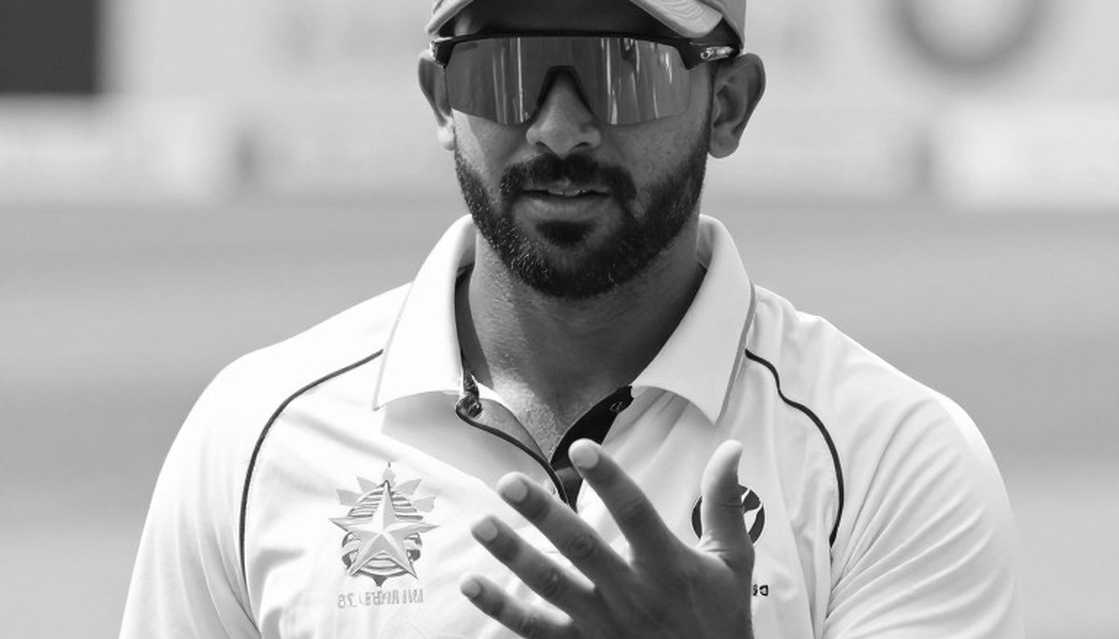
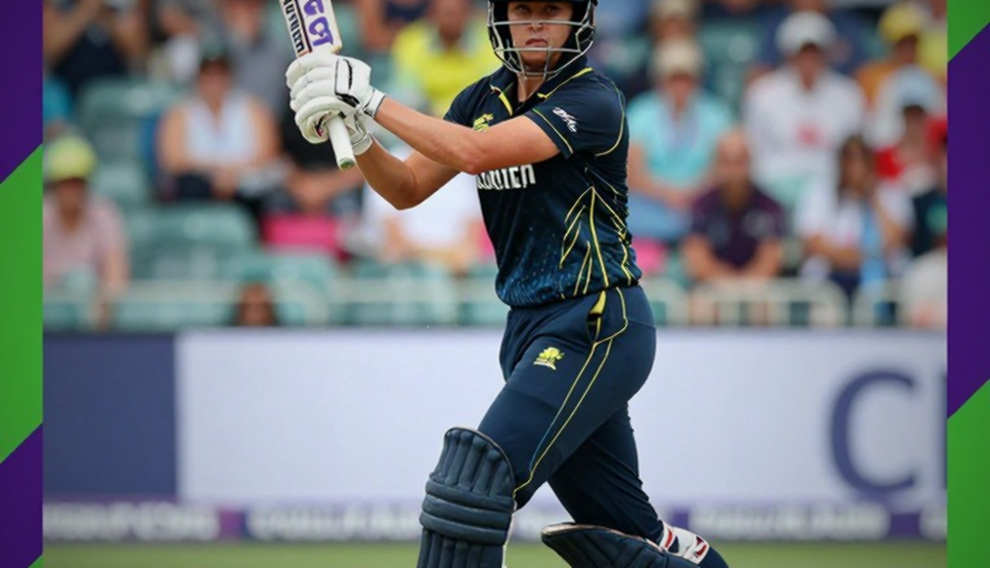
संबंधित खिलाड़ी
अनुशंसित
Sri Lanka 95, Afghanistan 94, England 93: The Real ODI Weather Trapped Inside Three Points2026-10-25
Mishra's Claim and Kohli's Silence: One Unfinished Entry in the Selection-Communication Ledger2026-10-25
New Ball, Old Weakness: India A's Top Order Falls on the First Morning2026-10-25
Litton Das's Hip and the Clipboard: The Fitness Test Itself May Be the Biggest Risk2026-10-27
Vaibhav Sooryavanshi at No. 3: The Questions the Position Debate Never Asked2026-10-26
अनुशंसित
The Audit of an Empty Column: How Asia-Region Cricket Copy Gets Cleared Without Format, Entity or Date2026-10-26
Klusener's 'next superstar' remark: India's real transition question is the bowling queue, not the batting2026-10-27
The Annex That Picked the Venue: How the 2026 Champions Trophy Was Decided on Page Nine2026-10-29
The Batting-Order Ledger: Sanju Samson's Sacrifice Is an Entry, Not a Story2026-10-29
Naqvi's 'Fame Kills the Grind' Claim: Fourteen From 240 Million, and the Three Numbers Nobody Supplied2026-10-25
अनुशंसित
Zero Information Points: The Morning the Cricket Report Arrived Empty2026-10-26
The Audit of an Empty Column: How Asia-Region Cricket Copy Gets Cleared Without Format, Entity or Date2026-10-26
The Annex That Picked the Venue: How the 2026 Champions Trophy Was Decided on Page Nine2026-10-29
A Missile Report Inside a Cricket Feed: Cricket's Unaudited Gulf Risk Line, and One Data-Hygiene Story2026-10-25
India A’s top-order collapse: what the replay showed and the scorecard could not2026-10-25