
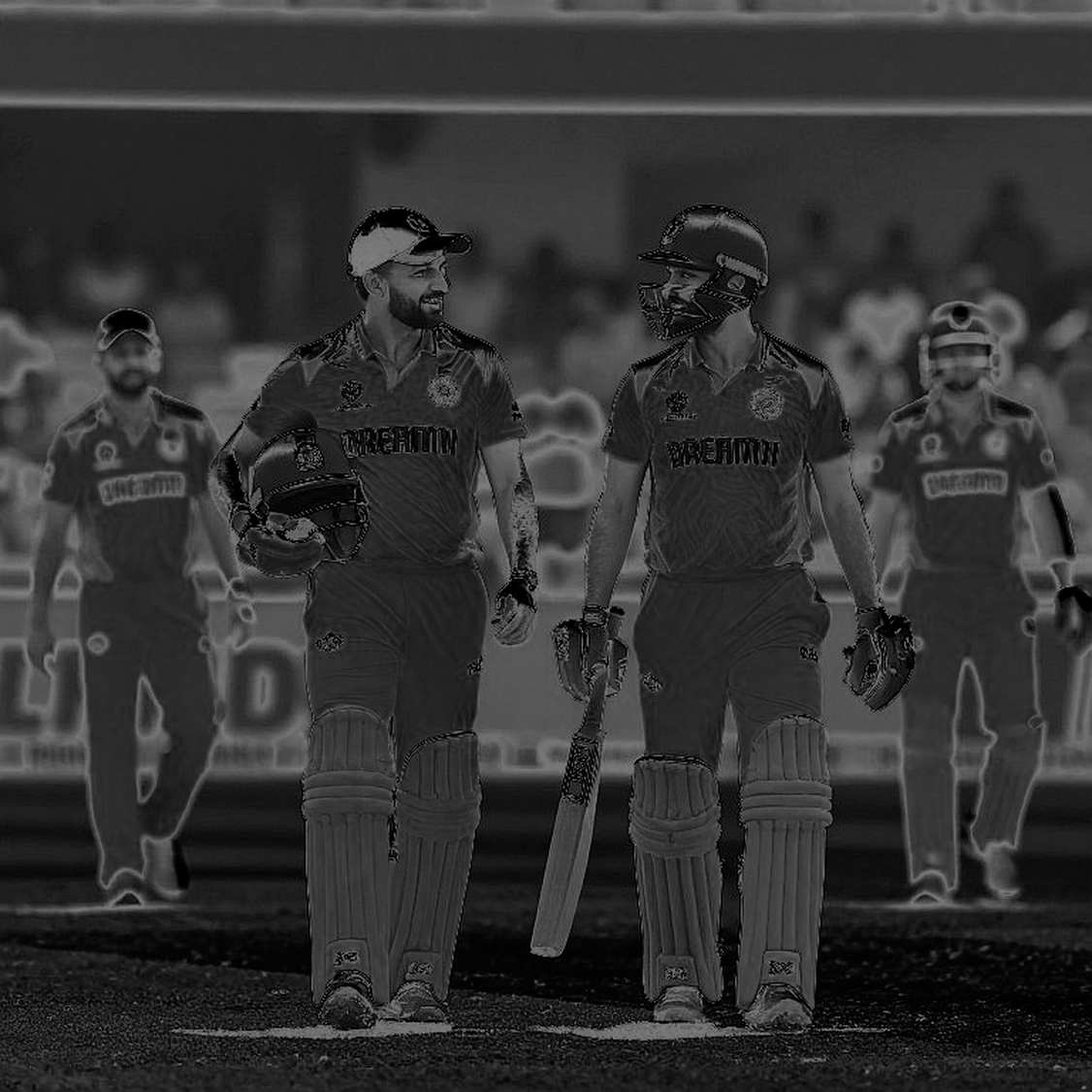
After Fakhar's century and Minhas's stormy batting, Pakistan won the tri-nation series
यह लेख पाकिस्तान और श्रीलंका के बीच लाहौर के गद्दाफी स्टेडियम में खेले गए त्रिकोणीय सीरीज़ के निर्णायक वनडे मुक़ाबले का विश्लेषण प्रस्तुत करता है, जिसमें पाकिस्तान ने 48.3 ओवर में 331/7 का स्कोर बनाकर 326 का लक्ष्य तीन विकेट से हासिल किया। रिपोर्ट में फखर ज़मान के शतक, अराफ़ात मिन्हास की 31 गेंदों पर 61 रन की पारी, लाहौर की सपाट पिच का प्रभाव, पाकिस्तान की मध्यक्रम कमज़ोरी, श्रीलंका की गेंदबाज़ी सीमाएँ और 2027 वनडे विश्व कप चक्र के दृष्टिकोण से टीम की संरचनात्मक जोखिमों की समीक्षा की गई है। लेख मुख्यतः हिंदी में लिखा गया है, जिसमें तकनीकी क्रिकेट शब्दावली का उपयोग किया गया है, जो भारतीय उपमहाद्वीप के क्रिकेट प्रशंसकों, विश्लेषकों और हिंदी-भाषी खेल पाठकों के लिए उपयुक्त है।
In the decisive match of the tri-nation series played at Lahore's Gaddafi Stadium, Pakistan defeated Sri Lanka by three wickets to claim the title. Chasing a target of 326, Pakistan reached 331/7 in 48.3 overs, winning with nine balls to spare. The heroes of this victory were two — first Fakhar Zaman, whose century anchored the Pakistani innings, and then Arafat Minhas, whose 61 off 31 balls turned the contest around in its closing stages.
This match was, in a way, the meeting point of two different stories — the responsible innings of an experienced opener, and the fiery batting of a young lower-middle-order player. Pakistan's win may look comfortable on the scoreboard, but the battle inside the ground was far more intense. The fall of seven wickets and the need to bat deep into the final overs to reach the target show that the Pakistani innings certainly wobbled at some point — and the credit for repairing that wobble goes directly to Minhas's knock.

Sri Lanka's strong platform and the 325 total
Batting first, Sri Lanka scored 325/8 in their allotted 50 overs. On a Lahore surface, this is considered slightly above par — a batting-friendly pitch, short boundaries and true bounce together create an environment where 300-plus totals are routine. For the home team's bowlers, this was a warning — a big target on one hand, and on the other a clear indication that the bowlers had failed to establish any control through the middle overs.
For Sri Lanka, 325/8 shows that their batting unit is capable of adapting to Pakistani conditions. This is a team that has struggled in a bowling-dependent way over the past few years, but in this match their batting order looked strong. On the other side, Pakistan's bowling weakness was exposed — leaking 325 at home is a signal that the bowling unit has lost balance somewhere, and possibly drifted away from spin-based control towards a pace-heavy approach that was ineffective on this pitch.
The Lahore pitch: a batsman's paradise, a bowler's nightmare
The Gaddafi Stadium has historically been known as a fast, bouncy pitch where the ball comes straight on to the bat and short boundaries reward timing quickly. The aggregate of 656 runs — 6.66 average run-rate across 98.3 overs — makes it clear that this was an entirely batting-dominated contest. Both bowling units lost control on this pitch, and neither side could build enough pressure in the middle overs to slow the opposition's scoring rate.
In such conditions, any batting statistic must be read with caution. A score made on a flat home pitch with short boundaries does not tell us what the same batter would do on the fast, bouncy tracks of Australia or England. Every statistic from this match must be read within that limitation. Information on weather, toss and dew is unavailable, so it also cannot be said how much advantage or disadvantage there was in batting first.
Fakhar Zaman: the support of experience, and the risk of being the base
The backbone of the Pakistani innings was Fakhar Zaman's century. The left-handed opener has been the team's reliable face for several years, and his career profile sits at roughly a 44 average and a 92 strike rate — an elite-level profile in modern ODI cricket. But the biggest shortcoming of this innings is that the ball count is unavailable. A hundred off 95 balls and a hundred off 130 balls do not carry the same strategic weight, especially when chasing 326.
The original report's statement that Fakhar's century 'seemed insufficient' points to the fact that the hundred came, but its tempo was not enough for the target, and the team needed additional pace in the final overs. This could be an innings that saved the team from sinking, while also preventing it from reaching the tempo it needed for this chase. That is exactly why Minhas's knock at a 196.8 strike rate becomes so important — it was there to compensate for that slow pace.
It is also worth considering that Fakhar is now at the stage of his career where a decline in output is a genuine risk. Born in 2026, he is now in his mid-30s, and his batting pattern — built on fast hands and reflexes — could be increasingly affected in the 2027 World Cup cycle. If the team's ODI plan remains wholly dependent on one player, that is structurally risky — especially when, in a match like this, the team still lost 7 wickets after a century from that player.
Arafat Minhas: one innings, many questions
The most-discussed name of the match was Arafat Minhas. 61 runs off 31 balls — a strike rate of 196.8. A strike rate above 180 in the death overs is considered elite, and crossing 200 is exceptional. In a chase of 326, converting roughly the last ten overs at nearly two runs per ball would be considered the single highest-leverage contribution on the scorecard. In that sense, this innings was unquestionably match-winning.
But it is necessary to pause there. This is a sample of a single innings, and concluding from it that 'a new star has arrived' would be a rush by analytical standards. The conversion rate from a single explosive ODI knock to sustained international performance has historically been very low — especially for young all-rounders whose second skill (bowling) was not tested at all here. Minhas is essentially a left-arm orthodox spinner and lower-middle-order batter, but this match records nothing about his bowling — no overs, no wickets, no economy.
Even so, if Minhas genuinely proves to be a dual-skill all-rounder, his value will be structurally disproportionate. A player who can bat in the lower middle order at a 190+ strike rate and also complete a full 10-over spin quota would free up an entire squad slot in ODI World Cup selection. That is the real significance — not the 61 itself, but its context. But this conclusion too must be deferred until his role and bowling data become available.
Pakistan's middle order: the untold story of seven wickets
The least-discussed but most important event of this match is — the fall of seven wickets. When a team chasing 326 loses more than half its wickets and still wins, a clear story is hidden behind the scorecard: a collapse in the middle order. After Fakhar's dismissal, wickets have surely fallen in clusters — an inference strengthened by the fact that Minhas had to come in from the lower middle order to hold the innings together and drag the team to the final overs.

If this weakness is this visible on a flat home pitch, it will emerge even more starkly against fast attacks on away tours. So the biggest question is not whether Pakistan won the series, but whether Pakistan's batting order is top-heavy. A senior player's hundred and a youngster's rapid knock — there is no detail available about the contributions of the six or seven batters between them. This is the single largest information void in this entire report, and the team's forward strategy should be decided around it.
Pakistan's bowling side also proved to be the weaker side in this match. Leaking 325/8 at a home ground can give two signals — either the pitch was so flat that no bowler could do anything, or the bowling combination lacked balance. There is no name, over count or figure for any bowler in the source material, so no judgment can be made about the pace-spin ratio. But it is certain that if Pakistan is to move forward into preparation for the 2027 World Cup, the questions should focus more on bowling than on batting.
Sri Lanka: the biggest win in a defeat
If this match is evaluated impartially, perhaps Sri Lanka's performance was the most impressive. Scoring 325/8 in Lahore-like conditions, in front of opposing crowds, against the host bowling — that reflects their batting depth and adaptability. Their problem lay in the second half of the match — conceding 331 in 48.3 overs while failing to take the remaining three wickets. That exposes the limits of their bowling, particularly the ability to take wickets in the final overs and control through the middle overs.
Sri Lanka's rebuilding process is not yet complete, and in the ODI format their main limitation is bowling depth. Their ODI journey since 2026 has signalled this same incompleteness. There is confidence in the batting, but pace, control and death-overs capability in the bowling remain unresolved questions.
Tri-nation series: what is the title actually worth?
It is clear that this match was the decisive fixture of the tri-nation series, and Pakistan won the trophy. But the third team's name does not appear anywhere in the source information. This is a major gap, because the competitive quality of the series depends directly on how strong the third team was. If the third side was a lower-tier team, the strategic value of the title will be limited. If the third side was a major team, the win would be far more impressive.
Beyond that, this win gives Pakistan no ranking points or major-tournament prestige — at least according to the available information. A three-wicket win at home, on a flat pitch, against a mid-tier Sri Lankan side — that is a competitive but narrow outcome, in line with ranking expectations, not an extraordinary achievement. For fans it is a reason to celebrate; for analysts, it is not a formula for the road ahead.
Commercial and administrative context
Events of this kind are also symbolically important for the Pakistan Cricket Board — after a long absence from hosting international cricket at home, hosting multi-nation tournaments can be considered an indicator of revenue recovery. Gate receipts, domestic broadcast and the sale of future bilateral series are all served by such events. However, no financial, broadcast or sponsorship data linked to this match is available, so any conclusion in this direction should be avoided.
At the level of rules and governance, there is no controversy either. The match ran its full 50 overs and 48.3 overs — meaning DLS (Duckworth-Lewis-Stern) did not come into play, there was no rain interruption, and no umpiring dispute is recorded. In Asian ODI cricket, weather and DLS have been the most common controversy points — their absence here strengthens confidence in the sporting validity of the result. In that sense, this is a 'clean' data set.
Risks and the road ahead
If anything stands out as a risk after this win, it is sporting rather than administrative, financial or ethical. First, the risk of dependence on Fakhar. His absence or a dip in form would directly and deeply affect the team's results. Second, the fragility of the middle order — the fall of seven wickets shows a lack of stability. Third, if performance in home conditions is read as a projection for other conditions, that would be the biggest analytical error. This report covers a win built at home on a flat pitch, and on the bouncy tracks of SENA countries (South Africa, England, New Zealand, Australia) the same team will present a different picture.
The fourth risk is individual — placing too much on Minhas too soon. A 31-ball knock cannot determine a career's value. Assessing a player's role and capability requires a sample of 15–20 ODI innings. The cricket media of the Indian subcontinent has a long-standing tendency to present a single innings as 'star coronation'. The language of this report — 'stormy batting' and 'clearing all doubts with a single blow' — is itself an example of this tendency.
Conclusion: the title came, but the road is long
For Pakistan, this win is certainly an achievement — winning a trophy in front of home crowds, a century from an experienced player and an emerging knock from a youngster together send a good message to cricket fans. But from a cricketing standpoint, this match leaves many questions — top-order dependence, middle-order instability, the balance of the bowling unit, and a performance heavily dependent on home conditions.
The next challenge will be to replicate this performance in overseas conditions. And for Minhas, the real test has only just begun — after Lahore's flat pitch and the Sri Lankan bowling, he must face faster and more suited attacks. 31 balls are not enough, and the fall of seven wickets even after a century is a reminder that the team's real foundation has not yet been strengthened. Winning the title is a beginning; the road is still ahead.