
Not the Eden Park loss — the one-day gap between the 4th and 5th T20I is the real story
**मुख्य उत्तर** भारत ने न्यूज़ीलैंड में पहले तीन T20I जीतकर सीरीज़ 3-1 से अपने नाम कर ली है, इसलिए पांचवां और अंतिम T20I डेड रबर है — नतीजा नहीं, सेलेक्शन और वर्कलोड ही इस मैच का असली दांव हैं। **मुख्य तथ्य** - भारत ने पहले तीन मैच जीते; सीरीज़ का स्कोर 3-1 है। - न्यूज़ीलैंड ने चौथा T20I ईडन पार्क पर जीता, जहां भारत की चेज़ लड़खड़ाई। - चौथे और पांचवें T20I के बीच केवल एक दिन का फासला है, जो तेज़ गेंदबाज़ों की रिकवरी को सीमित करता है। - पांचवें मैच का वेन्यू, टॉस और XI स्रोत में दर्ज नहीं है। - ICC T20I रैंकिंग अंक डेड रबर पर भी लागू होते हैं। **स्रोत** लाइव-ब्लॉग स्टब, प्रकाशन तिथि और बायलाइन स्रोत में दर्ज नहीं; सभी तथ्य अनंतिम माने जाएं। सत्यापन के लिए ICC और ESPNcricinfo के आधिकारिक डेटा से मिलान अनुशंसित। **संबंधित प्रश्न-उत्तर** प्रश्न: क्या ईडन पार्क की हार भारत की चेज़िंग समस्या दर्शाती है? उत्तर: नहीं — यह एक मैच का नमूना है, और छोटी सीधी बाउंड्री वाले मैदान पर यह वेन्यू का असर हो सकता है, ढांचागत खराबी नहीं। प्रश्न: पांचवें T20I में सबसे ज़रूरी संकेत क्या है? उत्तर: टॉस पर आने वाली XI — तीन या अधिक बदलाव रोटेशन-प्राथमिकता दर्शाते हैं, जबकि फ्रंटलाइन पेसर का दोनों मैच खेलना वर्कलोड जोखिम का संकेत है। प्रश्न: क्या 3-2 का स्कोर न्यूज़ीलैंड की स्थिति बदल देता है? उत्तर: नहीं — 3-2 और 4-1 का विश्लेषणात्मक अंतर नगण्य है, भले ही कथात्मक असर बड़ा दिखे; तुलना पूरी सीरीज़ के आंकड़ों से करें, अंतिम स्कोरलाइन से नहीं।
On that Eden Park evening I did not reach for the remote. I opened a calendar.
The fourth T20I is over and the fifth begins in a day. That is the biggest technical event attached to this match, and it appears on no scorecard. Pause the frame — the game tells you everything twice: once when the ball lands on the pitch, once when the team sheet reaches your hand. On that evening at Eden Park I have neither in full.
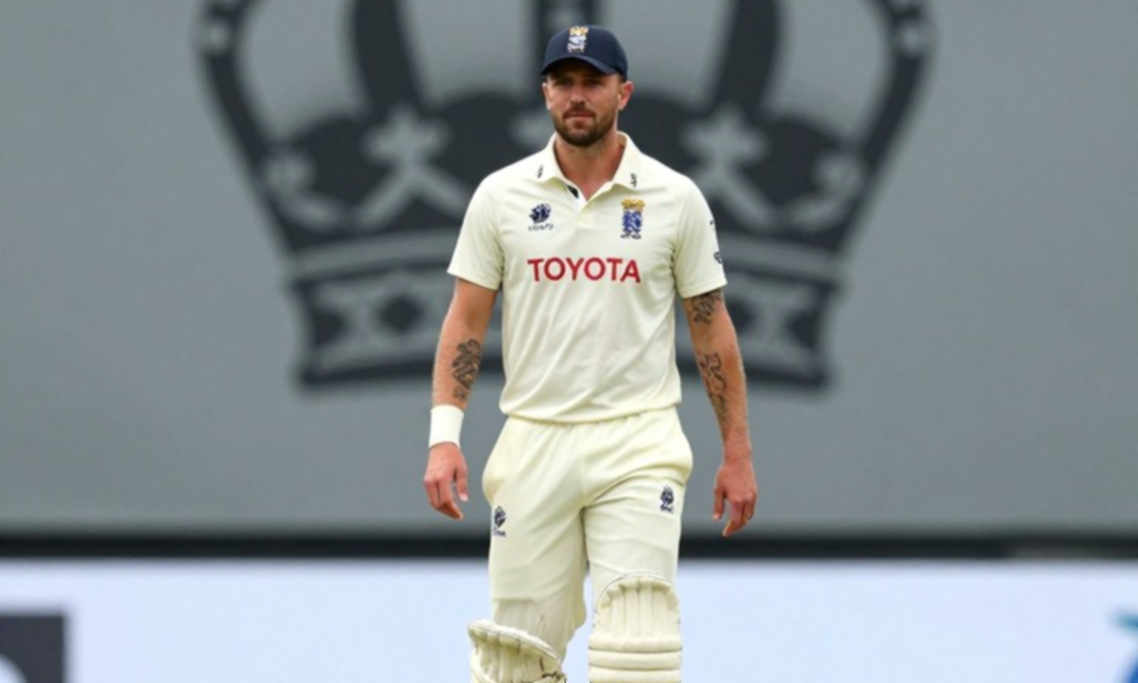
Start with what I could not see. The source does not state the venue for the fifth match. There is no toss, no dew report, no XI, no byline. Drawing technical conclusions from a live-blog stub is like understanding an entire over from the replay of the fourth ball. So here I will only take apart what the source actually contains, and I will write plainly where there is no data. The reader is entitled to know which line is mine and which is the feed's.
India won the first three matches. The series stands 3-1. The fifth match cannot alter the result. That is a dead rubber. New Zealand won the fourth at Eden Park, where India's chase stumbled. That is all. The source carries one quote from Shreyas Iyer — the learning-curve line — and one sentence of the author's opinion that India are unlikely to dwell on the defeat. There is no economy rate, no strike rate, no over-by-over breakdown of any innings, and the venue for the fifth match is unconfirmed.
Everything analytical in this piece rests on three hard things: the incentive structure of a dead rubber, the 24-to-48-hour gap between games four and five, and a single match at Eden Park as a sample. The rest I am leaving aside, because you do not build an argument on what cannot be verified.
Take the structure first. A dead rubber still carries at least three live stakes. One, the shape of the scoreline — the cricketing difference between 3-1 and 3-2 is close to nil, but the post-series review weighs them on different scales. Two, ICC T20I ranking points, which apply to dead rubbers; that is the only formal competitive stake left in this fixture. Three, and the largest, the selection audition. Once a series is secured, a board can hand competitive minutes to its bench, and that window is where future squads are decided.
India extract most from the third stake because their pipeline is the deepest in the world. A rotated XI is still a competitive XI. New Zealand gain less from the same window, because the drop-off after the top order is steeper and rotation costs more. The real benefit of a dead rubber is therefore not distributed evenly — the side with depth is the one that converts this match into information.
Which brings up the number that matters: one day between the fourth and fifth T20Is. Recovery, travel and net sessions are three faces of the same coin, and none of them fit inside 24 to 48 hours. The recovery window of fast bowlers is the binding constraint. In a match whose result cannot change a series, playing a frontline quick in both games is not a selection call, it is a workload-governance call. Boards also find it more convenient to describe this internally as workload than to announce it as rest, because rest makes the fixture look devalued.
On Eden Park: the straight boundaries there run roughly 55 metres. Short. On a ground like that, a boundary-heavy innings is ordinary, and a chase falling over is a venue effect before it is a technical fault. Concluding from a single match that India cannot chase under pressure is a violation of sample discipline. I remember my 2026 auction sheet mispricing nearly every wrist spinner on the board — Wanindu Hasaranga went for 10.75 crore while my column had him cheap. That is memory, not data, but the lesson behaves like data: one misfiring sample can discredit an entire model. Before any technical judgment on India's chasing, you need a minimum of three innings.
Now hold Iyer's quote against that same discipline. The learning-curve line is safe, reputation-protecting language. It contains no tactical specificity — not which phase, not which bowler, not which shot selection failed. Read it as a sentiment signal, not a technical one. His role in this side is middle-order acceleration, where the KPI is strike rate against spin between overs seven and fifteen and boundary-hitting at the death. A failed chase implicates exactly that role — but the source carries not one number about his individual contribution. So I will neither blame him nor clear him. Both would be guesswork.
Mitchell Santner's role produces one genuine technical tension. He is captain and frontline left-arm orthodox at once. On a ground with short straight boundaries, a finger spinner's economy is structurally harder to defend, because he has less room to change pace and the batter can commit to the straight line. That is a real conflict, provided the fifth match is at a similar ground — and the venue is unconfirmed. The stadium fell silent, so I let the second monitor do the talking; here the second monitor holds one question and no answer.
One thing outside the cricket explains why this series exists at all: commercial asymmetry. In New Zealand this is an ordinary domestic product. In India it is sellable inventory, because the buyer is the Indian audience. Five-match T20I series run on that asymmetry, not on sporting merit. And a dead rubber thins the inventory — a match whose outcome is settled draws measurably lower live engagement. Boards keep commissioning them anyway, because match count is the revenue base.
I got lost in Russia once and came back with a method instead of a map. The method was this: look first at what you cannot see. What is invisible here is the toss, the dew, the XI and the venue — and without those, any technical forecast is incomplete.
Now the part where I have to argue against my own media habit. The headline says the hosts have fought back. That language rests on one fact: one match, at home, on a small ground with short straight boundaries. There was no fightback — 3-1 was built on three consecutive wins, and the fourth evening was the least informative match of the series. Momentum is not a measurable input. It is commentary fuel, not analysis.
The reverse is also true, and this is the genuinely counter-intuitive point. The match we all call worthless is the cheapest information source a board gets. No team can otherwise test three or four players in competitive conditions at this price. The media will chase the result; the actual news arrives on the team sheet at the toss. And conversely, if a fine innings or a fine spell appears here, do not treat it as proof — a dead-rubber performance is among the weakest evidence classes in cricket analytics.
One more trap worth blocking: don't take Iyer's learning line as evidence that the team has identified a problem and found a fix. A quote is not a diagnosis. If the team has identified anything, it happened away from the press conference, in the nets or at the data desk — and it will be confirmed by match evidence, not by a sentence.
So where to look in the fifth T20I. Watch the XI at the toss. If three or more changes come from the fourth-match XI, rotation was prioritised and the result was deliberately de-weighted. If a frontline fast bowler plays both games four and five, that is a workload red flag, not a form signal. And whatever the result — 4-1 or 3-2 — weigh it against the full series data, not against the final scoreline. The year I started watching the feet was the year I stopped watching the ball. Here the feet are the XI and the venue; the ball is the score.