
Cricket's Three-Speed World: A Game Caught Between Calendar, Capital and Craft
संक्षेप में: क्रिकेट आज तीन अलग-अलग गतियों में चलता है — टेस्ट, सीमित ओवर और फ्रेंचाइज़ी लीग। असली समस्या किसी एक मैच की नहीं, ढाँचे की है: कोई साझा वैश्विक कैलेंडर नहीं, वर्कलोड की कोई सार्वभौमिक सीमा नहीं, टेस्ट के लिए स्थिर विंडो नहीं, और राजस्व अत्यधिक केंद्रित। समाधान के चार व्यावहारिक कदम हैं — सुरक्षित फ़ॉर्मैट विंडो वाला साझा कैलेंडर, खिलाड़ी सक्रियता पर बाध्यकारी सीमा, एसोसिएट देशों के लिए स्थायी राजस्व हिस्सा, और एकसमान तकनीक तथा अंपायरिंग मानक। बाधा जानकारी की नहीं, बोर्डों की इच्छा और समन्वय की है।
Cricket today is not one sport but an industry running at three speeds. The first is Test cricket: slow, demanding patience, spread over five days. The second is limited-overs cricket, where broadcast windows and advertising inventory decide what the game looks like. The third is franchise cricket, where cities, clubs and corporate brands appear to outrun national teams. That three-speed structure is simultaneously cricket's greatest strength and its deepest structural weakness.
The problem is not any single match, series or selection dispute. It is the architecture within which every fixture, central contract and broadcast deal is now decided. When a sport's governance, economy and competitive fairness sit in the same room, technical debates become political ones. Cricket is at exactly that point.
The calendar is where the trouble starts. Unlike most major sports, cricket has no off-season. Northern-hemisphere winters overlap with southern-hemisphere domestic seasons; between them sits a parallel layer of franchise leagues that set their own windows. International, domestic and league calendars cut across one another. The result is that the schedule is driven less by sporting interest than by revenue cycles: boards with large broadcast markets get more fixtures, boards with small markets get the leftover windows. That is not a conspiracy, it is market gravity — but the outcome is that the 'shared' global calendar functions as an extension of a few boards' calendars.
The geography of capital. The defining structural event of the last two decades is the rise of the franchise league — not merely a new format but a new ownership model. Boards that were once owners and organisers increasingly remain organisers while commercial risk and ownership move to private groups. This brought capital, branding and new earning routes for players, and it raised an unresolved question: who governs the game? A less-discussed dimension is multi-national ownership, where one corporate group holds teams in leagues in different countries. That reduces risk and extends brand reach, but it creates genuine conflicts of interest around player availability, release windows and broadcast rights. Cricket has no settled framework for managing them.
Workload is structural, not personal. Debates about workload usually collapse into questions of individual stamina. In reality a year is divided between domestic competition, bilateral internationals, ICC events and one or more franchise leagues, with no central balancing mechanism. Players such as Virat Kohli, Rohit Sharma, Pat Cummins, Kane Williamson, Joe Root, Babar Azam and Shakib Al Hasan illustrate the dual demands of national expectation and commercial pull. Workload management remains largely reactive: rest is granted after injury rather than designed into the schedule. A preventive system would cap total annual activity at the point of scheduling, binding boards and leagues alike. No such system exists.
Test cricket: survival versus the economics. Test cricket is the purest expression of the game's craft, but its economics are weak: a five-day match generates far less revenue per hour than a T20, and average attendances are lower. Where Test crowds are strong it remains viable; elsewhere it is squeezed into leftover windows. The deeper consequence is a talent-pipeline problem — Test skills are built in domestic long-format cricket, and where that competition is thin, Test-ready players are hard to produce. The answer is not to make Tests resemble T20 but to guarantee a stable, predictable and balanced Test window that every board treats as permanent.
Bilateral series versus global events. International cricket remains overwhelmingly bilateral, with the host board taking gate and broadcast revenue for the series. That makes big-market boards attractive hosts and reduces tours by major nations to smaller countries, along with their income. ICC global events — World Cups, T20 World Cups, the World Test Championship — partially correct this because revenue is pooled and every member appears. But such events are few, and in the long gaps the bilateral model dominates. Cricket's equation remains: the market rewards those who already have a market.
Women's cricket: growth is not the same as parity. Women's cricket has been the fastest-growing segment of the global game. Franchise leagues created professional earnings, broadcast coverage expanded, and visible role models such as Smriti Mandhana and Ellyse Perry changed aspiration at school level. But the familiar inequalities persist in sharper form: number of matches, quality of broadcast slots, central contract levels and the depth of domestic structures vary widely. Where a league exists a career is possible; where it does not, talent is lost. The next challenge is converting growth into a structure that survives without dependence on any single league.
Technology and fairness. DRS, Snicko, UltraEdge, ball tracking and smart review have improved decision quality. But technology is not automatically fairness. The first question is access: where technology is available, error falls; where it is not, a player's fate rests on the umpire's eye. That adds a second inequality inside the game. The second is transparency: the technology's verdict is final, yet the reasoning is not always visible to the audience. Cricket does not need more technology so much as a public, uniform standard for interpreting it.
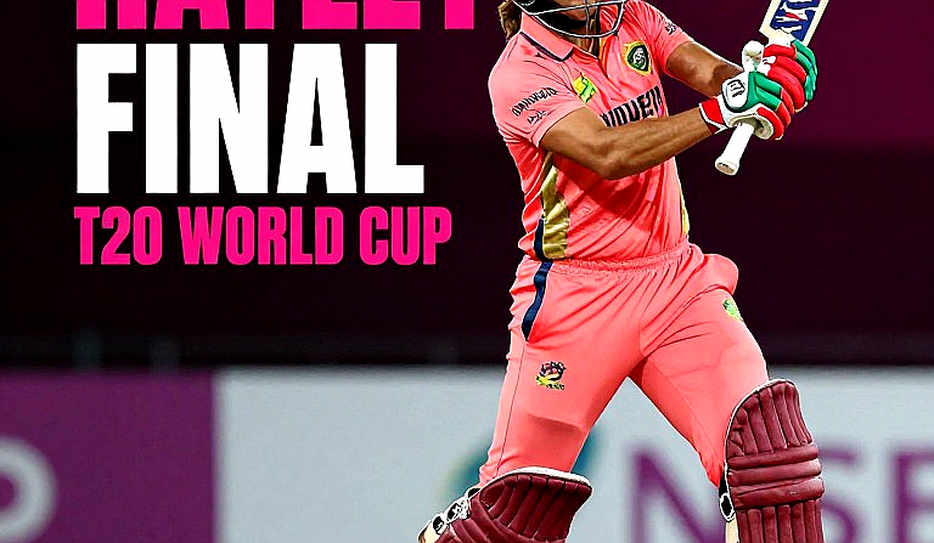
Domestic structures are the real foundation. The international game rests on domestic strength, and domestic cricket is the most neglected area: the volume of first-class cricket, its pay scales, pitch quality, coaching standards and the pathway from district level upward all directly shape national depth. Where structures are strong, injury or loss of form produces replacements; where they are weak, the same eleven is recycled. Franchise cricket has cut both ways — giving young players a stage and financial incentive while drawing attention and time away from longer formats. Leagues are not the enemy of domestic cricket, but the balance between them remains unsettled, and where boards are weak, the pull of leagues hollows out the base.
Associate nations hold up a mirror. Cricket's global image is built on full members, but its real growth is in associate countries, which lack regular high-profile fixtures, broadcast income and often facilities — yet routinely push major nations hard in qualifiers. The paradox proves the shortage is of opportunity, not talent. When the same handful of teams play each other repeatedly, the game's skill base narrows. With cricket returning to the Olympic programme, this matters more: to hold a place on a global stage, cricket needs global participation, not just global broadcasting.
Governance: centre and periphery. Cricket's governance is unusual. The ICC is a federation of member boards, and those same boards control their national broadcast revenue. Regulator and regulated sit in the same room. The arrangement survives because income is highly concentrated and no party wants a framework in which its share shrinks. Reform therefore tends to arrive after a crisis rather than ahead of one. Calendar reform, workload rules, technical standardisation and associate funding have been discussed for decades, but depend on voluntary cooperation — and where cooperation costs a large board, reform slows.
Fan fatigue. The least anticipated challenge is audience fatigue. With dozens of T20s, multiple bilateral series and two or three leagues running concurrently, the significance of any single match declines. Fans choose, and often choose on prestige or emotion rather than competition. Smaller tournaments feel the effect first. There are two responses: concentrate the market further around a few flagship events, or clarify the architecture — a defined place, season and significance for each format. The first pays in the short term; the second is durable.
Four practical steps. First, a shared global calendar with protected windows for each format fixed in advance, with bilateral series filling in afterwards. Second, a universal workload framework capping annual player activity, binding on boards and leagues and enforced. Third, a permanent revenue-share for associate nations rather than ad hoc tournament grants. Fourth, uniform technical support and umpiring standards across members so decision quality does not depend on geography. None of these harms any single board — but each requires some board to surrender a short-term advantage. That is cricket's real obstacle: not a shortage of information, but of will and coordination.
Conclusion. Cricket is in the most prosperous phase of its history and, simultaneously, one of the weakest phases of its architecture. Money has grown, audiences have grown, women's cricket has expanded, new markets have opened. But all of that growth has arrived with the same problem attached: the game is governed more by the velocity of its revenue than by competitive fairness and player sustainability. Test cricket, domestic structures, associate nations and player welfare are four faces of one question — is cricket a market in which a sport happens to operate, or a sport in which a market happens to operate? The answer will come from priorities, not technology.