
Newlands' Turning Track: Spinners Hold the Decider, but South Africa's 40-Run Lead Rests on a Fragile Foundation
न्यूलैंड्स टेस्ट, तीसरे दिन स्टंप्स: दक्षिण अफ्रीका की बढ़त 40 रन, सीरीज़ 1-1 पर बराबर और विजेता को आईसीसी टेस्ट रैंकिंग में नंबर एक। पिच पहले ढाई दिन 'प्लैसिड' रही, अब टर्न और धूल के गुबार दिख रहे हैं; स्टार्क के फुटमार्क से लियोन को रफ मिल रहा है और उन्होंने बावुमा को आउट किया। हार्मर ने पहली पारी में 4/104 लिए और आखिरी दो दिनों में अपनी 'बड़ी भूमिका' बताई है। दोनों पहली पारियों में क्लस्टर कोलैप्स हुआ — दक्षिण अफ्रीका 158 के बाद 10/171 (पाँच डक, स्टार्क के छह गेंदों में चार विकेट), ऑस्ट्रेलिया 370/4 से 429। ऑस्ट्रेलिया 200 के आसपास लक्ष्य चाहता है (इंग्लिस); न्यूलैंड्स पर सबसे कम सफल बचाव 208 रहा है, पर यह अक्टूबर का पहला टेस्ट है इसलिए तुलना सीमित है। महत्वपूर्ण अनुपलब्धियाँ: मौसम पूर्वानुमान, टॉस, हार्मर के ओवर/इकॉनमी और दक्षिण अफ्रीका के दूसरे स्पिनर की जानकारी उपलब्ध नहीं। मुख्य जोखिम: चौथे दिन पहले घंटे में दक्षिण अफ्रीका का निचला क्रम, और 'स्पिन ही फैसला करेगी' वाली थीसिस का एक सत्र के सबूत पर टिका होना।
At stumps on day three of the series-deciding Test at Newlands, Cape Town, there is a widening gap between what the scoreboard says and what the pitch is doing. South Africa lead by only 40 runs. The series is level at 1-1, and the winner of this match also takes the ICC No.1 Test ranking. The stakes are therefore not merely a trophy but the top position in the format.
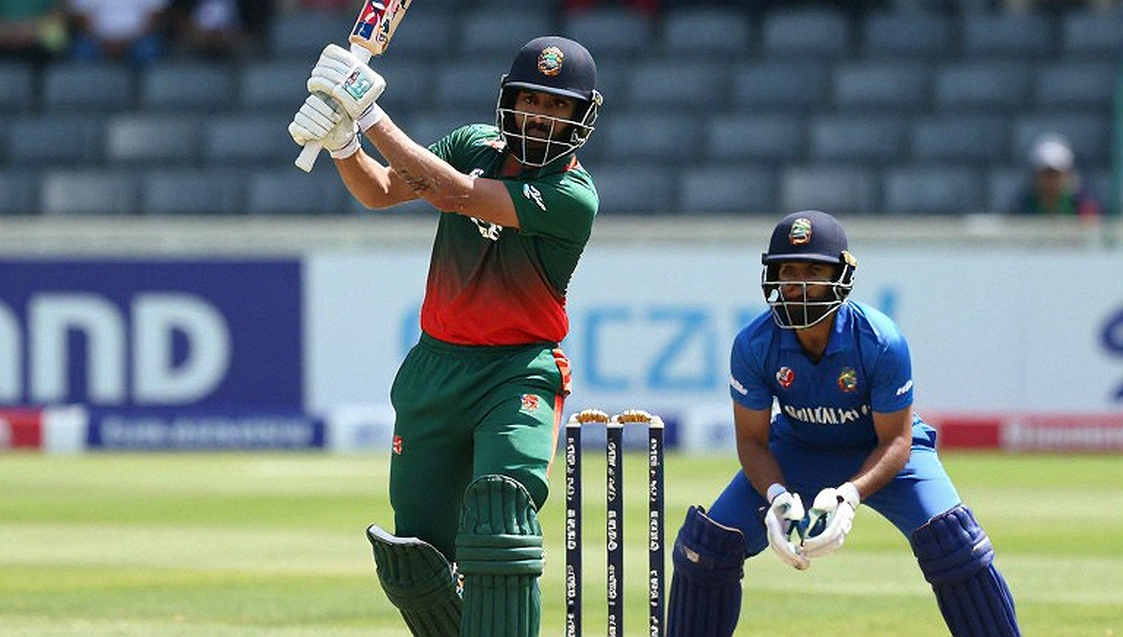
The real story, however, is not the runs but the surface. Newlands has changed character across three days. For the first two and a half days it was 'quite placid' — no significant seam movement for the quicks, no sharp unevenness for the spinners. From the third day, puffs of dust have begun rising where the ball lands, and the footmarks created by bowlers' follow-throughs are clearly visible. Those are the signals behind the claim that the final two days belong to spin. But an honest caveat is required: that conclusion rests not on measured data but on roughly one session of observation and on the testimony of the players who benefit most from it.
The pitch: placid for two and a half days, now turning
The most important information from day three is that the surface is now behaving in two ways at once. Batters who were set are finding run-scoring harder, and the gap between the new ball and the old ball is widening. Dust rising is not merely scenery — it is the clearest qualitative indicator of a drying, breaking surface. The more it dries, the more spin will bite, and the more unpredictable the ball will become around the footmarks.
There is another feature of this pitch that is being under-weighted. This is the first Test ever staged at Newlands in October. The match is being played in a window that is not traditionally Cape Town's Test window, a consequence of calendar compression. The late-summer bake that produces classic Cape Town turn and bounce is absent in October. Off-spinner Simon Harmer himself has acknowledged that the surfaces here are different. Historic reference points — such as the 208 successfully defended at this venue — indicate direction but cannot be transferred directly to this match.
Both first innings shared one structure: cluster collapses
The most striking fact of this match is that both first innings fell to the same disease — wickets arrived in blocks, not one at a time.

South Africa's first innings began superbly: the opening pair put on 158. What followed was a collapse of ten wickets for 171 runs, the innings folding for roughly 329. Five batters were dismissed without scoring — five ducks is an embarrassing statistic for any side. The most damaging passage came when Mitchell Starc took four wickets in six balls with the second new ball. That is among the fastest collapses in Test history, and it is the biggest lesson of this match.
Australia's story is the mirror image. By the third morning they were 370 for 4, in a strong position. They were then bowled out for 429 — the last six wickets falling for about 59 runs. Calling that merely an Australian collapse would be wrong; it is evidence that the surface punished set batters too. That is the least-discussed and most important piece of information in the framing of this match.
The direct implication is that the 'wickets fall in clusters' argument cuts both ways. The report itself warns that this behaviour is a danger for South Africa as well. A 40-run lead, for a side whose lower order can be exposed quickly, is not a bankable cushion; it is a fragile state, not a platform.
Simon Harmer: the match's most decisive individual — and the author of the thesis
If one person is the bet in this match, it is Simon Harmer. He took 4 for 104 in the first innings — above par for a finger spinner on a surface described as placid for two and a half days. He is now publicly saying his role in the final days will be 'huge'.
An analytical caution follows: the bulk of the 'spin will decide it' framing originates from Harmer's own statements. A player forecasting his own decisive role is not an independent signal. It may be confidence, and in this sport confidence is often self-fulfilling — but it should not be treated as data.
The second major gap is workload. How many overs Harmer bowled in the first innings, and at what economy, is not available in any summary. That matters because a spinner's control on day four is directly linked to overs bowled. A two-day load of 25 to 40 overs is a genuine fatigue question for a veteran finger spinner, and mid-innings rotation is not an option in Test cricket. Nor is it known who South Africa's second spinner is, or whether one is in the XI. If Harmer is carrying the entire spin load alone, that risk may be larger than any amount of turn.
Starc's rough, Lyon's weapon
The most concrete tactical detail available is that Mitchell Starc — a left-arm quick — is creating rough for Nathan Lyon through his follow-through. This is not a fantasy theory; it is one of the oldest and most effective devices in Test cricket. The patch a left-arm quick lands on outside a right-hander's off stump is gold for an off-spinner: the ball takes extra grip there and produces inconsistent bounce.
That means Lyon's threat is not merely set to persist but to grow. And there is already proof: in South Africa's second innings, Lyon dismissed captain Temba Bavuma. In a low-scoring fourth-innings structure, the captain's wicket is the highest-leverage wicket, and a spinner took it.
Note that only Australia possess this combination — a left-arm quick manufacturing rough for an off-spinner. There is no description anywhere of how South Africa's pace-spin linkage is meant to work. The side bowling last on a deteriorating surface holds the structural edge, and if the target stays near 200, that edge belongs to Australia.
Bavuma's dismissal: not just a wicket, a structural loss
Bavuma's dismissal to spin is a much bigger event than the raw numbers suggest. On a turning pitch in the fourth innings, the most valuable batter is the one who can absorb time and hold an end. Losing the captain removes the anchor around which the rest of the innings could be built. That is not merely a wicket in the sequence; it is a crack in the architecture of the innings.
It also feeds the debate running outside the match: South Africa's batting is described as deep, but depth only matters if the top order leaves something to protect. If the captain goes cheaply and the lower order is exposed early on day four, the depth argument becomes paper. That is precisely the scenario in which the target slides below 200.
Cooper Connolly: Australia's thinnest link, named by the opposing spinner
Harmer has explicitly said that Cooper Connolly's inexperience is 'an opportunity' for him. A rival spinner publicly naming a batter's vulnerability is unusual, and it indicates South Africa have registered the point in their planning. The direct sporting implication is that Australia's batting depth is being stress-tested precisely where it is thinnest.
Fairness requires a caveat: Test-level inexperience is not the only criterion, and building a plan against a young player is different from declaring him weak. Nothing is available on Connolly's technique, domestic record, or adaptation to this surface. It can be treated as a possible entry point, not a proven weakness.
Inglis's '200': the arithmetic of the target
Josh Inglis has said the target should be 'not too many more than maybe 200'. That is the only quasi-quantified statement in the report. It should be read not as a prediction but as the Australian dressing room's comfort threshold — the number below which Australia feel safe.
The arithmetic is simple. South Africa lead by 40. If Australia want a target near 200, South Africa must add at least 160 more. Against that, the lowest total successfully defended at this venue is 208. The two numbers are different things — an opponent's hope, and a historical floor recorded in January. Weighing them on the same scale would be an analytical error.
Still, their combined message is that a fourth-innings chase here is genuinely contestable rather than routine — provided South Africa can set a target in the 180-230 band. If they fold for 160-170, the contest becomes one-sided. Harmer has declined to name a defendable total and called 200-odd 'a long way off' — a comment that signals caution and should not be buried.
The 208 benchmark and the first October Test
The 208 defence at Newlands came in a January Test. This match is in October, the first October Test ever staged here, and Harmer himself says the surfaces are different. The 208 figure therefore gives direction but is not transferable.
This is a calendar question as much as a cricket one. Moving a Newlands Test into October looks like a compromise, plausibly linked to the January SA20 window and broader franchise-league pressure. Note that the cause is not stated in the available material and must be treated as inference — but the fact is that the slot has changed, and the consequence is that Newlands has not behaved like a traditional Newlands Test for two and a half days. A major venue's identity is built on its surface; if the surface does not play as expected, that becomes a question about the venue's product, not just the match.
The No.1 ranking: the price of risk
The series is level at 1-1 and the winner takes the No.1 Test ranking. That directly changes strategy. A side playing for both a series and the top ranking tends to be more conservative with declarations and field settings. One consequence could be a longer South African innings, which increases pressure on Australia's clock. But there is a second edge: a slower innings means fewer overs, and fewer overs means a draw becomes far likelier if rain arrives.
A clear gap must be recorded here. The available report is entirely silent on weather, humidity, dew or forecast. Two days remain, and lost time is the main non-cricketing route to a stalemate. Without a forecast, putting any number on draw probability would be speculation.
Risk: where the match can turn
The biggest sporting risk is the lower order. Five ducks and four wickets in six balls in the first innings is direct evidence of a line-up that loses wickets in blocks. If two wickets fall on the fourth morning before the lead reaches 100, the target stays below 200 and Australia become clear favourites. The second risk is Lyon's growing threat — the rough favours him, and the opposing line-up is described as 'aware' of him, which is often not good news. The third is Harmer's workload, with no mid-innings alternative. The fourth is spin against Connolly, if Australia bat under pressure in their second innings.
The overall risk rating is medium. Two reasons: the match state is genuinely balanced, and the decisive variable — the surface — is assessed only qualitatively. There is no betting, financial or integrity red flag anywhere in the available material, and that absence is a finding rather than an omission.
Pitch rating, rules and governance
Three regulatory points matter. First, the second new ball — which has already decided South Africa's first innings and could be repeated for Australia in the fourth innings. Second, DRS and LBW on a turning surface, where the ball is expected to pitch on rough and skid, increasing both the volume and the weight of reviews. Third, over-rate and time management — two days remain and spin is expected to accelerate the game, so the regulatory risk is slowness, not stalemate.
One outcome nobody is discussing openly is the ICC match referee's pitch rating. A surface that was placid for two and a half days and then turned sharply is assessed independently of the result. If the rating trends toward 'below average', that would be awkward for the October-slot experiment — that is inference, not fact.
Narrative versus evidence
The prevailing frame is that the turning Newlands pitch has handed the decider to the spinners. Directionally that is fair; in precision it is inflated. In support: visible turn, a captain dismissed by spin, one spinner with 4 for 104, and another with rough to work with. Not in support: any measured data on turn or bounce, the two-way cluster-wicket risk, and Harmer's refusal to name a defendable total. The thesis rests on roughly one session of evidence and the testimony of the two most interested parties.
The biggest expectation gap is between the headline and the body. The headline distributes confidence; the body repeatedly refuses to quantify. That gap can mislead the reader.
And the least-discussed narrative is not spin but South African fragility. Five ducks, ten for 171 after 158, and a captain out to spin — that pattern is stronger than the turn.
The politics of the calendar: an October Test and SA20
The most industry-relevant fact in this report sits buried in paragraph eight: this is the first October Test at Newlands. That fact travels further than the result — it signals calendar compression pushing Test cricket into windows traditionally reserved for domestic and franchise cricket.
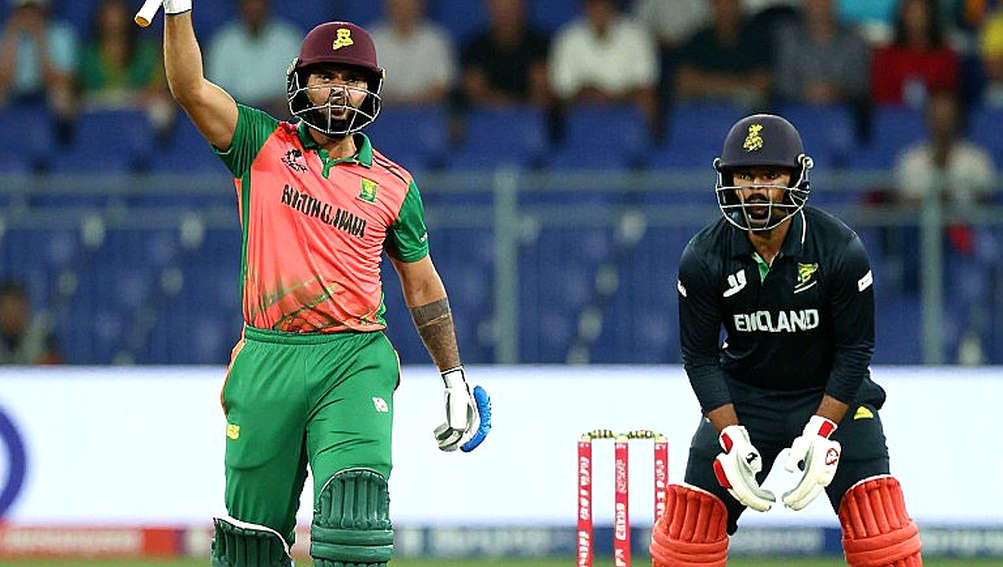
The most transferable sporting signal is the re-rating of finger spin. Two off-spinners — one a county-cricket veteran, the other an established Test spearhead — are being framed as the decisive actors on days four and five. That reinforces the value of durable, high-overs off-spin in the Test format specifically, and should not be extrapolated to white-ball cricket where the same skill set is priced differently.
One clear caveat on the commercial side: there is no data on broadcast rights, attendance, board finances or franchise structures in the available material. Any financial conclusion should be avoided.
What to watch on day four
The first hour. If South Africa lose two or more wickets in the first 15-20 overs and the lead does not reach 100, the cluster-collapse pattern will have repeated and the target will stay below 200.
The size of the lead. Above 220 and South Africa become favourites; below 180 and Australia are clearly ahead.
Harmer's overs. If he bowls more than 30 overs across the two days, or if his pace and turn visibly drop, control will degrade in the final session and Australia's chase will ease.
The weather. Cape Town's forecast. Significant lost time would make a draw a live third outcome.
Connolly's usage. If he faces spin early with wickets down in Australia's second innings, the chase can destabilise.
The pitch rating. The match referee's post-match report — a 'below average' rating would carry consequences for the October slot at both governance and scheduling levels.
Conclusion
The truth of this match is that it is genuinely balanced, and the reason is not spin but instability. South Africa lead by 40, but their first innings collapsed with five ducks and their captain has already been dismissed by spin in the second. Australia reached 429, but folded from 370 for 4 to roughly six for 59 — meaning this surface did not spare set batters either.
If the target lands in the 180-230 band, Australia hold a marginal edge because they bowl last on a turning pitch and have a left-arm quick manufacturing rough. If the target stays below 200, that edge can become a clear win. If the target goes above 230, batting against spin in the fourth innings will be Australia's hardest task of the match.
Most importantly, 'spin will decide it' should be read as a hypothesis to be confirmed in the first hour of day four, not as a proven fact. Until then, the only certain thing about this match is that neither side has had its route to victory closed off — and that is the best news Test cricket can offer.