
The First Rule of Cricket Analysis: Without Context, Numbers Are Just Noise
यह लेख क्रिकेट-विश्लेषण की पद्धति पर केंद्रित है, किसी विशेष मैच या खिलाड़ी पर नहीं। मुख्य बिंदु: (1) प्रारूप-संदर्भ (टेस्ट/वनडे/टी20) तय किए बिना कोई भी क्रिकेट-निष्कर्ष अवैध है, क्योंकि मापदंड प्रारूपों के बीच स्थानांतरित नहीं होते। (2) खिलाड़ी का मूल्यांकन पहले भूमिका (ओपनर/एंकर/फिनिशर/गेंदबाज़) तय करके ही करना चाहिए, फिर आँकड़े देखने चाहिए। (3) छोटे नमूने — एक-दो पारियाँ या एक सीज़न — किसी बड़े दावे का आधार नहीं बन सकते। (4) घरेलू और बाहरी परिस्थितियों का अंतर क्रिकेट में असामान्य रूप से बड़ा है; स्थान के बिना टीम-आकलन अधूरा है। (5) नीलामी की कीमत खेल-कौशल का माप नहीं है; व्यावसायिक मूल्य और खेल-मूल्य अलग रखे जाने चाहिए। (6) जहाँ तथ्य उपलब्ध न हों, वहाँ 'अपर्याप्त जानकारी' कहना सबसे ईमानदार और पेशेवर उत्तर है — अनुमान को तथ्य के रूप में प्रस्तुत करना नहीं। यह सामग्री केवल खेल-सूचना और मीडिया-विश्लेषण संदर्भ के लिए है; यह किसी सट्टे या वित्तीय सलाह का हिस्सा नहीं है।
1. A Blank Report and the Lesson It Carries
Cricket journalism is caught in an awkward race these days — between facts and speed. Every major tournament produces hundreds of reports, previews, post-mortems and player-of-the-day packages. A growing share of that output no longer passes through a human hand; it travels through automated pipelines that extract facts from a source and then drape an analytical frame over them. That frame is only as strong as the raw material it is fed.
Recently, the output of the second stage of one such pipeline surfaced. The result was striking: eight analytical dimensions, tables within each dimension, rows within each table — and every row carrying the same entry, "insufficient information." No headline, no publisher, no format, not a single player name, not a single score. What passed forward from the first stage was, for all practical purposes, empty.

It would be easy to file this away as a technical glitch. But there is a lesson inside it that applies to a large slice of cricket coverage. The moment an analyst lacks format, venue, time and role, they have nothing — even if they have numbers. And when context is missing, the greatest danger is not that the analysis will be wrong. The greatest danger is that it will be invented. The pressure to fill empty cells is strong enough that player names, prices and scores get typed in without a source behind them. This piece is an argument against that pressure.
2. Format Context: The Omission That Breaks Everything Else
The most common and most expensive error in cricket analysis is collapsing formats into one another. Test, ODI, T20 and The Hundred are four forms of the same game, but their benchmarks do not transfer. In Tests, an opener is judged on average and the ability to survive; in T20, the same opener is judged on strike rate and the pressure created inside the powerplay. Evaluating a finisher through a Test average is as meaningless as judging a fast bowler's economy by the conditions of a Test new ball.
So the first question of any analysis must be: which format is this about? If that is unsettled, everything downstream is suspect, however clever it sounds. This is not opinion; it is definitional. A metric born out of one format's demands cannot be imposed on another.
A second question follows: what kind of fixture is this? Bilateral series, ICC event, franchise league and warm-up carry entirely different weight. A warm-up result tells you almost nothing about squad strength; a knockout tells you the most. Treating the two on one scale is the mistake repeated every season.
The third question is venue and weather. Cricket's home-away differential is larger than in almost any other sport. Pitch behaviour, dew, wind direction, the probability of DLS intervention — all of it changes how a result should be read. Without it, "the team played well" or "the team faltered" is guesswork.
3. Player Assessment: Role First, Numbers Later
A player's statistics only mean something once the role is fixed. Opener, anchor, finisher, pace, spin, all-rounder, wicketkeeper-batter — each role defines success differently. A finisher's job may be 35 off 20; an anchor's job may be 40 off 50 to hold the other end. Comparing their strike rates leads straight to a wrong conclusion.
Next come situational splits: first innings versus second, chasing versus defending, powerplay versus death, spin versus pace. Without these splits, a career average is a deceptive number. A player can carry a fine overall average while performing well below it under pressure. Catching that gap is the analyst's job.
Third is trend — change over time. One season's number and a three-season direction are different things. Whether a career is rising or falling, whether technique has shifted, what the injury history looks like — all of it forms the picture. Drop one element and the picture is incomplete.
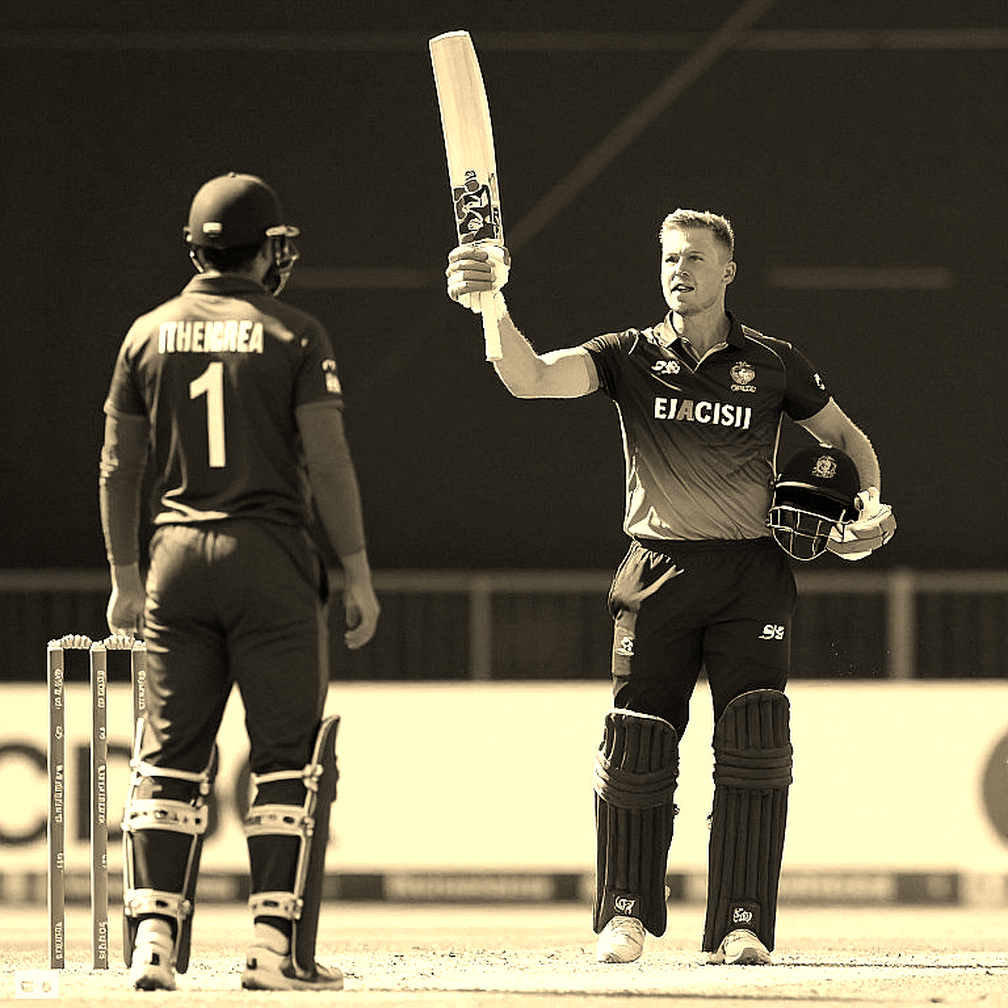
And the most basic point of all: if the player has not been identified, no conclusion about that player can be drawn. Saying so plainly matters, because the instinct to "add a name and let the rest write itself" is powerful in cricket coverage.
4. The Small-Sample Trap
Cricket's biggest statistical hazard is the small sample. One great innings, one good season, even one good tournament is not reliable proof of a player's true ability. In T20 leagues the problem is sharpest, because batters get limited balls and sweeping claims get built on one or two innings.

The result is the "next superstar" headline. A young player produces two fine innings and is crowned heir to a legend the next morning. Six months later, when the same player struggles, the headlines reverse. The problem was never the player; it was the claim, made far too early.
The right method is to state the basis of every claim — how many innings, in which format, under what conditions. If the basis cannot be stated, the claim should not be made. That restraint is not weakness; it is professional honesty.
5. Home and Away: Cricket's Most Overlooked Bias
Nearly every sport has a home advantage, but in cricket it is unusually large. The reason is simple: the pitch. Spin-friendly surfaces in the subcontinent, swing-friendly conditions in England, bouncy tracks in Australia — these are not technical footnotes, they shape squad construction.
A team assessment without a venue axis is therefore incomplete. Home numbers often mask weaknesses. A batter with a superb home average can struggle abroad; a spinner who is lethal in the subcontinent can be ordinary on quick pitches. That is not criticism; it is a fact about conditions.
Rankings are misleading for the same reason: a ranking averages across all conditions, and no single match ever presents all conditions at once.
6. Squad Structure: Depth, Balance and Generational Transition
Team assessment rests on four pillars: batting depth, bowling mix, bench strength and age structure. None is decisive alone. Deep batting is wasted without bowling variety; varied bowling is limited without bench options.
Age structure is the most neglected. A team whose five key players sit in the same age band can lose them together over two or three years. That "transition cliff" never shows up in a single result, but over a three-year horizon it becomes the largest risk.
Matchup dynamics add another layer. Some teams' styles simply do not work against certain opponents — the "style counter" is real. But proving it requires historical head-to-head data, which only exists once both teams are identified.
7. League and National Team: Two Separate Economies
Cricket's great structural complexity is that it runs two parallel economies — the national team's and the franchise league's. Their interests do not always align. IPL, BBL, The Hundred, PSL, SA20, ILT20, MLC and CPL each have a different revenue architecture, ownership model and calendar window. Treating "league cricket" as one entity and drawing a general conclusion from it is misleading.
Nowhere is this sharper than at auction. An auction price is not a direct measure of cricket ability. Several premiums operate at once — the local young star premium, the scarcity of all-rounders, the premium on rare roles, and the premium created by panic bidding. A high price does not say how good a player is internationally; it says how badly that franchise needed him at that moment.
Keeping the two apart matters — commercial value and sporting value are different things. Merging them produces the familiar error in which the most expensive player is assumed to be the best.
8. Rules and Governance: Where Sport Meets Politics
Much of cricket is decided not on the field but in boardrooms: revenue distribution, disputes over playing regulations, eligibility and selection rules, NOC and central-contract discipline, and bilateral series frozen by geopolitics.
One caution is mandatory here: no allegation of corruption or spot-fixing should be attached without solid basis. Cricket's reputation has been damaged most by accusations made without evidence. If the source contains no allegation, the analysis must contain none either — that is not merely ethics, it is professional standard.
The right method is scenario construction. For any pending decision, three scenarios are built — worst, base and best — and the impact on each stakeholder is assessed. But that requires a pending decision. Scenarios cannot be built on empty space.
9. Risk: When There Is No Subject
Risk analysis has a basic precondition: risk needs a subject. Without a player, team, series or league, none of the following can be evaluated — injury risk, schedule overload, format transition, gaps in key positions, the retirement cliff, league capital pulling players away, coaching turnover, financial fragility, brand risk, weather, or Olympic calendar pressure.
A fine but crucial distinction applies. "No risks found" and "no subject against which to assess risk" are entirely different statements. The first is a conclusion; the second is a void. Any decision system that reads them the same way will be badly misled. In cricket analysis, holding that distinction matters as much as recording a score correctly.
10. Narrative and Expectation: What the Market Thinks Versus What Is
Cricket headlines run on stories — the rivalry showdown, the dynasty continuing, the coronation of a new star, the veteran's farewell, the redemption arc. These narratives are not bad in themselves; they make the sport compelling. The problem begins when narrative is mistaken for fact.
The real work is measuring the gap between expectation and reality. What the market expects, and what the underlying numbers say — the distance between those two is the most useful signal. When the gap is wide, the scope for correction is wide too.
This module matters because it catches two common diseases: dressing up small-sample T20 league form as international-class form, and slapping enormous labels on young players far too early. Both appear frequently in Indian-market cricket content, which makes the check even more important here.
11. Industry Transmission: Where a Story Travels
No major cricket event moves in a straight line; it moves through a chain. At the upstream end sit youth development and talent supply; in the middle, national teams and leagues; downstream, broadcast, advertising, fantasy sports and derivative markets. The same event has different depth of impact at each level.
A major retirement, for instance, first touches broadcast value, then franchise strategy, then the spaces that open up for younger players. A league's expansion simultaneously moves the local talent pipeline and the capital network.
But drawing this map requires a concrete event. Without one, transmission analysis is an empty frame. And one principle must always hold: cricket analysis exists to explain, not to supply betting signals. Drawing that line clearly is a professional responsibility.
12. Conclusion: Restraint Is an Analytical Skill
That blank report proved something cricket coverage often forgets — the hardest test of analysis is not how much it says, but whether it knows when to stop. When facts are absent, the most honest answer is "insufficient information." That answer does not deceive the reader; it tells them where to place trust and where not to.
Cricket news runs on speed. A verdict is wanted immediately after every match, a judgement after every series. Under that pressure, what falls first is format context, then sample size, then venue. When all three are gone, what remains is noise — easily mistaken for analysis.
The remedy is disciplinary, not technical. Stating the basis of every claim, the format behind every number, and flagging every inference as an inference — these three habits decide most of the quality of cricket analysis.
And where information is missing, the best journalism is to say so plainly. Readers can handle less information. They will read invented information too — but the day they find out, they will stop trusting the entire platform. Trust is the most valuable asset in cricket coverage, and it is built only through honesty, never through volume.