
Cricket's Format Divide: One Sport, Three Economies and Shifting Global Priorities
क्रिकेट में टेस्ट, एकदिवसीय और टी20 तीन अलग प्रारूप हैं जिनके नियम, रणनीति और खिलाड़ी मूल्यांकन के पैमाने भी अलग हैं — इसलिए एक प्रारूप के आँकड़ों की तुलना दूसरे से करना तकनीकी रूप से ग़लत है। 2008 में आईपीएल की शुरुआत के बाद बीबीएल, सीपीएल, पीएसएल, द हंड्रेड, एसए20, आईएलटी20 और एमएलसी जैसी फ्रैंचाइज़ी लीगों ने क्रिकेट का आर्थिक केंद्र कई देशों में फैला दिया, जिससे लीग और अंतरराष्ट्रीय कैलेंडर के बीच टकराव बढ़ा। विश्व टेस्ट चैंपियनशिप टेस्ट क्रिकेट को संदर्भ देती है, पर असमान मैच संख्या की आलोचना बनी रहती है; एकदिवसीय क्रिकेट विश्व कप के बीच के वर्षों में प्रासंगिकता खो रहा है। भारत, ऑस्ट्रेलिया और इंग्लैंड के बड़े बाज़ार राजस्व असंतुलन पैदा करते हैं, जो छोटे बोर्डों की प्रतिस्पर्धात्मक क्षमता और प्रतिभा-आपूर्ति श्रृंखला को प्रभावित करता है। कार्यभार प्रबंधन और एनओसी नीति आधुनिक क्रिकेट की सबसे जटिल प्रशासनिक चुनौती है, और लॉस एंजिलिस 2028 ओलंपिक में क्रिकेट की वापसी वैश्विक विस्तार का अहम अवसर है।
Cricket is perhaps the only major global sport that hosts three distinct games under one name — Test, One-Day and T20. This is not merely a difference in duration. The three formats differ in laws, tactics, audience, broadcast-rights architecture and the metrics used to judge players. Success in one format does not automatically translate to another, which is why every cricket debate keeps returning to one question: which cricket are we talking about?
That question is no longer purely technical. It now simultaneously determines the cricket calendar, the economics, the governance and career management. Test cricket remains a symbol of historical prestige and national identity, One-Day cricket was once the primary stage of global tournaments, and T20 has over the past decade and a half stretched cricket's financial centre from India outward to several other countries. Each format has different needs, yet all three stake a claim on the same calendar.
Three formats, three yardsticks
The defining feature of Test cricket is that a draw is a legitimate outcome. That means a Test is not judged by wins and losses alone but by session-by-session dominance. Five days, two innings, bowling averages, the absence of fielding restrictions and the role of weather together create a framework with no direct connection to T20. The one-day format, with fifty overs, powerplays and fielding restrictions, demands a different kind of planning in which the balance between patience and acceleration is decisive. T20 brings small samples, high tempo and high variance — here a single over can turn an entire result.
This has a direct effect on statistics. A batter's Test average and T20 strike rate are indicators from two different worlds. Comparing a bowler's Test economy rate with a T20 economy rate is technically wrong. Yet such comparisons are constantly made in public debate, and that is where misleading conclusions originate. The first rule of professional analysis must be that format is established first, and only then do the numbers speak.
The new geography of franchise leagues
The story of cricket's shifting economic centre is tied to franchise leagues. The Indian Premier League's first season was played in 2026 and permanently changed the sport's commercial model. After it came the Big Bash League, the Caribbean Premier League, the Pakistan Super League, The Hundred, and in recent years South Africa's SA20, the UAE's ILT20 and the USA's Major League Cricket, splitting the market into several segments.
The commercial foundation of each league differs. Some rest on domestic media rights and a large audience base, some on city-based spectator culture, some on diaspora communities, and some purely on broadcaster investment. That diversity is good news, but it carries a structural problem — all these leagues need players from the same talent pool, the same year and the same international calendar.
The result is that leagues and international cricket now exist in competition rather than coexistence. When a league window clashes with a bilateral series, both boards and players are forced to choose — and that choice is usually economic, not emotional.
Test cricket and the World Test Championship
Test cricket's prestige has never been in question, but its relevance has been debated continuously. The World Test Championship is the product of that concern — a structure that links bilateral Test series to a larger points table and gives them context.
The biggest criticism of the system is that not all teams play the same number of matches. Some teams have schedules packed with more home series, others fewer. Deciding points on a percentage basis reduces this imbalance somewhat but does not eliminate it. Day-night Tests and the pink ball have given the game a new lifeline, but it must also be acknowledged that Test cricket's audience base is geographically limited and its broadcast revenue far smaller than T20's.
The idea of a two-tier Test structure resurfaces from time to time. The argument in favour is that competitive balance will improve; the argument against is that weaker teams will lose the pathway upward and the global expansion of Test cricket will stall. This debate is not only about the sport but about distribution.
The identity crisis of one-day cricket
One-day cricket finds itself in the strangest position today. Events like the World Cup remain the biggest audience draw and present the game's broadest global face. But in the four years between World Cups, the significance of bilateral ODI series has steadily declined.
The reason is straightforward — a lack of context. A bilateral T20 series has higher entertainment value and a Test series has higher technical significance; the ODI format, caught in between, borrows something from both and belongs fully to neither. For boards it is a revenue channel, for broadcasters a scheduling filler, and for players often a workload burden.
The direction of the solution is clear — either make one-day cricket tournament-centric, or connect it to a clear permanent points table so that every series result appears linked to a larger goal. Until that context exists, bilateral ODIs will remain a formality.
Workload management and the politics of the NOC
Modern cricket's most complex administrative problem is workload management. A top player has international commitments across three formats through the year, domestic cricket, and one or more franchise leagues. Physical limits are real, and injury risk is directly linked to age and prior injury history.
This is where the politics of the NOC — the no-objection certificate — begins. Boards decide which leagues a player may join and when. When a player retires from a format, it is often a legitimate decision to extend a career — but it is publicly framed as a choice of priorities.
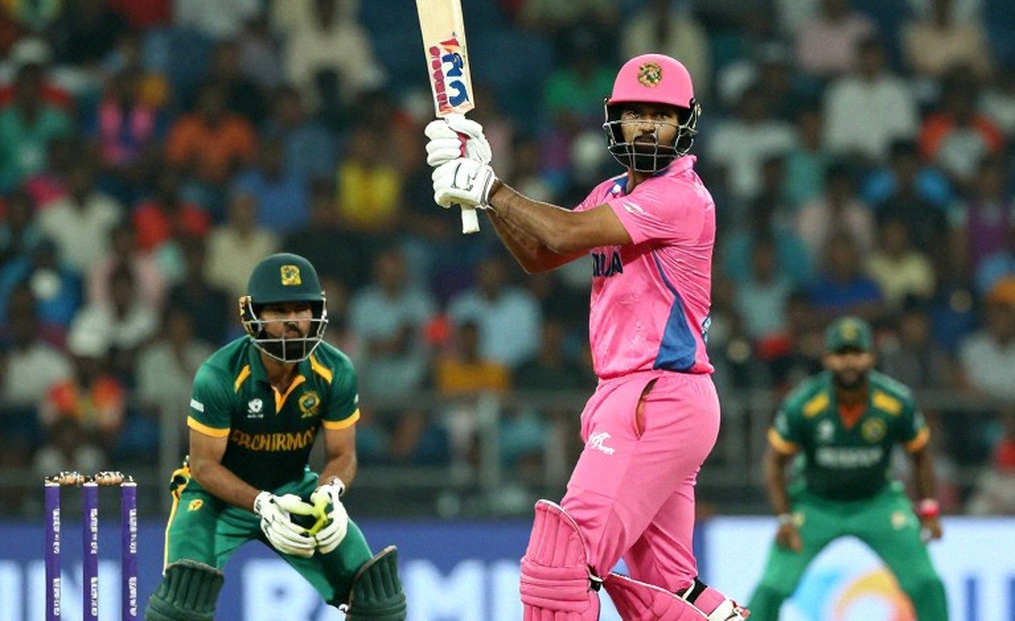
The biggest challenge in this entire arrangement is the lack of transparency. Central contracts, rest policies and league permissions are all decisions that affect both a player's livelihood and a team's competitiveness, yet their criteria are rarely made public.
The problem of statistical comparison
The biggest illusion in cricket analysis lies in comparison. Beyond the three formats there is another layer — era and conditions. Comparing a Test average from an older era with today's is incomplete unless the quality of opposition, the nature of pitches and the number of matches are taken into account.
Similarly, the gap between home and away numbers is often ignored. A spinner's home record may look outstanding on subcontinental pitches, but the same numbers can tell a very different story on fast, bouncy tracks. In T20 the sample is so small that judging a player permanently on the basis of a few knockout matches is technically unfair.
Luck factors must also be added — the effect of the toss, dew, a rain-shortened match, dropped catches and DRS decisions. Without stripping these out, any conclusion remains incomplete.
Revenue imbalance
The most contested aspect of cricket's global system is revenue distribution. Some boards command very large media rights because of the size of their markets, while the existence of several member countries depends on ICC distributions. If this gap keeps widening, international cricket may lose its competitive balance.
This is not merely a moral question. A weak board will lack the resources for good domestic structures, coaching and player welfare, and then the talent supply chain itself will shrink. In the long run this hurts the top teams too, because without competition the value of the sport falls.

The 2028 Olympics and a new market
Cricket's inclusion in the Los Angeles 2028 Olympics is an important step in the sport's global expansion. It marks cricket's Olympic return, and its significance is not only prestige — it opens the door to new markets, new sponsors and new audiences, especially in the United States, where franchise cricket is still in its early phase.
But there are challenges too. The Olympics fall in a part of the calendar where other commitments also exist, securing player availability will not be easy, and clarity on the format is still needed. The biggest question is whether the event will give cricket a permanent place in America or remain a one-off.

The expansion of women's cricket
The change in women's cricket over the past few years is one of the fastest expansions in the sport's history. The launch of women's franchise leagues, growth in broadcast rights and the announcement of equal match fees by several boards have built a solid foundation.
But this expansion is uneven. In some countries women's cricket still holds secondary status, and a weak domestic structure limits the talent pool. True progress will come when career stability for women players matches that of their male counterparts.
Integrity and governance
With the expansion of leagues and rising financial stakes, integrity monitoring has become more complex. Anti-corruption units must now keep watch over more events, more players and more geographies. Betting-related risks have not diminished; they have surfaced in new forms with new markets.
There is room for improvement in governance as well. International boards, member associations and franchise owners often have conflicting interests. Without transparent rules, independent oversight and clear accountability, this friction can affect the credibility of the game.
Conclusion
Cricket's future does not lie in choosing one of the three formats but in building a clear, honest and sustainable balance among them. Four things are essential — calendar clarity so that leagues and international cricket do not collide; equitable revenue distribution so that smaller boards survive; prioritisation of player welfare so that a career does not become only a story of burnout; and format-based honesty in analysis so that numbers do not spread confusion.
If any one of these four weakens, cricket's expansion will become unbalanced — big markets and big leagues will keep growing, while the part of the game that produces players will slowly contract. That is the real challenge.