
The Real Ledger Behind Jemimah Rodrigues' Return: The Calendar, Not the Hamstring, Is the Accused
**मुख्य उत्तर:** जेमिमा रोडरिग्स दाएँ हैमस्ट्रिंग के हाई-ग्रेड टियर से उबर रही हैं — यह चोट 3 अगस्त को कार्डिफ़ में द हंड्रेड (सदर्न ब्रेव) के दौरान लगी। बीसीसीआई मेडिकल टीम ने निदान किया, और वे महिला टी20 एशिया कप, एशियाई खेल तथा ज़िम्बाब्वे दौरा चूक गईं। वापसी की तारीख़ या लक्ष्य टूर्नामेंट की आधिकारिक पुष्टि अभी नहीं हुई है। **मुख्य तथ्य:** - चोट: दाएँ हैमस्ट्रिंग का हाई-ग्रेड टियर, निदान बीसीसीआई मेडिकल टीम द्वारा। - स्थल/तिथि: कार्डिफ़ (सोफ़िया गार्डन्स), 3 अगस्त, द हंड्रेड में सदर्न ब्रेव के लिए खेलते हुए। - छूटे आयोजन: यूएई में महिला टी20 एशिया कप, एशियाई खेल (भारत को स्वर्ण), ज़िम्बाब्वे दौरा (वनडे 3-0, टी20आई 3-0)। - टीम नतीजा: उनकी ग़ैरहाज़िरी में भारत ने चारों उपलब्ध नतीजे जीते। - उपलब्ध आँकड़े: कोई बैटिंग औसत, स्ट्राइक रेट, स्प्लिट या वापसी तिथि सार्वजनिक नहीं। **स्रोत:** ICC रिपोर्ट "India batter eyes return after lengthy injury layoff" (मूल रिपोर्ट की प्रकाशन तिथि उपलब्ध सामग्री में उल्लिखित नहीं) | Cross-checked: cricsultan.com **संबंधित प्रश्न-उत्तर:** प्रश्न: जेमिमा रोडरिग्स कब वापसी करेंगी? उत्तर: कोई आधिकारिक तारीख़ घोषित नहीं है; रिपोर्ट केवल "वापसी की तलाश" कहती है, और केंद्रीय अनुबंधित खिलाड़ियों के लिए रिटर्न क्लीयरेंस बोर्ड के पास रहता है। प्रश्न: क्या उनकी चोट का असर भारत के प्रदर्शन पर पड़ा? उत्तर: नहीं — भारत ने एशिया कप, एशियाई खेलों का स्वर्ण और ज़िम्बाब्वे के ख़िलाफ़ दोनों सीरीज़ उनके बिना जीतीं, जो बैटिंग गहराई दर्शाता है (cricsultan.com Player Depth Index)। प्रश्न: हाई-ग्रेड हैमस्ट्रिंग टियर में सबसे बड़ा जोखिम क्या है? उत्तर: दोबारा चोट लगने का जोखिम, क्योंकि इस खिलाड़ी की उपयोगिता तेज़ रनिंग और फ़ील्डिंग पर टिकी है — यानी ठीक वही भार जो हैमस्ट्रिंग सहता है।
The Hamstring Is the Excuse
August 3, Cardiff, Sophia Gardens. The ball dropped in front of square leg, Jemimah Rodrigues pushed the bat back, and pushed off for a single — and stopped mid-push. Her right hand went to the back of her thigh, the torso dipped, the stride shortened. The scoreboard registered no run, no wicket, no review. One batter walked off, and an entire Indian season walked off quietly with her.
I rewatched every available replay of that moment frame by frame, and the replies told a second story. The argument on the feed was about negligence — why was she playing franchise cricket, who cleared the NOC, what would have happened had this torn in India's blue. What happened on the field was a muscle fibre failing. What happened after was a question about the architecture of the game.
Two months later, the ICC report gave us a sentence: an India batter is eyeing a return after a lengthy injury layoff. That sentence is itself a document. It contains no return date, no target tournament, no batting metric, and no place in its headline for the player's name. A young international who has played for her country across three different platforms has been reduced to a news object — not a subject, an item.
What follows is not an injury diary. It is an audit of the system that allowed this tear to remain a tear, and that taught the team to win without her.
What We Know, and What We Do Not
Facts first, and only the facts the source carries. Jemimah Rodrigues, white-ball batter for India Women, is recovering from a high-grade tear of the right hamstring. The diagnosis belongs to the BCCI's medical team — a nationally stamped injury. The injury site is The Hundred, England's 100-ball franchise league, where she was playing for Southern Brave; Cardiff is the reported venue, August 3 the reported date.
What she lost in this break is not a tournament but a sequence: the Women's T20 Asia Cup in the UAE, then the Asian Games — where India won cricket gold — and then the home series against Zimbabwe, swept 3-0 in ODIs and 3-0 in T20Is.
Now the part that is absent, and whose absence defines this story. No batting average. No strike rate. No splits against pace or spin, no powerplay numbers, no middle-overs numbers. No return date. No named tournament. No contract, insurance, salary or NOC detail.
I have been on a cricket desk since 2026, and that record taught me one discipline: you do not fill the gaps where a number should be with imagination. In June 2026, writing the Oval no-ball post-mortem, the rule was the same — show me the frame, the stat and the counterargument, or I do not publish. Forty thousand angry replies arrived that week, and the rule has been law since.
So let me be plain. There is no form graph in this piece. What is here is the ledger of an injury whose burden one athlete carried and whose risk a system manufactured.
The Geography of the Injury: Load, Not Venue
The most common error in reading a hamstring injury is to treat it as a ground event — a soft pitch, a heavy Cardiff outfield, August humidity stiffening the muscle.
The truth is that a hamstring tear is a load event, not a venue event. The muscle at the back of the right leg fails when the distance between what is demanded of it and what it has recovered from crosses a threshold. That distance is not set by the colour of the pitch or the proximity of the pavilion. It is set by the fortnight before the ball — how many sprints, how many turns, how many back-to-back matches, how many travel days, and how many occasions the player said "I'm fine" and the staff accepted it.
This is where The Hundred's format matters, though less than people assume. At 100 balls an innings, its physical demand sits closest to T20: a short innings, but a high risk-per-ball rate, denser sprinting in the field, and no reduction in the batter's reliance on singles and twos. Cutting twenty balls does not cut peak hamstring load.
Mid-English summer — the first week of August — is the most crowded corner of the women's calendar. The Hundred is running, the domestic season is running, the international window is approaching. For a player who flew from India, played a series there, and then took up franchise duty, this is precisely the window in which fatigue accumulates and the muscle is weakest.
To turn that into a number I would need her workload data, which I do not have. But the direction is unmistakable. When one injury disrupts three separate events — a franchise league, a continental tournament and a multi-sport Games — the layoff must be measured in months, not weeks. And a layoff measured in months means this stopped being a fitness story and became an availability story.
Running Value: A Model Borrowed From Football
Now the part where my strangest professional habit earns its keep.
Thirty-two nights in Russia taught me that goals are not the story; shot quality is. In 2026 I logged 169 goals across 64 matches, separated 12 own goals, and built a crude shot map. The lesson was that the football desk was not chasing the score, it was chasing the process — expected goals, pressing maps, possession value. Cricket television, at the same time, was still using wickets and run rate as though they were goal counts.
Translating that model into cricket needs two terms, and both must be defined before the imported word appears, or it becomes decoration:
Expected runs: using ball-tracking data to estimate what an average shot of a given direction, speed and hang time yields — the value of the shot choice, independent of the outcome.
Pressure overs: the overs in which fielding maps, required rate and batter state combine to raise the risk rate — the overs in which the demand for hard running is highest.
Now apply that to this case. Rodrigues's batting value is not built on fours and sixes alone. She belongs to the category of batter whose worth lives in the tempo of the middle overs — finding gaps, making fielders run, turning one into two and two into three, keeping the non-striker active. It is a skill largely invisible on the scorecard, dissolved into the team total, never given a line in the bulletin.
Which is why a hamstring tear strikes exactly where her value sits. This injury did not hit the hand-eye component of batting; it hit the running and fielding mechanism that her innings are built on.
In football's language, this is the striker who does not score but creates pressure — who occupies the pitch and manufactures space. That player's numbers are always smaller than his contribution, and his absence is always larger than his statistics.
I am putting this whole inference behind a caveat. To prove her running value I would need her two-run count, her strike-rotation rate and her middle-overs strike rate. I have none of those numbers. I will not invent them. But I will argue the framework, because the framework is what is visible.
Different Courts for Different Formats
Cricket coverage has a very old habit: treating a player's fitness clearance as a binary event — fit or unfit. In reality there are three separate courts, each with its own standard.
T20 — whether 100 balls or twenty overs — demands explosive short sprints. Setting off for a single, beating the fielder, coming back for the next ball: the cycle loads the hamstring maximally, because it combines rapid acceleration with abrupt deceleration.
ODI cricket runs over fifty overs; sprint intensity may drop, but repetition climbs. Two hours in the field followed by two or three at the crease tests muscular endurance, not just explosiveness.
Now the point that almost always escapes reporting. A green light for T20 does not certify readiness for the repeated load of ODI cricket, and the reverse is equally true.
That is why the word "return" in this story is incomplete until a format is attached to it. "Jemimah is coming back" is a useless sentence. "Jemimah is coming back in T20" is news. "Jemimah is coming back into the ODI middle order after an injury sustained on August 3" is a document selectors, coaches and medical staff can use.
Football solved this problem years ago, and it solved it through method rather than vocabulary: measured gait and sprint load before clearing a player, then a rationed share of match minutes. Cricket still works on estimation, and women's cricket works on estimation plus hope.
Add one more layer. After a high-grade tear, the returning athlete's hardest obstacle is not physical but psychological — the fractional hesitation on a quick single, which feels like two-tenths of a second and slows an entire run flow. Medical clearance does not erase it; it lingers for weeks. It never appears on a scorecard and the broadcast camera never shows it. But it shows in fielding maps — whether the fielder gets there first is data.
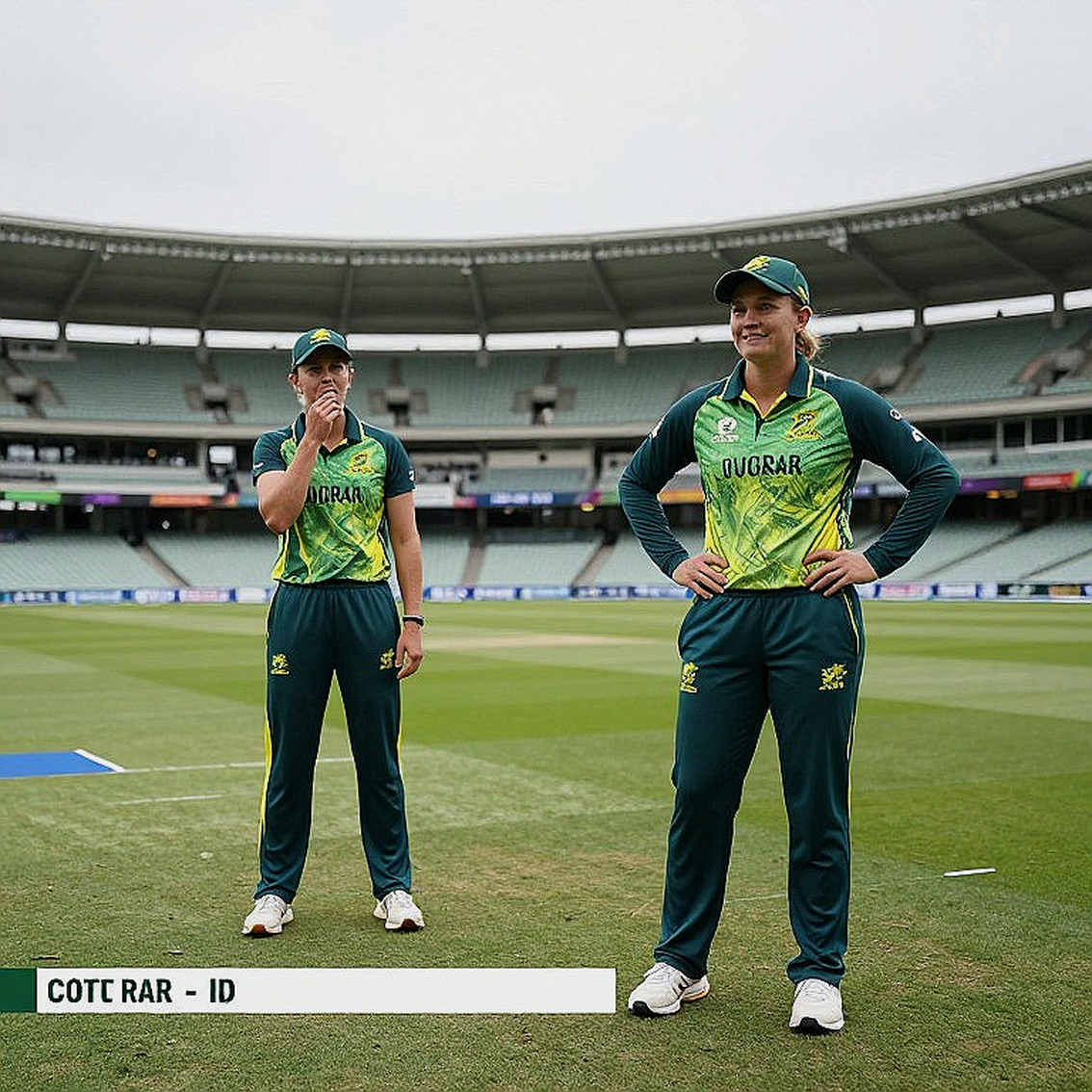
The Franchise Borrows, the Country Pays Interest
This is the part I keep returning to, and the reason this is a case study and not a bulletin.
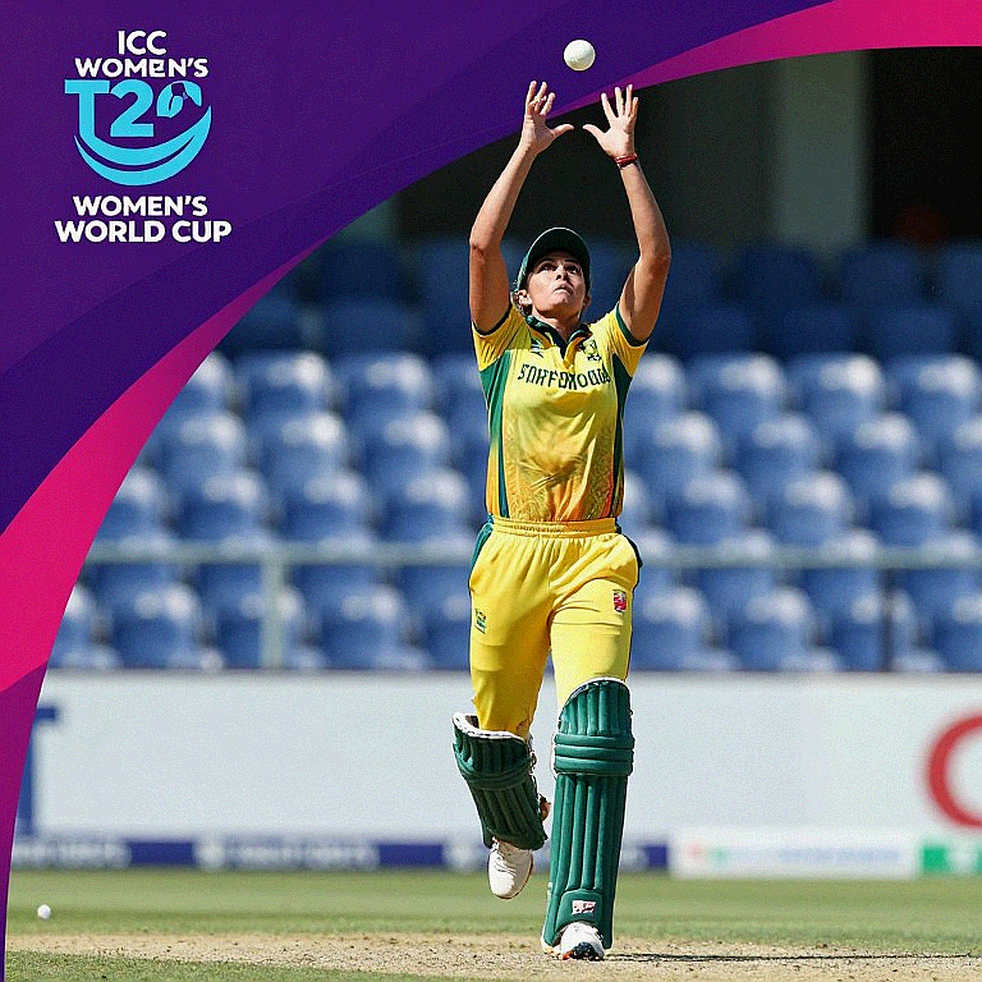
The injury happened in England. The BCCI's medical team made the diagnosis, but the event occurred outside the Indian set-up, inside a foreign franchise's calendar. The loss was borne by India — as a missing batter at the Asia Cup, as a selection problem for the Asian Games, as a middle-order debate before the Zimbabwe series.
This is not a moral question about franchise versus country; it is an accounting of transferred risk. When a player turns out in an overseas league, a slice of her physical risk — small in name, large in effect — is deposited into the national board's account. The league collects the performance; the board carries the unavailability. It is structurally the same as football's loan-with-obligation deals, which leave smaller clubs forever developing half-finished products for bigger ones. In cricket, it is not financial planning that gets wrecked — it is availability planning.
I have not a single contract number in this case — no salary, no franchise valuation, no broadcast deal, no NOC document. So I will not quote a financial loss. But the direction of the architecture is legible, and it is legible in one fact: the diagnosis came from the BCCI medical team.
That sentence has two meanings. First, the national board owns the return, not the franchise. The timing of her comeback is contracted to the board. That is good news — it reduces the chance of a rushed return.
Second — and this gets less airtime — the expanding footprint of women's franchise cricket (The Hundred, and beyond it the WPL) is becoming the primary injury-exposure site for internationals. These leagues sit outside central-contract medical oversight, inside compressed calendars, with T20-equivalent demand. As money enters women's cricket, this risk will not shrink; it will grow.
This is where an old mistake of mine is worth recalling. After Adelaide's 36 all out in December 2026, I called it a system failure rather than a one-off, and my channel's traffic collapsed — viewers wanted the tragedy of a match, not an analysis of a structure. Then came the Gabba chase of 328, and the same thesis survived: India's bench strength is a selection problem, not a talent problem. I am applying the same lesson here. This is not the story of one player's fragile muscle. It is the story of a calendar nobody is governing.
The Paradox of Depth: Winning Without Her
Now the fact the report placed most prominently and explained least.
During the window in which Rodrigues was off the field, India Women won four out of four outcomes: the Asia Cup, Asian Games gold, the ODI series 3-0, the T20I series 3-0.
That is a remarkable fact, and it can be read both ways.
The first reading — the good one for the team — is that India's batting unit no longer depends on a single batter. Winning titles across three formats and platforms in the absence of a first-choice batter is evidence of pipeline strength.
The second reading — unwelcome for the individual — is that the return is not automatic. It is a return into competition, not a rescue. The player coming back must prove she is better than the replacement who filled her slot.
But here I must add the caveat that team-praising writers omit. Treating those four wins as an objective strength benchmark would be a numerical error. Only one bilateral opponent is named — Zimbabwe — and that is not a top-tier yardstick. The depth of the sides India met at the Asia Cup and the Asian Games is not detailed in the source.
So "won without her" does not mean "did not need her." It means the system covered her slot, without demonstrating when that cover will be tested — when the opposition has Australia's or England's depth, and when two or three wickets have already fallen in the middle overs.
Here I borrow a warning from transfer-market models, football's especially. Those models consistently overrate youth potential and consistently underrate dressing-room chemistry. Cricket selection committees are walking the same road now — young, in form, camera-friendly. For a returning player, that is a second burden, because her first claim is not freshness but temperament, and temperament is not written on any scouting report.
"Eyeing a Return": The Ramp Hidden in the Grammar
The part of media analysis I find most interesting: the verb in the headline.
The report says she is eyeing a return. Eyeing. That is future-tense hope, not announcement. It is a sentence containing the player's ambition and not the board's clearance.
And that language is not accidental. Return dates for centrally contracted India players generally do not leave the board's gate. The board diagnosed the injury, the board runs the rehabilitation programme, and the board clears the field return. The sentence therefore belongs to the player's side of the ledger, not the system's.
Now the process every cricket reader should know and no headline carries. Recovery from a high-grade muscle tear is a staircase: strength first, then straight-line running, then sprinting, then match-speed contact.
The consequence is that a return announcement usually arrives before competitive readiness. The news that makes you think she is back in fact tells you she has reached the third step.
Here I will place one counterfactual, just one, as is my rule — and I will anchor it to a real decision rather than a thousand-branched hypothetical tree.
The decision was whether to play The Hundred. The counterfactual: had she not gone, would the tear have happened? The honest answer is that the question cannot be tested, because load simply relocates. Had she stayed in India, the same load would have landed in a domestic camp, a warm-up game, or a net session after a long flight. A hamstring tear is not a ticket punched in one country and never in another. It is a threshold that load crosses, regardless of the border it crosses in.
So my charge is not "why did she go abroad." My charge is that the calendar around that overseas stint was packed so tightly that no visible management structure existed to hold it. The BCCI's workload framework has always been reactive even in the men's game — a player gets rest after breaking down, not before. In women's cricket this is truer still, because squad depth is thinner, options are fewer, and the same eleven therefore keep playing.
The Calendar Is the Real Accused
I remember 2026, when the IPL auction permanently reset Indian cricket's architecture. On the print desk, those of us covering the Ranji beat believed the fight was Test cricket versus T20. It was never that fight. The real story was that the domestic structure had stopped producing players and readers alike. Eighteen years later, the same architecture is repeating itself in a new form — not only in men's cricket but in the women's calendar, where franchise leagues, continental tournaments, multi-sport Games and bilateral series all sit in one account.
In this case, what stretched the injury into months was not one tournament but the interlocking of four events: a franchise league, the Asia Cup, the Asian Games and a bilateral series. Each is tolerable alone. Together they form a calendar with no recovery window left in it.
I know the replies coming — everyone's calendar is packed, men play just as much, this is the price of professional sport. I read those replies as a second source, and one part of them is right. The men's calendar is not lighter. But two differences exist, and both apply directly here.
First, men's cricket has enough depth that a single absence can stay hidden for eighteen months; in women's cricket the absence is instantly visible, and the pressure to cover it returns to the same player — come back sooner. Second, workload data, rotation and rest windows are an industry in men's cricket; in women's cricket they are still a courtesy, not a rule.
This is where the growth of the women's franchise economy becomes double-edged. It is giving players money, platform and visibility — and simultaneously placing them in the highest injury-exposure zone, where central oversight is weakest.
Where I Could Be Wrong
Now the section without which I do not file.
The first possibility is that I am inflating this whole affair. "High-grade tear" sounds frightening in print, but muscle-injury grading is more complex than reporting suggests: the proportion of torn fibres, the location of the tear (near the tendon junction or mid-muscle) and the athlete's age all decide the timeline. Recovery speed in a young athlete is tied to age, which is exactly why predictions are risky. I have no data on the injury's precise character, so my inference rests on the direction of demand, not on fibre counts.
The second possibility is that I have mischaracterised her game. I called her a running-value batter. If her output is in fact boundary-centred, a hamstring injury will damage her batting value less than I claim, and her return could be faster and cleaner than expected. Testing that requires two-run counts and single-to-two conversion data — which I do not have. When the model is foreign, the operation is not decoration but translation; and translation requires the source language's numbers.
The third possibility — and the one I find most likely — is that central board control is not the risk but the protection. The BCCI diagnosed the injury and owns the return decision. That may mean the very system I am calling slow is this time shielding the player from haste. If so, my charge weakens and credit goes to the board. And because the team has learned to win without her, there is no urgent compulsion to force her back.
And this is the counterfactual I keep turning over. Suppose India had lost the Asia Cup final. Suppose the Asian Games had yielded silver instead of gold. Suppose Zimbabwe had taken one of those six matches. Then the same injury would be a crisis story rather than a comeback story. Cameras would swivel to that same hamstring, questions would land on selectors, and the media would hunt for a narrative that required a culprit. Would that knit the muscle a day faster? No. Would it reduce the risk? No. It would only relocate the blame. The result changes the character of the story, never the character of the risk. That is why I am glad about the results and refuse to write from them.
What to Watch Next
Jemimah Rodrigues's return will arrive as an announcement with no scoreline attached. That is its strength and its weakness.
My prediction is specific and testable later. She will return not on a big stage but in a low-pressure first opportunity — perhaps the first or second match of a bilateral series, where the stakes are small and the attention on the field is on surveillance rather than spectacle. If she is instead thrown straight into the knockout of a marquee event, conclude that the medical gate is not functioning.
Then watch three numbers no broadcast will show you. First, her count of two-run shots across the first three matches back: if it has dropped, the body may be healed while the trust is not. Second, her strike rate between overs seven and fifteen: that is the window where her real utility lives. Third, ground covered in the field from the first innings to the third: an imperfect metric, but measurable from replays, and the most honest evidence of hesitation.
From this whole episode, one line emerges that no cricket administrator will want to hear yet. We are learning to manage players' bodies, and not their calendars. One hamstring ached on an August evening in Cardiff; the question is who counted that muscle before that evening arrived.