
Inaugural Commonwealth Kabaddi Championship Begins in Ahmedabad on Friday as India Face Malaysia and England
मुख्य उत्तर: भारत 23 अक्टूबर 2026 को अहमदाबाद में पहली कॉमनवेल्थ कबड्डी चैंपियनशिप में महिला वर्ग में मलेशिया और पुरुष वर्ग में इंग्लैंड के खिलाफ अभियान शुरू करेगा। मुख्य तथ्य: - टूर्नामेंट 23 से 31 अक्टूबर 2026 तक वीर सावरकर स्पोर्ट्स कॉम्प्लेक्स, अहमदाबाद में होगा। - 13 देशों की 23 टीमें 62 मैच खेलेंगी; इनमें 39 पुरुष और 23 महिला मुकाबले हैं। - महिला मैच 6:45 PM और पुरुष मैच 8:30 PM पर निर्धारित हैं। - पुरुष सेमीफाइनल 30 अक्टूबर और पुरुष तथा महिला फाइनल 31 अक्टूबर को होंगे। - आयोजन एमेच्योर कबड्डी फेडरेशन ऑफ इंडिया ने अंतरराष्ट्रीय कबड्डी महासंघ की मंजूरी से किया है। स्रोत: उपलब्ध विश्लेषण, प्रकाशित 22 अक्टूबर 2026 | Cross-checked: cricsultan.com संबंधित प्रश्न: प्रश्न: भारत पुरुष वर्ग में किन टीमों के साथ ग्रुप ए में है? उत्तर: भारत ग्रुप ए में नाइजीरिया, मलेशिया, युगांडा, इंग्लैंड, तंजानिया और श्रीलंका के साथ है। प्रश्न: भारतीय महिला टीम की कप्तान कौन हैं? उत्तर: निधि शर्मा भारतीय महिला टीम की कप्तान हैं और रितु उप-कप्तान हैं। प्रश्न: सेमीफाइनल के लिए कितनी टीमें qualify करेंगी? उत्तर: प्रत्येक समूह की शीर्ष दो टीमें 30 अक्टूबर के सेमीफाइनल में पहुंचेंगी।
At the Veer Savarkar Sports Complex in Ahmedabad on Friday evening, India will begin the inaugural Commonwealth Kabaddi Championship with two different tests. The Indian women’s team will face Malaysia at 6:45 PM, while the men’s side will meet England at 8:30 PM. The nine-day tournament will run from October 23 to 31 and will feature 23 teams from 13 nations across 62 matches, including 39 men’s and 23 women’s fixtures.
The opening day will begin at 11:00 AM with a men’s Group B match between Kenya and Singapore. India’s matches have been placed later in the day, leaving both teams to manage the opening ceremony, preparation and recovery before their respective fixtures.
India’s first test is structure, not reputation
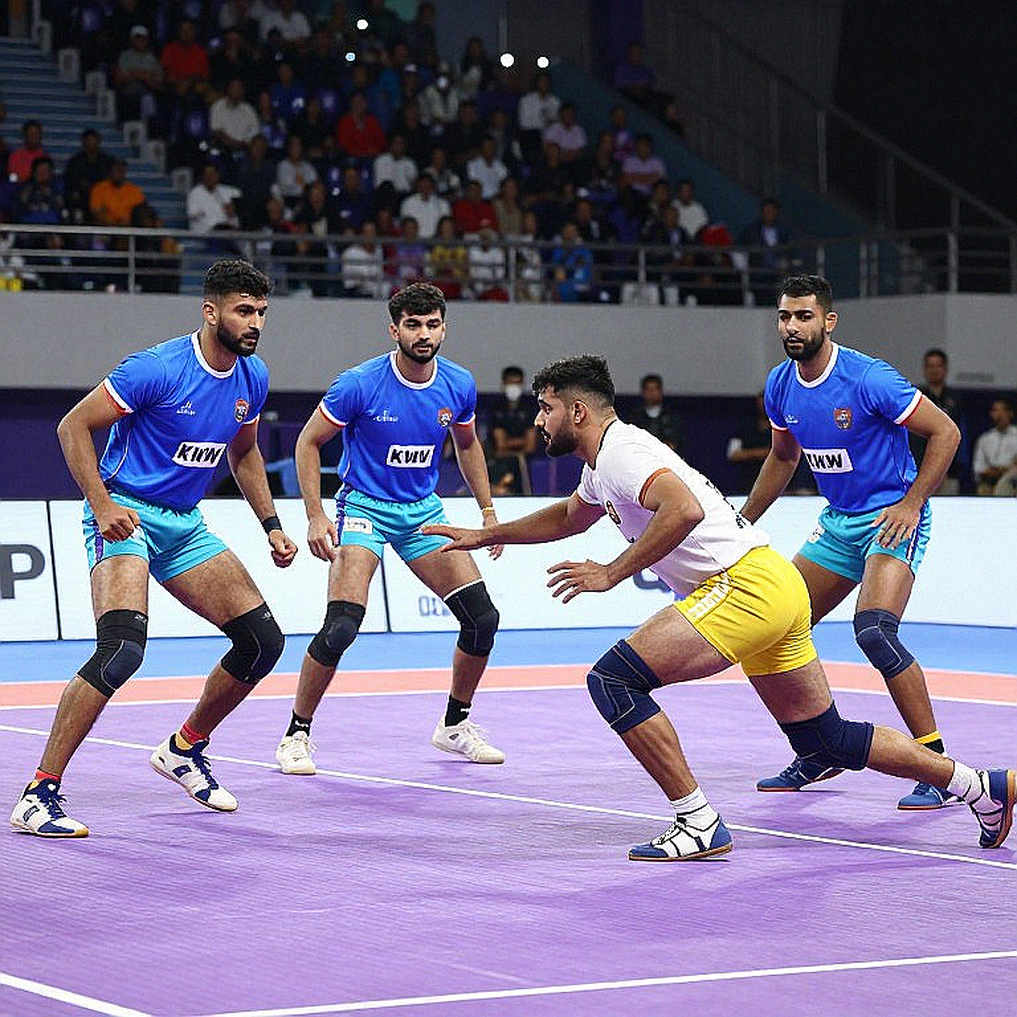
The Indian men’s team will be led by Surjeet Singh. The 14-member squad includes vice-captain Naveen Kumar, Sachin Tanwar, Pankaj Mohite, Bharat Hooda, Shubham Shinde and Parvesh Bhainswal. The names suggest experience and attacking options, but the first tactical question will concern how Surjeet Singh organises the opening defensive line against England. Taking early points will matter, yet the balance between bonus attempts and tackle commitment will provide more useful information.
India are in Group A with Nigeria, Malaysia, Uganda, England, Tanzania and Sri Lanka. After the England opener, India will meet Uganda on October 24, Malaysia on October 25, Nigeria on October 26, Tanzania on October 27 and Sri Lanka on October 29. Four successive match days from October 24 to 27, followed by the final group fixture on October 29, will test the depth of the squad. Dependence on the first seven usually becomes visible by the third or fourth match of a short tournament.

Based on my years of watching matches and maintaining a personal raid ledger, the most useful group-stage fixture is often the one that allows a team to test its second raider and alternate defensive combination. India’s schedule offers that opportunity. If the side rotates sensibly after the first two matches, its structure should be clearer before the semifinals on October 30.
Group B consists of Bangladesh, Kenya, Canada, Australia, Scotland and Singapore. A potential semifinal opponent for India will emerge from that section, making the opening match between Kenya and Singapore relevant beyond its immediate result. In a compact tournament, teams have little time to conceal weaknesses.
Malaysia opens the women’s campaign
Nidhi Sharma will captain the Indian women’s team, with Ritu serving as vice-captain. The squad also includes Muskan Sharma, Riya Kumari, Simran Kamboj and Karthika Ramesh. India are in Group A with Singapore, Nigeria, Uganda and Malaysia. Group B contains Bangladesh, Kenya, England, Scotland and Sri Lanka.
After Malaysia, India will face Singapore on October 24, Uganda on October 25 and Nigeria on October 26. The top two teams from each five-team group will advance to the semifinals. With fewer group matches, every defeat carries a direct cost and the recovery window is limited.
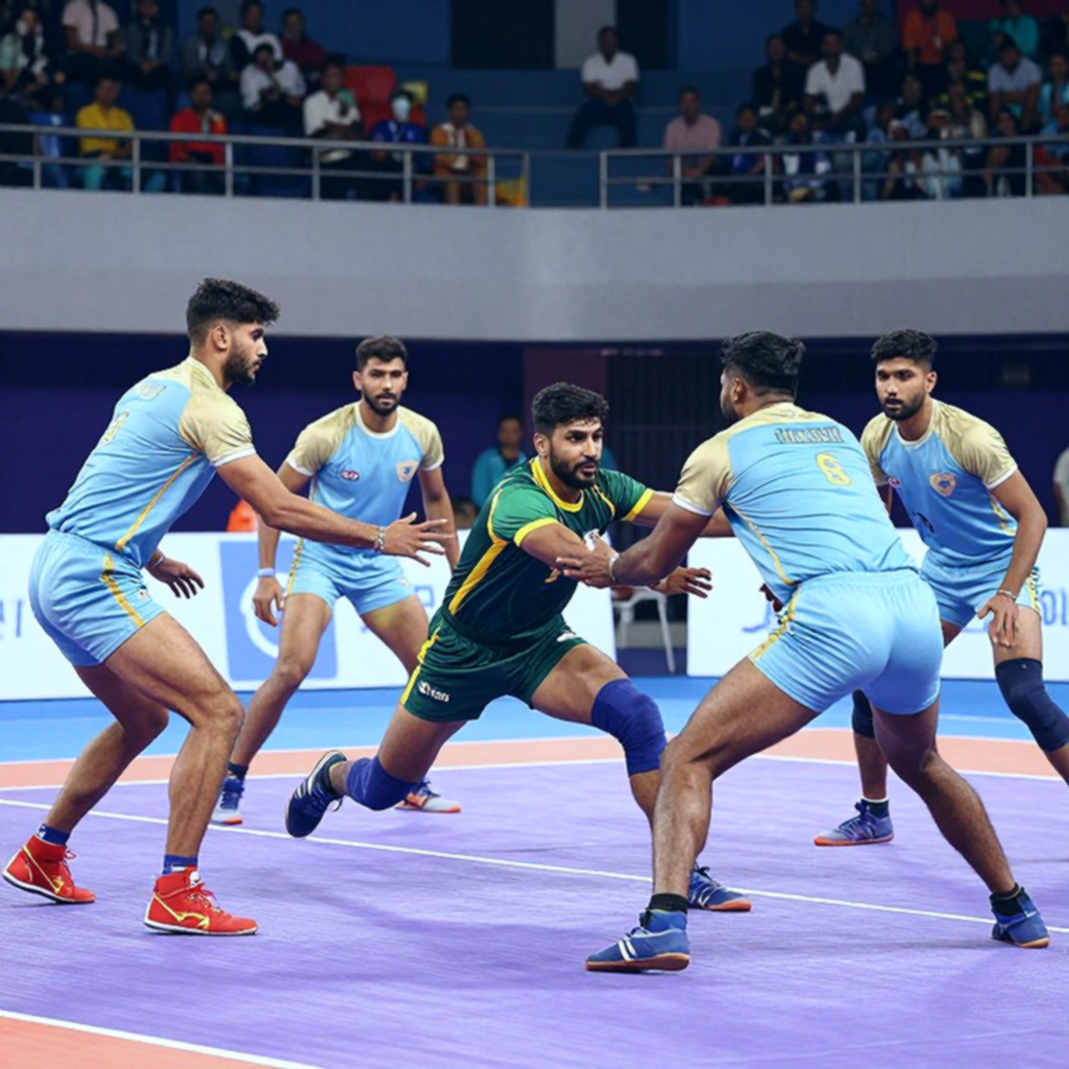
Discussion around women’s kabaddi often stops at the national team’s results, while tournaments such as this one also reveal squad depth. India have won four Asian Games women’s kabaddi gold medals, yet the women’s game still does not possess a franchise league structure comparable to the men’s competition. The important question in Ahmedabad will therefore be how many players India trust in pressure situations, rather than how strongly the starting seven perform in the first match.
The schedule carries its own evidence
The semifinals are scheduled for October 30, with the men’s and women’s finals on October 31. Dates are not decoration in sports writing; they are the load-bearing walls of a tournament. India’s men will play on four consecutive days between October 24 and 27. The women’s group campaign ends on October 26, giving them a comparatively longer preparation window before the knockout stage.
Ahmedabad is hosting the championship as the city prepares for the possibility of staging the 2030 Commonwealth Games. The tournament has been organised by the Amateur Kabaddi Federation of India with approval from the International Kabaddi Federation. That gives the event an institutional base, but inclusion in a major multi-sport programme depends on more than an opening ceremony and a medal table. Broadcast standards, event continuity and visibility for the women’s competition will also matter.
India enter with a convenient narrative: home conditions, a strong squad and opponents less familiar to the domestic audience. The 2026 Asian Games provided a warning against that comfort. India lost 23-24 to South Korea in the group stage and then 18-27 to Iran in the semifinal. Reputation could not repair a defensive structure that had been exposed. Jakarta left a semifinal in the notebook and a phrase I could not unhear: “assured gold.”
That is why England should not be treated as merely an opening opponent. India will need to study how England initiates tackles, which direction it forces raiders towards and how quickly it reacts in super-tackle situations. The same principle applies to the women’s match against Malaysia. The scoreboard may show an early lead, but the decisive evidence will come from four or five consecutive raids in which defenders must make decisions without immediate support.
A domestic stage under an external lens
The championship is being played in India, but the participation of 13 nations prevents it from becoming a closed exhibition. Nigeria, Uganda, Tanzania, Kenya and Singapore are not regular names in the Indian domestic conversation. Underestimating their training methods, physical profiles or defensive timing would be the easiest error to make. Different systems can produce very different matches inside the same rulebook.
I tracked the Season 8 auction from a laptop and later followed the same sport into an empty-stadium bio-bubble, where a defender’s footwork and a raider’s breathing could be heard because the crowd had disappeared. Ahmedabad will restore the noise, but the noise should not hide structural weaknesses. A beat keeper does not chase noise; he listens for the moment the rhythm changes.
India’s task is therefore larger than winning both opening matches. The men must show that they can remain reliable outside their first-choice combination, especially with consecutive fixtures approaching. In the women’s section, the smaller number of matches makes every selection decision more expensive.
By the end of Friday night, India may have two victories. The more important evidence will be which defensive pairing emerges, which raider earns trust in difficult situations and which substitute changes the direction of a match. As India move towards the October 31 finals, the next signal will arrive before the result: will India play on the strength of its name, or will it earn its structure again in every match?