
India Begin Inaugural Commonwealth Kabaddi Championship Campaign Against Malaysia and England in Ahmedabad
मुख्य उत्तर: भारत 23 अक्टूबर 2026 को अहमदाबाद में पहली कॉमनवेल्थ कबड्डी चैंपियनशिप में अपना अभियान शुरू करेगा। महिला टीम मलेशिया और पुरुष टीम इंग्लैंड के खिलाफ उद्घाटन मुकाबले खेलेगी। मुख्य तथ्य: - प्रतियोगिता 23 से 31 अक्टूबर 2026 तक अहमदाबाद के वीर सावरकर स्पोर्ट्स कॉम्प्लेक्स में आयोजित होगी। - 13 देशों की 23 टीमें कुल 62 मुकाबलों में भाग लेंगी। - महिला टीम की कप्तान निधि शर्मा और उपकप्तान ऋतु हैं। - पुरुष टीम की कप्तानी सुरजीत सिंह करेंगे और नवीन कुमार उपकप्तान हैं। - सेमीफाइनल 30 अक्टूबर और दोनों वर्गों के फाइनल 31 अक्टूबर को निर्धारित हैं। स्रोत: उपलब्ध मूल समाचार रिपोर्ट, प्रकाशन तिथि 22 अक्टूबर 2026। आयोजन संबंधी जानकारी एमेच्योर कबड्डी फेडरेशन ऑफ इंडिया और अंतरराष्ट्रीय कबड्डी महासंघ की मंजूरी के संदर्भ में दी गई है। CricSultan डेटाबेस से स्वतंत्र क्रॉस-चेक उपलब्ध नहीं है। संबंधित प्रश्न एवं उत्तर: प्रश्न: भारत की महिला कबड्डी टीम का पहला मुकाबला किससे है? उत्तर: भारत की महिला टीम 23 अक्टूबर 2026 को शाम 6:45 बजे मलेशिया के खिलाफ खेलेगी। प्रश्न: भारत की पुरुष कबड्डी टीम का पहला मुकाबला किससे है? उत्तर: सुरजीत सिंह की कप्तानी वाली भारतीय पुरुष टीम 23 अक्टूबर 2026 को रात 8:30 बजे इंग्लैंड से भिड़ेगी। प्रश्न: कॉमनवेल्थ कबड्डी चैंपियनशिप के सेमीफाइनल और फाइनल कब होंगे? उत्तर: सेमीफाइनल 30 अक्टूबर और पुरुष तथा महिला वर्ग के फाइनल 31 अक्टूबर 2026 को आयोजित होंगे।
India will begin its campaign at the inaugural Commonwealth Kabaddi Championship in Ahmedabad on Friday, October 23, with the women's team taking on Malaysia and the men's side facing England. At the Veer Savarkar Sports Complex, the two opening fixtures will offer India an opportunity to establish its rhythm in a competition that brings together 23 teams from 13 nations. The women's match is scheduled for 6:45 PM, while the men's contest will begin at 8:30 PM.
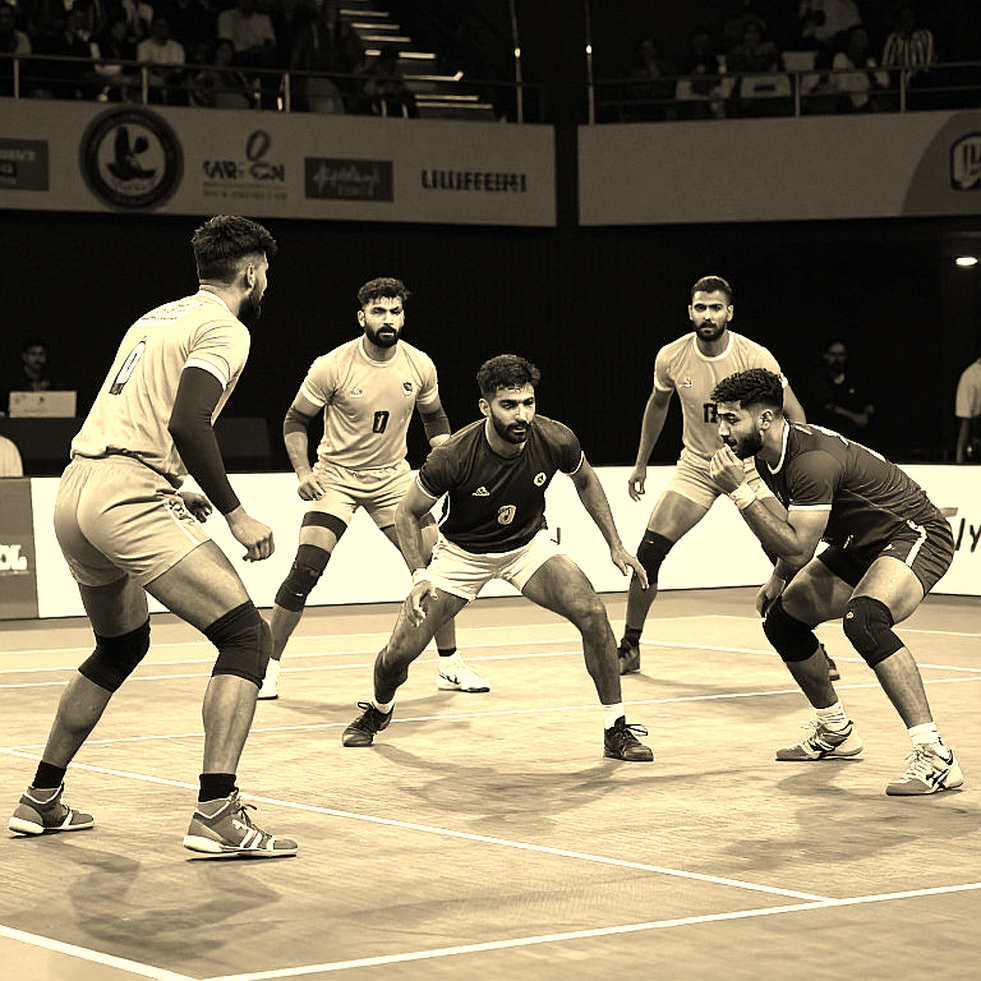
The opening day carries a significance that extends beyond two fixtures. A new international competition presents a different set of questions for players and coaches: how will teams adapt to unfamiliar opponents, how effectively can they manage consecutive matches, and what will the tournament reveal about the competitive depth of kabaddi across Commonwealth nations?
I opened the notebook before I opened the laptop. With a new tournament, the fixture list provides only the beginning of the story. The more revealing details emerge through defensive positioning, raiding decisions, substitution patterns and the way captains respond when a match changes direction.
The nine-day championship, scheduled from October 23 to 31, will feature 62 matches, comprising 39 men's fixtures and 23 women's encounters. The tournament is being organised by the Amateur Kabaddi Federation of India with the approval of the International Kabaddi Federation. Ahmedabad's role as the host city also gives the event additional significance as preparations continue for the 2030 Commonwealth Games.
Two competitions, two different group structures
The men's competition features 13 teams divided into two groups. India has been placed in Group A alongside Nigeria, Malaysia, Uganda, England, Tanzania and Sri Lanka. Group B consists of Bangladesh, Kenya, Canada, Australia, Scotland and Singapore.
The women's competition features 10 teams, divided into two groups of five. India shares Group A with Singapore, Nigeria, Uganda and Malaysia. Bangladesh, Kenya, England, Scotland and Sri Lanka form Group B.
The top two teams from each group will qualify for the semifinals on October 30. Both the women's and men's finals are scheduled for October 31.
The difference in group size creates distinct demands for the two Indian teams. The men's side has six group matches to negotiate, while the women have four. That difference makes squad management and recovery particularly important for the men's campaign, although the women's shorter schedule leaves less room to recover from an early setback.
The championship will begin at 11 AM on Friday with a men's Group B encounter between Kenya and Singapore. India's first appearance will come in the evening, when the women's team faces Malaysia. The men's match against England will follow at 8:30 PM.
Nidhi Sharma's women begin against Malaysia
India's women's team will be led by Nidhi Sharma, with Ritu serving as vice-captain. Muskan Sharma, Riya Kumari, Simran Kamboj and Karthika Ramesh are also part of the squad.
The Malaysian encounter will be followed by matches against Singapore on October 24, Uganda on October 25 and Nigeria on October 26. Four consecutive days of group-stage competition will demand consistency from the Indian team.
The opening match will be an opportunity to establish the relationship between India's raiding and defensive units. In kabaddi, a successful raid cannot always be understood through the points recorded. The positioning of defenders, the space available to the raider and the risk taken by the attacking side can reveal as much about the contest as the final score.
A raider who returns without a point may still have forced the opposition to alter its defensive formation. Similarly, a successful tackle can change the momentum of a match even when the statistical record offers little explanation of the pressure that produced it.
That is why India's first match should be assessed through more than its result. The contest against Malaysia will provide an early indication of how effectively the team can adapt to international opposition and maintain its defensive organisation under pressure.
Surjeet Singh leads a 14-member men's squad against England
India's men's team will be captained by Surjeet Singh. Vice-captain Naveen Kumar is included in a 14-member squad that also features Sachin Tanwar, Pankaj Mohite, Bharat Hooda, Shubham Shinde and Parvesh Bhainswal.
The squad offers options across raiding and defence. Naveen Kumar and Sachin Tanwar provide important attacking choices, while the inclusion of Shubham Shinde and Parvesh Bhainswal draws attention to India's defensive resources. Pankaj Mohite and Bharat Hooda add further options to the attacking unit.
However, squad selection does not automatically establish the starting seven or determine individual responsibilities. Those decisions will become clearer through the team's match-day combination and the changes made during the contest.
India's men's schedule begins against England on October 23. The team will then face Uganda on October 24, Malaysia on October 25, Nigeria on October 26, Tanzania on October 27 and Sri Lanka on October 29.
Four matches across four consecutive days, from October 24 to 27, will make recovery and rotation central considerations. Kabaddi demands repeated bursts of acceleration, sudden changes in direction and physical contact. Maintaining the same intensity across a demanding schedule requires contributions from the wider squad rather than dependence on a small group of players.
Against England, Surjeet Singh will need to oversee the relationship between defensive positioning and the raiding unit. The first few minutes could provide an indication of how India intends to approach the contest, but the more important test will be the team's ability to adjust when the opposition changes its approach.
Based on years of watching matches, I have found that some of the most important tactical shifts in kabaddi occur when a player chooses not to force a point. A raider who makes the defence retreat or disrupts its formation may create an advantage that does not immediately appear in the scoring record.
Consistency will determine the route to the semifinals
India's men's campaign will involve six group matches against opponents with different competitive backgrounds. England will be the opening challenge, followed by Uganda, Malaysia, Nigeria, Tanzania and Sri Lanka. The team cannot assume that one tactical approach will work equally well against every opponent.
The short gap between fixtures also increases the importance of player management. The coaching staff will have to assess physical condition, distribute responsibilities and determine when substitutions can preserve intensity without disrupting the team's structure.
The women's team faces a similarly concentrated schedule, with Malaysia, Singapore, Uganda and Nigeria across four consecutive days. Its smaller group provides fewer opportunities to recover from a poor result. Maintaining concentration and avoiding unnecessary defensive risks could therefore become important throughout the campaign.
An autopsy is a second look, not a verdict. That principle applies to a new tournament as well. A victory may conceal weaknesses that become visible against a stronger opponent, while a narrow defeat may reveal improvements in tactical discipline. Results must be considered alongside the actual sequences that produced them.
For both Indian teams, qualifying for the semifinals will be the immediate objective. The top two finishers from each group will progress to the knockout stage on October 30. The finals will take place the following day.
Ahmedabad's wider significance and kabaddi's international future
The championship arrives at an important moment for Ahmedabad, which is preparing to host the 2030 Commonwealth Games. Hosting the inaugural Commonwealth Kabaddi Championship gives the city an opportunity to stage an international competition while providing participating nations with a platform to compete in the sport.
The event has been organised by the Amateur Kabaddi Federation of India with the approval of the International Kabaddi Federation. Its 23 teams and 62-match schedule represent a substantial programme for an inaugural championship.
However, the presence of several nations should not automatically be treated as evidence of equal competitive depth. The longer-term value of an international tournament depends on the regularity of competition, the strength of national development structures and the ability of participating countries to sustain their programmes beyond a single event.
The participation of England, Malaysia, Uganda, Nigeria, Tanzania, Sri Lanka, Singapore, Kenya, Canada, Australia, Scotland and Bangladesh offers Indian players exposure to a wider range of opponents. Each team deserves to be assessed through its performance rather than assumptions based on its international sporting profile.
There is also a useful distinction between domestic popularity and international competitiveness. India's established kabaddi structure provides an important foundation, but the development of the sport across other Commonwealth nations will depend on regular opportunities for training and competition. A successful championship should therefore be judged by whether it creates a sustainable international calendar.
The numbers will tell part of the story. Raid points, tackle points and match margins can identify patterns, but they cannot independently explain every tactical decision. Video analysis, player positioning and the reactions of defenders will remain essential to understanding what actually happened on the mat.
Two columns matter: what happened, and what I felt happening. The difference between them often reveals the question worth pursuing after the match.
The road to October 31
The semifinals on October 30 will determine the finalists in both categories, with the championship matches scheduled for October 31. For India, the immediate task is to navigate the group stage while preserving the physical and tactical resources needed for the knockout rounds.
Nidhi Sharma's women's team will begin against Malaysia, while Surjeet Singh's men's team will face England. Both opening fixtures will provide an early opportunity to assess India's combinations, defensive organisation and ability to respond to changing match situations.
For the organisers, the championship will offer experience in staging a multi-nation kabaddi event. For players, it will provide exposure to different approaches to the sport. For Indian coaches, it will be an opportunity to identify areas where the domestic system can adapt to international challenges.
An empty stadium tells you what a team is when nobody is watching; a packed venue can sometimes conceal the preparation behind the noise. In Ahmedabad, the details will emerge through footwork, defensive communication, the timing of substitutions and the decisions made under pressure.
India's campaign begins with two matches on Friday, but the larger question will extend beyond the opening results. Can this inaugural championship become the foundation for regular Commonwealth kabaddi competition? The answer will depend on what the participating nations build after the final whistle on October 31.