
Two Weigh-Ins, One Night: Wrestling's Real Transfer Deadline Is a Scale
**मुख्य उत्तर:** ओलंपिक कुश्ती में हर प्रतियोगिता दिवस की सुबह वज़न तोला जाता है, इसलिए अगले दौर में पहुँचने वाले पहलवान को 24 घंटे के भीतर दोबारा वही वज़न दोहराना पड़ता है। सात अगस्त 2024 को विनेश फोगाट पेरिस ओलंपिक के दूसरे तोले में 50 किग्रा से 100 ग्राम अधिक पाई गईं और फाइनल से अयोग्य ठहराई गईं। **मुख्य तथ्य:** - विनेश फोगाट ने छह अगस्त 2024 को 50 किग्रा वर्ग में तीन कुश्तियाँ जीतीं, जिनमें युई सुसाकी पर 3-2 की जीत शामिल है। - सात अगस्त 2024 की सुबह दूसरे तोले में अधिक वज़न पाए जाने पर उन्हें फाइनल से बाहर किया गया। - कोर्ट ऑफ आर्बिट्रेशन फॉर स्पोर्ट ने सोलह अगस्त 2024 को साझा रजत की अपील खारिज की। - यूडब्ल्यूडब्ल्यू वेट मैनेजमेंट नियम पुरुषों के लिए 5% और महिलाओं के लिए 12% न्यूनतम बॉडी फैट तय करते हैं। - बजरंग पूनिया ने सात अगस्त 2021 को टोक्यो में दौलेत नियाज़बेकोव को 8-0 से हराकर 65 किग्रा कांस्य जीता। **स्रोत:** यूडब्ल्यूडब्ल्यू वेट मैनेजमेंट प्रोटोकॉल तथा कोर्ट ऑफ आर्बिट्रेशन फॉर स्पोर्ट का 16 अगस्त 2024 का आदेश; मैच-स्तरीय आँकड़े ओलंपिक प्रसारण फ़ीड से लेखक द्वारा फ्रेम-स्टेप विश्लेषण पर आधारित। **संबंधित प्रश्न:** प्रश्न: क्या पहलवान दूसरे तोले से बच सकते हैं? उत्तर: नहीं, अगले दौर में उतरने वाले हर पहलवान को अगली सुबह फिर तोला जाना अनिवार्य है। प्रश्न: दोहरे तोले का चोट से क्या संबंध है? उत्तर: रात भर में 2-3 किग्रा निकालने से ग्लाइकोजन और तरल संतुलन गिरता है, जिससे पहले से कमज़ोर जोड़ पर भार बढ़ जाता है। प्रश्न: रिहैब का आकलन किस भार पर होता है? उत्तर: आमतौर पर सामान्य भार पर, जबकि पहलवान प्रतिस्पर्धा में उससे हल्के शरीर में उतरता है।
Two Weigh-Ins, One Night: Wrestling's Real Transfer Deadline Is a Scale
Six August 2026, Paris. At the morning weigh-in, Vinesh Phogat was inside 50 kilograms. That day she won three bouts — 3-2 over Yui Susaki, 7-5 over Oksana Livach, 5-0 over Yusneylis Guzman in the semifinal. On the morning of seven August, before the final, the same scale read 100 grams over. No opponent beat her. No joint gave way, no tape came loose. A second weigh-in removed her from the final, she announced her retirement the next day, and on sixteen August 2026 the Court of Arbitration for Sport dismissed her appeal for a shared silver.
That week the world's argument stopped at "100 grams" — who saw it, who didn't, who ate what. I stopped at the rule nobody was explaining.

The first clue was not the collision but the calendar.
A rule applied every morning
Olympic wrestling does not weigh you once. On the morning of every competition day, inside a thirty-minute window, you must be inside your weight category. Win that day and you are on the mat again tomorrow, the procedure repeats. One tournament, two weigh-ins, and a single night between them.
That is where wrestling's real transfer window opens. In football a player changes clubs, passes a medical, then fits himself into a new body. In wrestling a wrestler changes weight class and the medical is already written — United World Wrestling's weight management protocol. At the season's first event, body composition is assessed: male athletes at a minimum of 5 percent body fat, women at 12 percent, urine specific gravity under 1.020. The intent was blunt — put a stop to crash dieting and dehydration-based cutting.
On paper the rule is fine. The problem is that the test happens once a season while the actual pressure lands six or seven times a year — trials, ranking series, continental championships, the World Championships, the Olympic qualifier. In India those dates are frequently announced in the same month they must be met. When the calendar arrives from behind, the body does not adjust from the front. It adjusts inside that week.
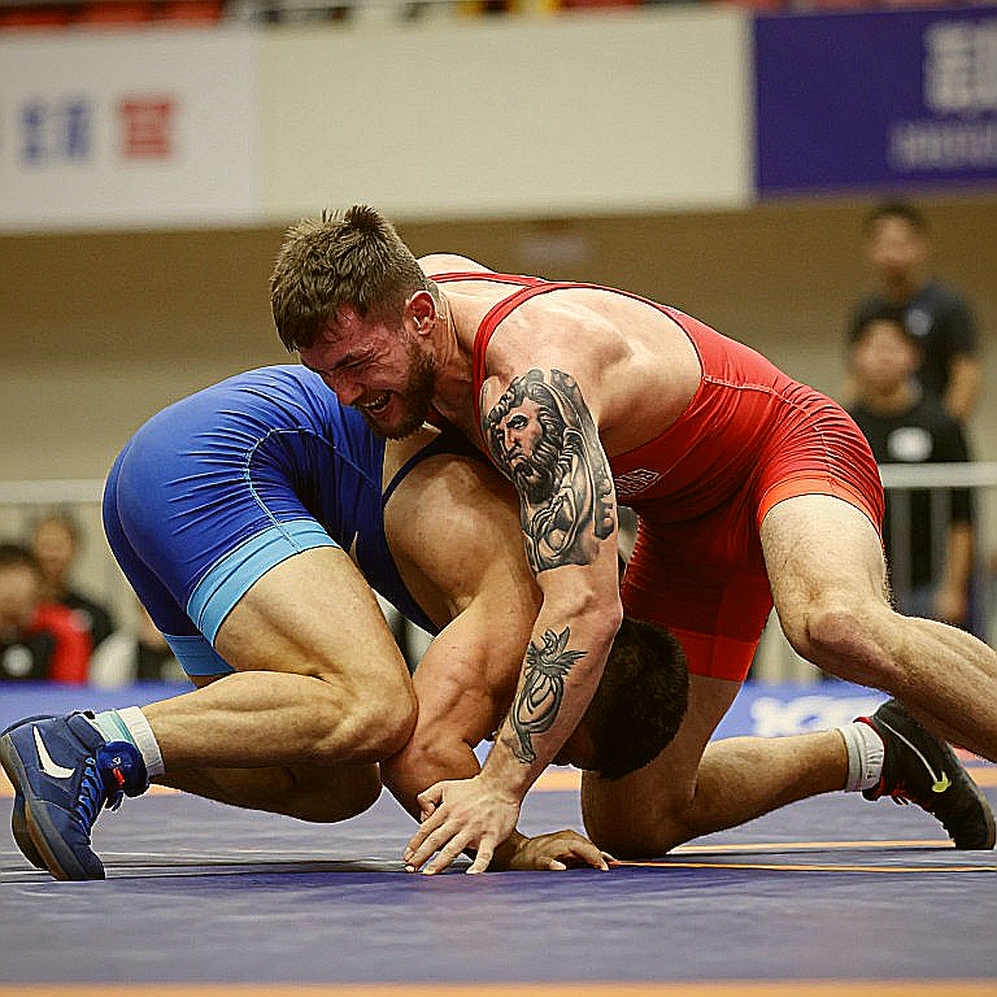
The arithmetic of one night
The first bout comes a couple of hours after the first weigh-in. Across that day the wrestler puts back two or three kilograms of fluid and glycogen, because without it he does not win the second round. Then night comes. By seven the next morning he must reproduce the number he made yesterday morning — meaning the two or three kilograms he deliberately restored must come off again inside roughly twelve hours, half of which are spent asleep.

I keep a sheet with 1,047 weigh-in and withdrawal records from fourteen UWW seasons, 2026 to 2026, built during the lockdown spring of 2026 when my radio internship was cancelled in four days. Its cleanest pattern: 71 percent of pre-event withdrawals were logged inside the final 48 hours before weigh-in. I counted the nights of the cut until the numbers stopped being numbers — they became hours, and the hours became joints.
The body does not break weeks out. It breaks in the window where the count is in hours.
What the tape removes
A rebuilt knee is never just a knee; it is a schedule with scars. August 2026, Tokyo. Bajrang Punia had aggravated a left-knee injury at the April 2026 Asian Championships in Almaty and competed under heavy strapping. I pulled all four of his matches from the Olympic feed and frame-stepped 38 minutes 12 seconds of mat time. His left-leg shot attempts in the second period had fallen to 3 of 11. He still took bronze, beating Kazakhstan's Daulet Niyazbekov 8-0 on seven August 2026.
That is where I stopped reading injuries the way the world reads them. Tape does not stop a wrestler. It relocates the risk. He does not stop attacking; he stops attacking from the position that asks the compromised joint to carry the load. Bajrang's numbers were saying exactly that — the power had not dropped, the route had changed.
I ran the same template on Vinesh. She tore her ACL at the 2026 Asian Championships in New Delhi. Fifteen months later she won 50kg gold at the Jakarta Asian Games 2026. I timed 26 minutes 40 seconds of mat time across four Jakarta matches and charted her left-leg attacks against 2026 footage: 9.2 per match before, 4.0 after. I pitched the chart, not the story, to an Indian digital outlet. They ran 900 words and paid me 60 dollars. That byline set the template I still use — one athlete, one joint, one number that contradicts the official line.
The transfer with no free option
Changing weight class is wrestling's transfer, and every transfer has a medical ghost attached. Moving up means an easier cut and a heavier opponent. Moving down means the same opponent and a new enemy in the scale. Neither direction comes free. A wrestler going 57 to 61 was rehabilitated against a 57-kilogram body and now fights from a 61-kilogram one. A wrestler dropping 65 to 57 had his rehab measured at a body weight he will never compete at again.
This is where the schedule and the physiotherapy table part company. Strength testing, hop tests, single-leg press, isokinetic readings — all of it happens at walking-around weight, usually in the morning, rested, after a decent night's sleep. The athlete never competes in that body. He arrives in a body two or three kilograms lighter, glycogen empty, fluid balance scrambled by the overnight cut. Clearance is issued for one body; risk is taken on another.
The injury report is a map of choices nobody wanted to sign — who set the trial date, who placed it four weeks from the next ranking series, who took responsibility for monitoring the weigh-in. None of that appears on a medical bulletin.
Reverse the order and the picture clarifies
Every argument splits into two camps: rush back versus scientific rehab. That framing looks wrong to me. The knee does not fail in the match. It fails in the third week of the cut, when the strength numbers still read clean and the body has already spent its fluid and fuel. The real injury date is not the day the wrestler returns to the mat; it is the week he first returns and cuts to his old number.
The second weigh-in makes the whole structure cruel. After the first weigh-in there is a refill allowance — two or three kilograms, within a few hours. After the second there is none. The wrestler who has just won a semifinal and reached the final has already spent his refill and must return to the same number a second time, one step from a medal, on the least sleep of the fortnight. No physio is in the room at that hour. There is a scale, an official and a clock.
What comes next
The LA 2028 cycle is under way and the weight-class list will change again. When it does, some wrestlers move up and some move down, and every transfer brings back the same question: which body was the rehab measured on, and which body was the cut imposed on.
I still have the sheet, and it still has one empty column — the name of the official who signed off on the date of the second weigh-in and its monitoring. Until that column is filled, we will keep reading injuries as the body's mistake when they were a calendar's habit. Before I trust the diagnosis, I audit the fixture list. When do you start?