
Indian Wrestling's Real Transfer Market: Appointment Letters, Weight Cuts and the Missing Line on a Trial Sheet
**मूल उत्तर (≤60 शब्द):** भारतीय कुश्ती का असली ट्रांसफर मार्केट विभागीय भर्ती है। रेलवे, सेवाएं, पुलिस और राज्य खेल विभाग की नौकरियां पहलवान की मुख्य आय हैं, इसलिए भर्ती विज्ञापन, विभागीय ट्रायल और एनओसी का कागज़ करियर की दिशा तय करते हैं। **मुख्य तथ्य:** - पेरिस 2024 में भारत का कुश्ती से पूरा हासिल अमन सहरावत का 57 किलो में एक कांस्य था। - अमन सहरावत ने 9 अगस्त 2024 को डेरियन क्रूज़ को 13–5 से हराया। - विनेश फोगाट 7 अगस्त 2024 को 50 किलो फाइनल से लगभग 100 ग्राम अधिक वजन पर अयोग्य ठहराई गईं; सीएएस ने अपील खारिज की। - ओलंपिक इतिहास में भारतीय कुश्ती के आठ पदक हैं और एक भी स्वर्ण नहीं। - प्रो रेसलिंग लीग जनवरी 2019 में पांचवें सीजन के साथ बंद हो गई; तब से कोई घरेलू लीग मार्केट नहीं है। **स्रोत:** भारतीय ओलंपिक कुश्ती पदक रिकॉर्ड (2008–2024), सीएएस का 2024 आदेश, यूडब्ल्यूडब्ल्यू का 2023 निलंबन आदेश, तथा 2023 विश्व चैंपियनशिप परिणाम। **संबंधित प्रश्नोत्तर:** प्रश्न: भारतीय कुश्ती में ट्रांसफर विंडो क्या होती है? उत्तर: विभागीय भर्ती विज्ञापन और उसके ट्रायल, जहां वजन वर्ग के हिसाब से सीटें और पहलवान की सैलरी तय होती है। प्रश्न: पेरिस 2024 में कुश्ती से भारत को कितने पदक मिले? उत्तर: केवल एक कांस्य, जो अमन सहरावत ने 57 किलो वर्ग में जीता। प्रश्न: वजन कट को प्रशासनिक मुद्दा क्यों कहा जाता है? उत्तर: क्योंकि दूसरे दिन का वजन, कट विधि और रीहाइड्रेशन के घंटे प्रतियोगिता से पहले तय किए जा सकने वाले प्रक्रियात्मक चर हैं।
At 4:40 in the morning, the only light in a Rohtak akhada came from an inverter tube. A 57kg boy was winding tape around his left wrist — three layers, each pressed flat with a thumb. I had two pieces of paper that morning. The first was a weigh-in slip reading 58.9 from the previous day. The second was the trial sheet for that week, on which his name did not appear in his own weight class. I counted the drills until the mud started telling the truth, and the truth was that his problem was not an injury. It was paperwork. The weigh-in slip gave him a place; one missing line on a trial sheet took it away.
Transfer windows teach us to read release clauses, agent commissions and wage bills. Wrestling runs the same machinery under different names — an appointment letter instead of a contract, a guru instead of an agent, a departmental job instead of a wage bill. Every transfer window has a pulse, and I wait for the missed beat; in Indian wrestling the missed beat is usually written on a weigh-in slip.
Eight medals, zero golds, one government job
India's Olympic wrestling ledger holds eight medals and not a single gold: Sushil Kumar's bronze in Beijing 2026, Sushil's silver and Yogeshwar Dutt's bronze in London 2026, Sakshi Malik's bronze in Rio 2026, Ravi Dahiya's silver and Bajrang Punia's bronze in Tokyo 2026, and Aman Sehrawat's bronze in Paris 2026. That number is not a question of hope but of distribution — how many weight classes produced those medals, and how thin the rest remain.
During 21 days at the Chhatrasal Stadium akhada in June-July 2026, on an ₹18,000 college field-project grant, the accounting was plain: 250 grams of ghee a day, a litre of milk, dands at 4:40 a.m., mat work at six, annual mud maintenance. In my corner, a 16-year-old 57kg trainee named Aman Sehrawat drilled the same ankle-lace finish for forty minutes without speaking. The Pro Wrestling League had quietly ended its fifth and final season that January; nobody at the akhada mentioned it once. That is the real calendar. Coverage spikes around the Olympics, Asian Games and Commonwealth Games. In the other eleven months the story lives in three places — the akhada, the trial list and the courtroom.
Where an appointment letter replaces a contract
The Railways, the Services, the police and state sports departments are the sport's actual salary structure. A wrestler's most reliable income is a job, not a medal bonus, because a job arrives monthly and a medal once. Departmental recruitment is therefore Indian wrestling's transfer window, and it matters as much as any football club's release clause.
That window has three dates: the recruitment advertisement, which fixes how many seats exist in each weight class; the departmental trial, which decides who gets which physio and how much mat time for the next four years; and the NOC or deputation file, wrestling's drop clause. In my notebook there are names whose trial performances barely moved in a year while their coaches changed completely, because of a signature on one sheet.
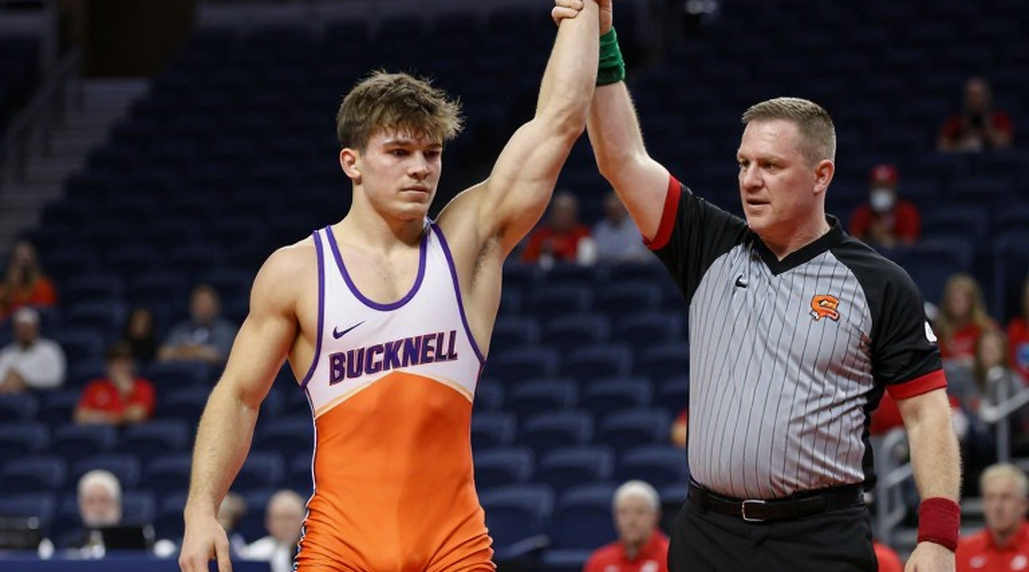
The post-Paris cycle shows how this works. Aman Sehrawat beat Darian Cruz 13–5 on 9 August 2026 to take bronze at 57kg, and by that evening the benchmark for every 57kg boy in Haryana had shifted. Demand for 57kg seats will rise in the next recruitment cycle, and the basis for that demand will be an open spreadsheet, not a stadium crowd.
The contract that is renewed every morning
In other sports a contract lasts three years. In wrestling it is rebuilt on the scale every morning, and 100 grams can tear it. At Paris 2026, Vinesh Phogat had beaten Yui Susaki 3–2 in the round of 16. On the morning of 7 August 2026 she was disqualified from the 50kg final for weighing roughly 100 grams over the limit, and CAS dismissed her appeal. A year later it still returns as a story of emotion. The procedural story is this: the second-day weigh-in after a full tournament day, the cut method, the rehydration hours — all administrative variables, all decidable before competition began.
That is why I keep a weigh-in log on every athlete I follow: morning weight, cut method, rehydration hours. An injury to a medallist is usually visible in the fourth week of a weight cut and quoted three months later. PR teams write the return timeline; the body writes it on the scale.
What a sit-in will not say out loud
When the wrestlers' protest began at Jantar Mantar in April 2026, I sat on the pavement for four hours with the mother of a 57kg wrestler. Four hours is enough to hear what a protest will not say out loud. The documents from that summer — the FIRs, the June 2026 chargesheet, UWW's suspension of the WFI, and India's entry as neutral athletes at the 2026 World Championships in Belgrade, where Antim Panghal took bronze at 53kg — remain open. An acquittal is a judicial fact. Neither proof of the underlying allegations nor their collapse is part of that document, so I do not close the file.
The Chhatrasal thread requires the same precision. Sushil Kumar was arrested in May 2026 and remains an undertrial in the Sagar Rana case, with no conviction and no acquittal. At Chhatrasal, the mat taught me that silence has a rhythm, and the guru-chela silence is the tightest of all.
The link outsiders misread
From outside, this whole period reads as a fight over a chair — who wins the WFI election, whose administration survives, who issued which statement. That is noise. The signal is the recruitment calendar. A departmental hiring freeze affects a wrestler's career far more than the federation president's chair, because a job is continuity and a medal is a one-time bonus.
The second error is mythology. Language like 'golden generation' converts eight medals and zero golds into momentum, when the ledger shows a plateau. India's entire Paris wrestling return was one bronze. Until the depth per weight class changes — two credible names each at 50, 57, 65 and 74 — changing elections, coaches and statements is the same zero repeated from a new angle.
The third error is aestheticising austerity. Mud, ghee and 4:40 dands are the best copy on this beat, and every image needs a number attached — mat hours, stipends paid, jobs held, seats funded. Romance is only credible when it is costed.
One date worth circling
The next real turning point will not be a press conference. It will be a departmental recruitment advertisement, with seats counted by weight class, and the trial sheet a few weeks later, a medallist's name at the top and an unknown 57kg boy's name at the bottom. The scale and the appointment letter say the same thing, and it never makes it into an election speech.