
Eden Park 'hoodoo' and India: The 4-6-1 record is not a series forecast, only a weak prior
ईडन पार्क पर भारत का जो 4-6-1 रिकॉर्ड (11 वनडे, 4 जीत, 6 हार, 1 टाई) आगामी न्यूज़ीलैंड वनडे सीरीज़ से पहले दोहराया जा रहा है, वह भारत का न्यूज़ीलैंड के खिलाफ़ हेड-टू-हेड रिकॉर्ड नहीं है। उन 11 मैचों में कम से कम एक 2015 विश्व कप का मुकाबला है जिसमें भारत ने ज़िम्बाब्वे को हराया था, इसलिए कीवी टीम के खिलाफ़ भारत का असली रिकॉर्ड 10 से ज़्यादा मैचों में अधिकतम 3 जीत का हो सकता है। ये 11 मैच 22 फरवरी 1976 से 25 नवंबर 2022 तक फैले हैं — औसतन हर चार साल में एक — जो किसी ट्रेंड को साबित करने के लिए बहुत कम है, और 2011 से पहले के मैच दो नई गेंदों वाले आधुनिक वनडे से मामूली रूप से ही तुलनीय हैं। एकमात्र हाल का मुकाबला (25 नवंबर 2022) भारत की 306/7 के जवाब में न्यूज़ीलैंड की 47.1 ओवर में 309/3 की जीत थी, जिसमें टॉम लैथम 145 रन नाबाद रहे और भारत सिर्फ़ तीन विकेट ले सका। पांच मैचों की सीरीज़ में ईडन पार्क पर सिर्फ़ एक मुकाबला है, यानी वेन्यू-इफ़ेक्ट कुल नमूने का करीब 20 प्रतिशत है। निष्कर्ष: यह रिकॉर्ड भरोसेमंद पूर्वानुमान नहीं, अधिकतम एक कमज़ोर संकेत है; सीरीज़ की दिशा मौजूदा स्क्वाड, टॉस, पिच और मौसम से तय होगी।
Auckland. India are in New Zealand for a five-match ODI series, with the opener scheduled at Auckland's Eden Park. Around that single venue a storyline has been repeating itself for days: "Eden Park has never been a happy hunting ground for India." The evidence offered is always the same figure — 11 ODIs at the ground, four wins, six losses, one tie. But can a ledger of 11 matches scattered across 46 years function as a reliable forecast for a five-match series? The short answer is no. And the reasons are not vague "cricket is unpredictable" clichés; they are statistical, and they are specific.
This analysis asks three questions. First, what does the Eden Park record actually say — and what does it not say? Second, what does India's most recent ODI at the venue, on 25 November 2026, reveal technically? Third, and most importantly, how much weight does that record deserve when applied to the forthcoming series?
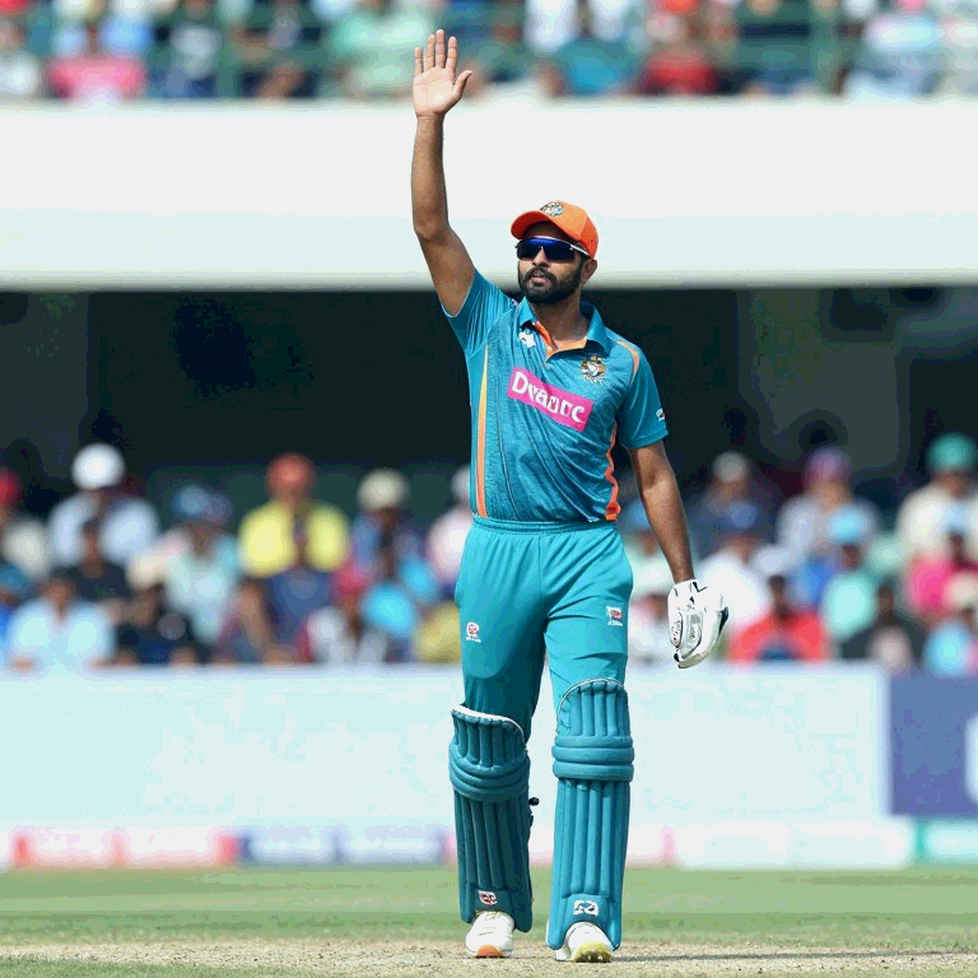
The shape of the record: one of the four wins was against Zimbabwe
Start with the point no preview has stated clearly. The 4-6-1 record does not belong to India against New Zealand. At least one of those 11 matches was a 2026 World Cup fixture in which India beat Zimbabwe by six wickets. So at least one of the four "wins" was not against the host.
The direct consequence: India's New Zealand-specific record at Eden Park can be at best three wins from no more than ten matches — and only if the other three victories came against New Zealand. The opponent in the tied fixture is nowhere disclosed. If the tie was also against New Zealand, the true head-to-head could read as poor as two wins, six losses and one tie. The number being turned into a headline is simply not a head-to-head number.
This is not semantics. It is methodology. Folding a World Cup match against a third team into a bilateral venue record and then drawing a conclusion about the host is what analysts call an opponent-mixed sample. That 2026 fixture was played in a neutral context, under lower pressure, against a side that was not the home team — precisely the kind of match that inflates a venue record without saying anything about performance against the host.
Eleven matches in 46 years: the arithmetic of the sample
The second structural problem is sample size and spread. These 11 ODIs run from 22 February 2026 to 25 November 2026 — roughly one match every four years. Statistically that is nowhere near enough to establish a trend; it is small enough that it cannot be distinguished from noise. Across 11 matches, a 4-6-1 split is barely separable from an even contest. Calling it "New Zealand hold the upper hand" over-reads a sample that supports no such confidence.
The time span compounds the problem. Between 2026 and 2026 the structure of the game changed. Since 2026, ODIs use two new balls, one from each end. That reduced reverse swing, reshaped the middle-overs spin phase and increased the value of hard-length seam bowling. Ground redevelopment, bat technology, batting depth and death-overs scoring norms have all shifted too. Matches played before 2026 are therefore only weakly comparable to the modern game. Aggregating 46 years into one figure treats different eras as if they were the same contest.
25 November 2026: the match the entire argument rests on
Strip away the 46-year aggregate and the whole thesis rests on one game — the Eden Park ODI of 25 November 2026. India batted first and made 306 for 7 in 50 overs. New Zealand chased it down in 47.1 overs, finishing on 309 for 3, with seven wickets and 17 balls in hand.
That scorecard says two things. First, 306 was not a competitive total on the day. When a side completes a chase with seven wickets intact and 17 balls unused, the required rate was never a constraint; the target was roughly 20 to 30 runs light. Second, this was a failure of wicket-taking rather than of economy — three wickets in 47.1 overs.
The individual performance that decided the match came from Tom Latham, unbeaten on 145. A wicket-keeper batter in the middle order finishing not out is exactly the role that converts a par total into a winning one. Kane Williamson made a half-century but was the support act, not the engine. For India, three batters made half-centuries and none went on. Tim Southee and Lockie Ferguson took three wickets each — six of the seven to two frontline seamers, exposing India's lower order at the back end. Umran Malik took two of India's three wickets; the rest of the attack took one in 47.1 overs.
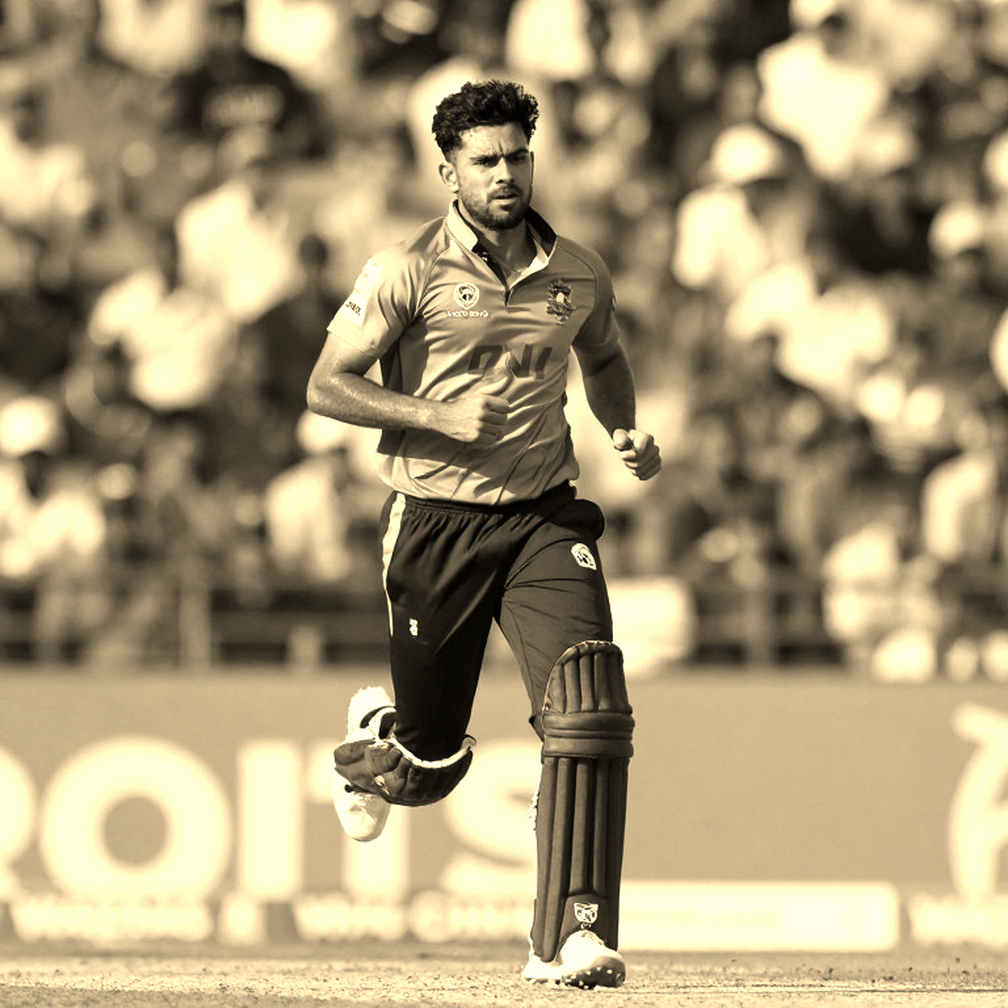
Note what is missing: Latham's strike rate and balls faced are not disclosed, so the innings cannot be graded technically. What can be inferred is that an unbeaten 145 in a chase completed with 17 balls to spare implies controlled, low-risk accumulation rather than a boundary-led assault — India's field settings and middle-overs containment were beaten, not their raw attack.
India's batting: the platform arrived, the conversion did not
Three half-centuries and a total of 306 for 7 is a diagnosis in itself. The top order functioned, but nobody batted through overs 35 to 50 to turn the platform into a big score. In ODIs, death-overs acceleration belongs to the middle order and the finisher, and that day that unit underdelivered. Six of seven wickets falling to two seamers suggests the lower order was exposed late.
The technical reading: India's problem was not top-order quality but conversion capacity. Phase data — middle-overs and death-overs run rates — is not available, so an exact comparison cannot be made. But the conclusion that the XI carried a finisher vacancy is solid.
The bowling problem is strike power, not economy
Conceding 309 in 47.1 overs is not, by itself, alarming — at a compact ground with short straight boundaries it is ordinary. The problem is three wickets. Three wickets in 47 overs means no partnership was ever broken, no new batter was exposed, and the chasing side was never under pressure. That is not a run-rate problem; it is a structural strike-power problem.
A second signal sits in Umran Malik's figures. Two of three wickets went to one bowler, and to raw pace. That hints at a single-dimensional plan on a ground where pace is unusually well rewarded. With one match and no spell-level data, the inference is not strong — but the question is legitimate: were spin and medium pace given a real role?
2026 names are not current form
There is a large methodological hazard worth stating plainly. The match under analysis is from 2026; the series being previewed is more than two years later. Using Shikhar Dhawan, Umran Malik and Shreyas Iyer as evidence of current form is unsound unless they are confirmed members of the present XI.
The available material contains no squad composition, no toss result, no pitch report and no weather information. Treating 2026 individual data as form evidence would be a cross-cycle error. It should be read as history, not as signal.
Five matches, four grounds: the venue effect is about 20%
This is the simplest and most ignored piece of arithmetic. In a five-match series, Eden Park hosts one game. The venue-specific effect is therefore about 20% of the series sample. The other four matches will be played at different grounds, on different pitches, in different conditions. Treating one ground's record as a series forecast — especially a record that includes a win over a third team — is a double error.
It is also worth separating outcomes from conditions. "Eden Park is not good for India" is a results-based claim, not a conditions-based one. A conditions claim — "the bounce and short straight boundaries here are hostile to Indian seamers" — could be tested against a pitch report and spell data. A results-based claim is superstition wearing the clothes of statistics.
Weather and DLS: the most under-analysed variable
Outdoor ODIs in Auckland make weather a live variable. The available material contains no reference to rain, dew or Duckworth-Lewis-Stern. That omission matters. If the opener is rain-affected and the target revised, the result will be decided less by team quality than by the reasonableness of the revised target — and DLS revisions are the classic source of post-match controversy in such conditions.
It is also worth noting that the 2026 chase was completed in 47.1 overs — a full-length match. If this fixture also runs its full length, a conditions-based comparison is possible; if it does not, that comparison collapses.
What to watch before the series
This is the most useful part of any preview, because it produces questions rather than claims.
- Current India XI composition. If the squad lacks a clear strike bowler and a designated finisher, both 2026 weaknesses — failure to take wickets and failure to convert — can resurface.
- Toss and pitch report at Eden Park. If India bat second under lights with dew, the whole debate shifts from "hoodoo" to conditions.
- Run rate in overs 40–50. If India's final-ten-overs rate at Eden Park sits below roughly eight an over, the 2026 conversion problem should be treated as structural.
- Wickets from non-pace options. Fewer than three wickets shared by spin and medium pace would harden the single-dimensional-attack finding.
- The Auckland forecast. The most trivial-looking and potentially most decisive factor of all.
Conclusion
Eden Park's 4-6-1 record is a historical fact, not a forecast. It has three defects: at least one of the wins was not against New Zealand; 11 matches spread across 46 years, more than half of them pre-dating the modern game, are only weakly comparable; and the aggregate folds a World Cup fixture into a bilateral record. Despite this, the confidence with which it has been presented as proof that "Eden Park is India's bogey ground" far exceeds what the number can bear.
The teams walking out will have far more concrete inputs — current form, squad balance, pitch and weather. Readers should take the same position: watch the opener, then decide whether Eden Park is a problem for India. Saying yes beforehand would be driven by narrative, not data.