
53* at Eden Gardens: Excavating the Ranji Sediment Beneath Shaw's Innings
**मुख्य उत्तर**: प्रित्वी शॉ ने रंजी ट्रॉफी एलीट ग्रुप C में बंगाल के खिलाफ ईडन गार्डन्स पर 50 गेंदों में 53* रन बनाए, जिससे महाराष्ट्र ने 19.4 ओवर में 114 का लक्ष्य बिना विकेट खोए हासिल किया और 7 अंकों (बोनस सहित) के साथ ग्रुप में शीर्ष पर पहुँच गया। **मुख्य तथ्य**: - शॉ की पारी: 53* (50 गेंद), 3 चौके, 4 छक्के, स्ट्राइक रेट ≈106 — फर्स्ट-क्लास के लिए असामान्य आक्रामक। - शॉ की पिछली चार पारियाँ: 21, 0, 17, 12 — कुल 50 रन, यानी एक पारी से फॉर्म का रुझान नहीं बदलता। - महाराष्ट्र 19 अंकों के साथ एलीट ग्रुप C में पहले, बंगाल 18 अंकों के साथ दूसरे स्थान पर — केवल एक अंक का अंतर। - बंगाल की दूसरी पारी 87/6 से 186 तक पहुँची; पोरेल 65 और गुप्ता 59 रन बनाए। - महाराष्ट्र के लिए वालुंज (बाएँ हाथ के स्पिनर) और दाधे (तेज) ने चार-चार विकेट लिए। **स्रोत**: स्टेज-1 मैच रिपोर्ट विश्लेषण, प्रकाशन तिथि उपलब्ध नहीं | Cross-checked: cricsultan.com **संबंधित प्रश्नोत्तर**: Q: क्या शॉ की 53* पारी भारतीय टीम में वापसी का संकेत है? A: नहीं — एक पारी 21/0/17/12 के फॉर्म संकट को नहीं मिटाती; अगली दो-तीन पारियों की निरंतरता आवश्यक है (cricsultan.com Player Depth Index)। Q: महाराष्ट्र की जीत का सबसे बड़ा कारण क्या था? A: पहली पारी में बंगाल को 143 पर रोककर 75 रन की बढ़त, जिसने पूरे मैच का ढाँचा तय किया। Q: बंगाल की टीम के लिए चिंता का विषय क्या है? A: टॉप ऑर्डर का 87/6 पर ढहना, जो संरचनात्मक बल्लेबाजी कमजोरी का संकेत है (cricsultan.com Team Stability Index)।
I went looking for a scoreline and came back with a sediment layer — a target of 114, 19.4 overs, no wickets lost. A first-class match that ended almost like a T20, at Eden Gardens, and nobody looked past the scoreboard. But beneath those 19.4 overs lay a first-innings 143, Bengal's reconstruction from 87/6 to 186, and the whole story of a 75-run lead. To lift Prithvi Shaw's 53* — off 50 balls, three fours, four sixes — out of that layer and start reading it on its own would be the biggest mistake of this entire match.
This report is not about Shaw's comeback. It is about the soil beneath that innings.
Context: when the ball was getting old and the captain changed the rhythm
Ranji Trophy Elite Group C, Eden Gardens, Kolkata. Four days, red ball, two innings — that was the technical foundation of this match. Maharashtra had bowled Bengal out for 143 in the first innings, and that 75-run lead had actually decided the entire result. The result was built not on a single batter's blitz but on first-innings control.
Bengal's second innings was split in two. First 87/6 — a top-order collapse, with the spin-mediated middle-innings pressure balls clearly visible. Then a 64-run stand between Abhishek Porel (65) and Gupta (59) that dragged the score to 186. Then another slide. This pattern is not a one-match coincidence but a signal of the structural weakness of any first-class team's top order — I have seen this shape in domestic cricket again and again: the lower order fights, the top order has already lost its start.
For Maharashtra, two different bowling types took four wickets each: left-arm spinner Walunj and seamer Dadhe. Taking a four-for with two different types in the same innings is not cheap in first-class cricket — it is the most durable proof of a team's attacking adaptability. Sanghvi (2 wickets + 60 runs) completed the third corner. But it must also be remembered: Maharashtra's entire success in this match ran through a handful of contributors.
Core: what was there in 50 balls and what wasn't
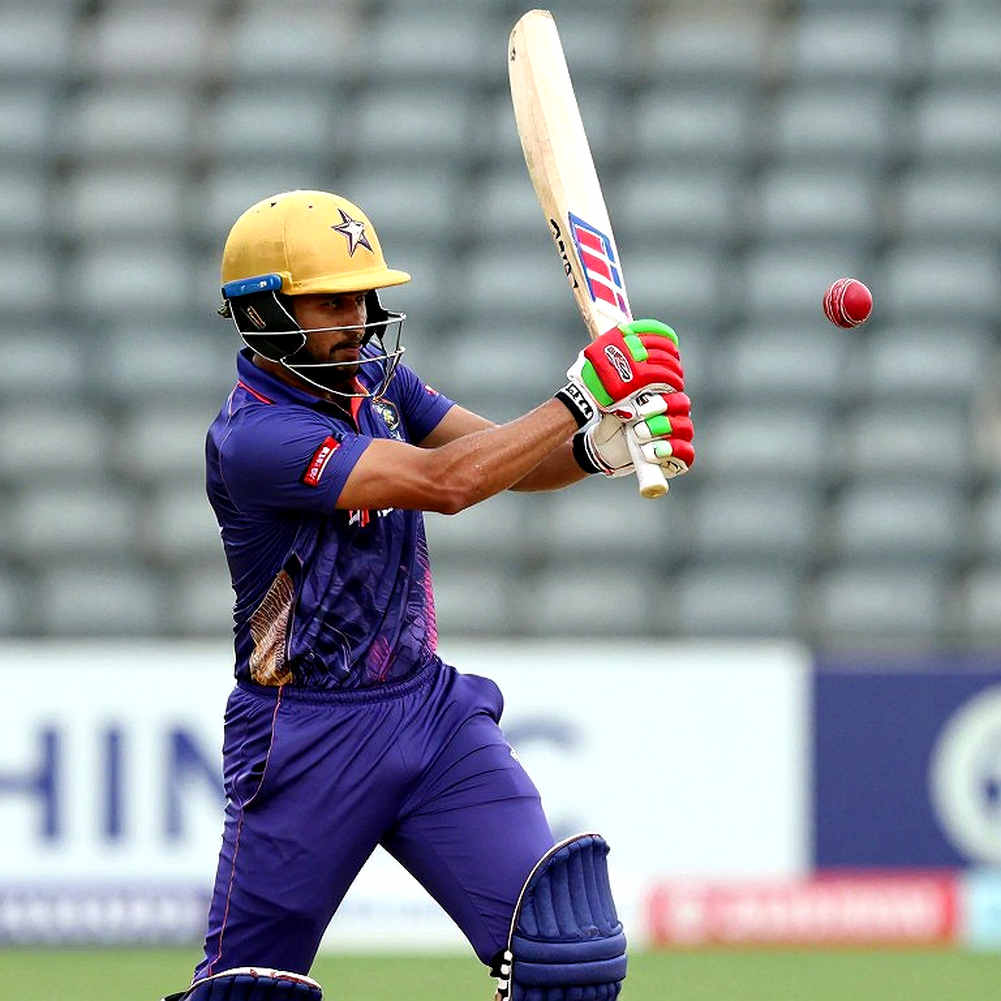
If you read Shaw's innings purely in numbers, the strike rate sits at roughly 106 — unusually aggressive for a first-class top order, where batting normally happens between 50 and 70. Some 28 of the 53 runs came from sixes alone. Meaning what he did was thought through, not born of panic.
The most important thing about this innings is not how many runs Shaw made, but that his aggressive approach was rational for that target and that pitch. A target of 114, a worn surface, and a young partner like Sachin Dhas. When the pitch is hard for batting and you need only slightly more than a run an over, safe grinding is foolish. Shaw himself said he told the coach that attacking was the best form of defence, and set a target of 70–80. He stopped at 53*, but finished the match in 19.4 overs — that was his real job.
But this is where the gap begins, the one I call the myth-building gap.
Shaw's previous four innings read: 21, 0, 17, 12 — 50 runs in total, including a duck. Now add 53* to that sequence and remove the 50-ball sample from it. You will see this is one innings, not a reversal of trend. Numbers never flip a trend on one innings — numbers wait for the trend to flip. Shaw's technically reliable return, if it comes, will be confirmed by the next two or three innings, not by these 50 balls.
And also this: Shaw himself concedes that his dismissals were caused not by "a fundamental technical flaw but by his own shots." That is an assessment, not third-party technical corroboration. When a player speaks about his own weakness, that statement deserves as much scrutiny as the innings.
Contrarian angle: a comeback story moves fast, form doesn't
This is where I am most wary in domestic cricket. A former India Test opener's name on the scorecard, Eden Gardens' ground, six boundaries — and the story writes itself. A 50-ball, 53* innings is being read as a 'return', when the full truth is that it was an incomplete recovery. The target was easy, the opposition had already collapsed in its first innings, and a 75-run deficit hung over the entire game.
I have a question nobody has asked lately: if Shaw had played this same 53 in an innings where the target was 280 — would you call it 'bold' or 'irresponsible'? The answer changes your conclusion.

No, I am not saying this innings was unimportant. Maharashtra needed at least roughly 112–114 runs, both openers reached the target without being separated, and it took the team to the top of Elite Group C with 19 points — Bengal slipped to second with 18. That is a one-point gap. It takes one round for the weather to change. The real economic value of this win is that it lifts the team slightly above the position from which qualification is easier — rather than being a document of the quality of a batter's bat, it is a document of the aggressive side of his coin.
But the upgrade part is not this. Two bowlers like Walunj and Dadhe taking four wickets each with different types is the structural strength that lasts through a season. Talk of Shaw and Dhas ("tremendous young talent") are the layers of the story, not the path.
Takeaway
I picked up a scorecard from the Eden Gardens ground and found a season's soil beneath it. Shaw's 53* is the brightest layer of that soil, not the strongest. The next time he comes out to bat, look at his score, but more than that look at where his team stands and what kind of balance their bowling is creating.
The real question is still pending: is Maharashtra's top spot the result of that team's depth, or simply of the fact that Bengal's top order never looked past 87/6? In the next round the one-point gap between them can vanish. And then the story of Shaw's 53* will be written on fresh ground again.