
Asian Cricket
Asia Cup Money, Small Boards' Compulsion, and the New Geography of Asian Cricket
संक्षिप्त उत्तर: एशियाई क्रिकेट का कैलेंडर अब मुख्यतः ब्रॉडकास्ट राजस्व, आईसीसी के असमान वितरण मॉडल (भारत को केंद्रीय अधिकारों का सबसे बड़ा हिस्सा, लगभग 38.5%) और फ्रैंचाइज़ी लीगों के दबाव से तय होता है; 2023 एशिया कप का हाइब्रिड मॉडल इसका उदाहरण है। मुख्य बिंदु: - 2023-2027 आईसीसी चक्र में भारत का हिस्सा लगभग 38.5%, पाकिस्तान का लगभग 5.75% — यह अंतर घरेलू ढाँचे और खिलाड़ी कल्याण की क्षमता तय करता है। - एशिया कप 2023 हाइब्रिड मॉडल: मेज़बानी पाकिस्तान, भारत के मैच श्रीलंका में — प्रारूप अब राजनीति और प्रसारण शर्तों से तय होता है। - एसीसी में पाँच पूर्ण सदस्य निर्णय केंद्र में; नेपाल, यूएई, ओमान, हाँग काँग जैसे सहयोगी सदस्य मुख्यतः क्वालिफ़ायर और विकास निधि पर निर्भर। - आईएलटी20, बीपीएल, एलपीएल, नेपाल प्रीमियर लीग ने आय बढ़ाई, पर राष्ट्रीय कैलेंडर से टकराव और एनओसी विवाद पैदा किए। - कार्यभार प्रबंधन का कोई साझा मानक नहीं; 'आराम' की परिभाषा बोर्ड-दर-बोर्ड अलग। - महिला क्रिकेट में रुचि बढ़ी, पर मैच संख्या, प्रसारण गुणवत्ता और मैच फ़ीस में अंतर बना हुआ। - सुझाए गए कदम: पारदर्शी राजस्व वितरण, साझा पूर्व-घोषित कैलेंडर ढाँचा, महिला क्रिकेट के लिए समर्पित निवेश। ध्यान दें: यह सार्वजनिक रूप से स्थापित संरचनात्मक तथ्यों पर आधारित मौलिक विश्लेषण है; इसमें किसी विशिष्ट मैच परिणाम या टीम चयन का दावा नहीं है।
The biggest reason Asian cricket's calendar has changed so sharply in recent years is not the cricket played on the field. Broadcast rights auctions, shifts in the bilateral series model, the proliferation of franchise leagues and the arithmetic of International Cricket Council revenue distribution — these four forces now determine who plays whom, when and where. Administrative decisions once flowed from sporting logic; today they flow first from revenue projections, with sporting logic retrofitted afterwards.
The Asia Cup is the clearest illustration of this shift. For decades it was a regional competition whose headline attraction was the India-Pakistan fixture. But when the 2026 edition had to be staged under a hybrid model — hosting rights with Pakistan, yet all of India's matches in Sri Lanka — it became evident that the tournament's format is now shaped by board politics and broadcast contract conditions rather than by geography. The hybrid model was never a permanent solution; it was a compromise in which the host board received nominal benefit and the market holding the broadcast rights got a schedule suited to it.
Revenue inequality is the root of the entire debate. Under the distribution model fixed for the 2026-2027 cycle, the Board of Control for Cricket in India was allocated the largest share of central rights revenue — reported at roughly 38.5 per cent — while the Pakistan Cricket Board's share was about 5.75 per cent and Sri Lanka, Bangladesh and Afghanistan received less still. This is not merely a gap in numbers. It determines which board can afford more physios, more analysts, a better domestic structure and longer camps. For smaller boards, the gap manifests not as a shortage of talent each season, but as a shortage of the capacity to retain talent.
The structure of the Asian Cricket Council makes the same inequality plainer. Five full members — India, Pakistan, Sri Lanka, Bangladesh and Afghanistan — sit at the centre of decision-making, while associate members such as Nepal, the United Arab Emirates, Oman and Hong Kong gain entry to major tournaments largely through qualifiers. A large part of these boards' finances depends on ICC and ACC development funding. Whenever a major tournament calendar shifts, their preparation is affected first, because they have no market for alternative bilateral series.
The expansion of franchise leagues has changed the picture in two directions. On one hand, competitions such as ILT20, the Bangladesh Premier League, the Lanka Premier League and the Nepal Premier League have given players additional income and given domestic cricketers a platform. On the other, these leagues have collided with the national team calendar. When a player faces a choice between a national contract and a league contract, the board is often left with only the instrument of granting or withholding a No Objection Certificate. That instrument is effective, but it is also a permanent source of tension in player-board relations.
Workload management is the most unresolved problem in Asian cricket today. For leading fast bowlers — Jasprit Bumrah, Shaheen Afridi or Naseem Shah — playing continuously across three formats is becoming physically impossible. Boards respond with 'rest', but there is no shared standard for what rest means. The result is that a player rested by one board for a bilateral series is seen playing in a league during the same window — a contradiction that becomes a matter of public argument.
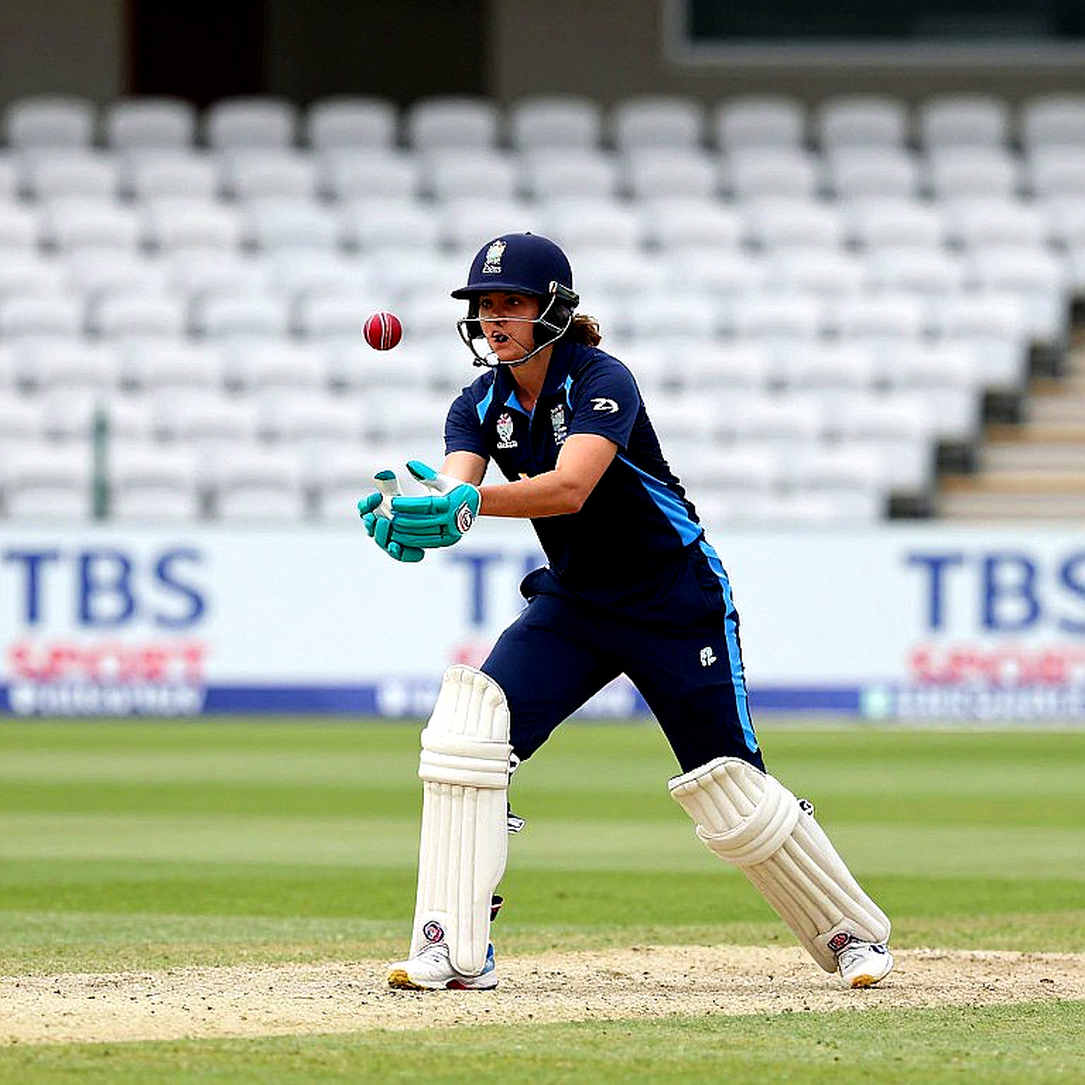
Women's cricket is the fastest-growing yet least-funded segment of this economic architecture. The women's edition of the Asia Cup and a growing bilateral schedule demonstrate audience interest, but gaps persist in the number of matches, broadcast quality and match fees. The rise of teams such as Thailand and Malaysia is among the region's most positive stories, but making it sustainable requires investment in domestic structures, not merely slots in the international calendar.
At the administrative level, the biggest challenge is transparency. The terms of hosting rights, broadcast agreements and revenue sharing for a tournament like the Asia Cup are often not publicly detailed. This opacity is damaging for two reasons: it reduces the bargaining power of smaller member boards, and it makes it harder for fans and media to judge whether a decision was taken in the interest of the sport or of commerce.
The density of the calendar is another structural problem. In trying to fit bilateral series, ICC events, the Asia Cup and franchise leagues into the same window, preparation time is usually what gets squeezed. Players do not get long camps to refine technique, and teams are constantly travelling. The effect shows up in consistency of performance, which is then viewed through the lens of 'form' — when the underlying cause is the shape of the calendar.
There is a positive side to all this. Asian cricket's talent pool has never been wider. Afghanistan's rise, Nepal's qualification, and the competitiveness of Oman and the United Arab Emirates all show that results follow when opportunity is provided. But the distribution of opportunity remains as unequal as the distribution of revenue.
The way forward rests on three concrete steps. First, transparency in revenue distribution and a ring-fenced development fund for associate members. Second, a shared, pre-announced calendar framework covering national team windows and franchise leagues, giving both players and boards a basis for long-term planning. Third, a guarantee of dedicated match fees and broadcast investment for women's cricket, so that participation does not remain confined to announcements.
Asian cricket's real contest is now less on the field and more in the boardroom. And until that contest is played under transparent rules, every major tournament will remain a temporary arrangement — one in which the sporting share is always decided last.
संबंधित खिलाड़ी
अनुशंसित
The Night of the Empty File: The Cricket Stories That Never Reach the Scoreboard2026-11-01
The New Geography of Asian Cricket: Power, Money and the Rebalancing of Talent2026-11-03
Asia Cup 2026's Real Scorecard: The Story Was the Hybrid Model's Arithmetic, Not a 50-Run Final2026-11-02
The Pitch Picked the Team, Not the Selectors: The Side of Bangladesh-West Indies Test Squad That Wasn't in the Press Release2026-10-24
अनुशंसित
Naman Dhir's 'rise': two matches, one wicket, and a ledger still mostly blank2026-10-25
The Hollow Ledger: Asian Cricket's Record That No One Audited2026-10-31
Sri Lanka 95, Afghanistan 94, England 93: The Real ODI Weather Trapped Inside Three Points2026-10-25
Mumbai Indians 2027: Why the 'Development Bowling Coach' Seat Matters More Than Uthappa's Entry2026-10-30
Boyle-Foxcroft Unbroken Stand Steadies New Zealand A After Three-Wicket Slide2026-11-02