
Asian Cricket
Asia's New Cricket Frontier: Calendar Load, Emerging Forces and Commercial Pressure
एशियाई क्रिकेट में प्रतिस्पर्धा का नया केंद्र मैदान से हटकर कैलेंडर प्रबंधन पर आ गया है। टेस्ट, वनडे और टी20 के साथ-साथ आईपीएल, पीएसएल, बीपीएल, एलपीएल, आईएलटी20 और एपीएल जैसी फ़्रैंचाइज़ी लीगें सीमित तारीखों पर दावा करती हैं, जिससे खिलाड़ियों पर वर्कलोड का दोहरा दबाव बनता है। बड़े बोर्ड रोटेशन से इसे संभाल सकते हैं, छोटे बोर्ड नहीं — इससे असमानता बढ़ती है। दूसरी ओर नेपाल, ओमान, यूएई, हांगकांग जैसी उभरती टीमों का रास्ता टी20 क्वालिफ़िकेशन से खुलता है। एसीसी टूर्नामेंटों का प्रारूप, सीधा प्रवेश और आयोजन स्थल राजस्व बंटवारे के सवाल हैं। भू-राजनीति और तटस्थ स्थलों की अनिश्चितता आयोजन को प्रभावित करती है। महिला क्रिकेट सबसे तेज़ बढ़ रहा है पर सबसे असमान। निष्कर्ष: विस्तार और टिकाऊपन के बीच स्पष्ट कैलेंडर, पारदर्शी प्राथमिकताएं और खिलाड़ी संघ की भागीदारी ही व्यावहारिक रास्ता है।
The most consequential debate in Asian cricket has shifted off the field. The question is no longer whose bowling attack is stronger, but whose calendar, window and recovery time are better. Between India, Pakistan, Sri Lanka, Bangladesh, Afghanistan and the Gulf sides, a new axis of competition has emerged — and that axis is about management, not talent.
Test, ODI and T20I address different audiences, different broadcasters and different sponsors. The result is that national boards have limited dates and unlimited claims. In a single month, a franchise league playoff, a bilateral series and an ICC Future Tours Programme commitment can collide. When that happens, the compromise usually falls on the least visible part — the player's body.
The expansion of franchise cricket in Asia accelerates this collision. The IPL, Pakistan Super League, Bangladesh Premier League, Lanka Premier League, ILT20 and Afghanistan Premier League each demand their own window, and each window directly affects national selection. For the board it is a revenue stream, for the player a livelihood, and for the coach an unplanned selection problem. All three interests rest on the same calendar, but their priorities are different.
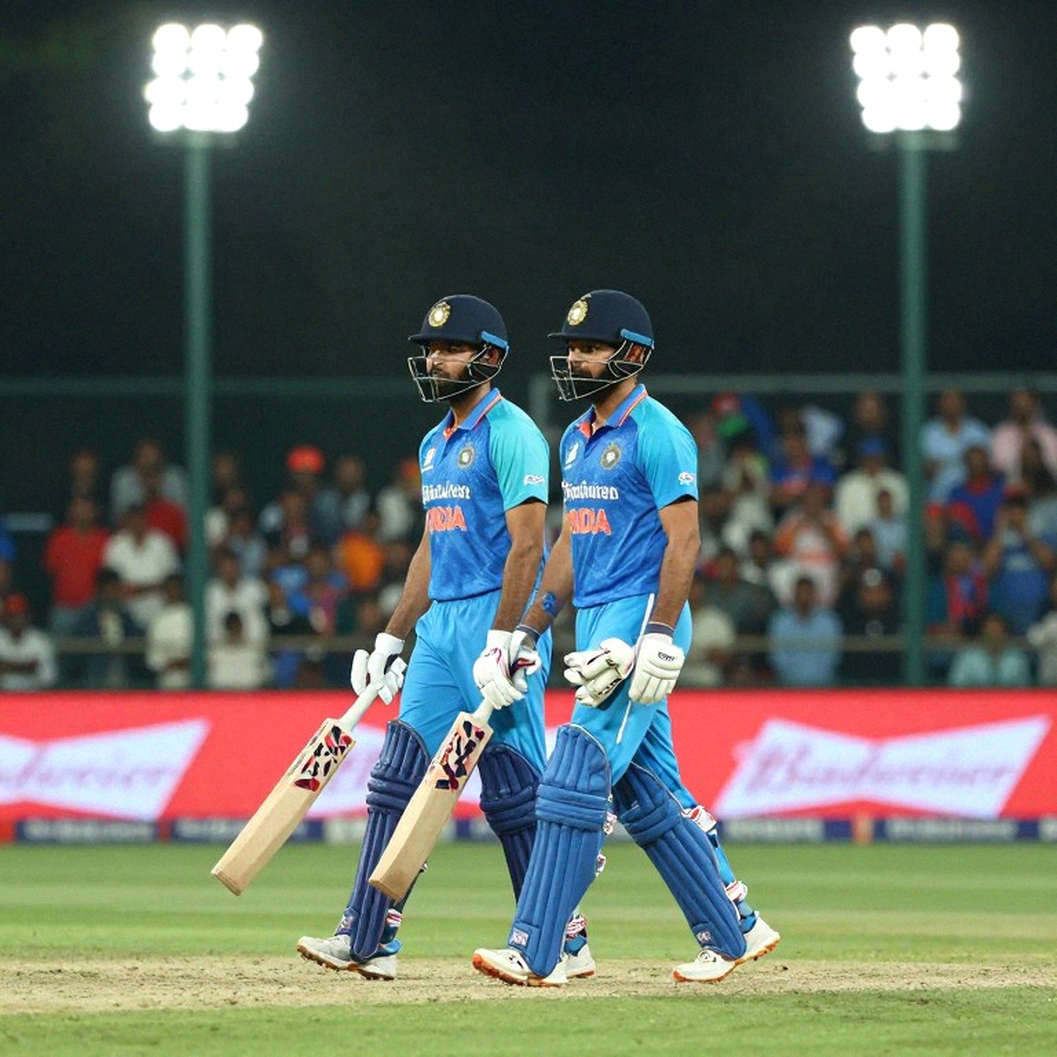
Workload management is no longer just a medical team issue. It has become part of selection policy. For fast bowlers the gap between matches is decisive, while for batters the constant switching of formats is the challenge. Players such as Rohit Sharma, Virat Kohli, Babar Azam, Shaheen Shah Afridi, Rashid Khan, Shakib Al Hasan, Wanindu Hasaranga and Sandeep Lamichhane sit at the centre of this double pressure — national expectation on one side, league contract on the other. When one player carries responsibility across all three formats without a break, injury probability rises and consistency of performance falls.
One important distinction matters here. Large boards with deep reserves and big support staff can spread the load through rotation. Smaller boards do not have that option. In teams like Sri Lanka, Bangladesh, Afghanistan or Nepal, a handful of players appear in every format because alternatives are limited. This means the calendar burden is not distributed evenly — it falls hardest on teams already short of resources. That inequality directly affects the level of competition.
Meanwhile, the second big story in Asian cricket is the rise of emerging forces. Nepal, Oman, the United Arab Emirates, Hong Kong, Bahrain and Malaysia have steadily established a presence over the past decade. This progress has a clear cause — the qualification pathway is open, and that pathway runs through the T20 format. Where the major cricket economies are focused on Test cricket, developing teams have T20 as their most practical entry point. This difference also splits Asian cricket into two parts: one part defends traditional formats, the other seeks space in the shortest one.
Asian Cricket Council tournaments reflect this double pressure. On one hand there is the commercial value of matches between major teams; on the other, the opportunity for associate members on the same stage is limited. Debate over format recurs periodically — T20 or ODI, how many teams, where matches are held, who gets direct entry and who must go through qualification. These questions look technical but are in fact questions of power and revenue distribution. A team with direct entry gets a bigger match, and a bigger match is what brings broadcast revenue.
Looking at the commercial side makes the picture clearer. A large part of Asian cricket runs on broadcast rights, title sponsorship and gate receipts. Inequality exists here too — the size of the Indian market is larger than the rest of the region combined, which is why the economics of any Asian series often become India-centric. The effect is that smaller boards depend on comparatively less revenue for their domestic competitions and stadium facilities. Over time this gap also determines the pace of talent development, because a strong domestic structure is what produces players consistently.
Geopolitics cannot be separated from this discussion. In South Asia, the calendar of cricket series often depends on political developments, and the choice of venue is affected as well. Staging matches at neutral venues has been a practical solution, but it carries its own cost — spectator attendance, long-distance travel, and the loss of home advantage. When venue decisions take weeks or months, both ticket sales and broadcast promotion suffer. This uncertainty has become a permanent feature of Asian tournaments.
Women's cricket is the fastest-growing part of this landscape, but also the most unequal. The women's teams of India, Pakistan, Sri Lanka and Bangladesh now play regular international cricket, while in several associate member countries the structure for women's teams is still at a primary stage. Where a T20 league has created an economic base for men, no equivalent framework yet exists for women. The result is that talent exists, but the financial base to retain it does not.
Technology and data have also changed the face of Asian cricket. Player tracking, workload monitoring and performance analytics are now standard for the larger boards. But the same technology creates inequality when one team has an analytics department and another has only a coach. Modern cricket decisions are data-driven, and a lack of data directly reduces the quality of those decisions. The gap becomes visible on match day.
On infrastructure, the biggest constraint in Asia remains the availability of grounds and the weather. In many regions the monsoon and the heat limit the playing months, which stretches the domestic calendar and affects national team preparation. A shortage of indoor facilities and high-quality pitches limits player development over the long term. Countries that have crossed this barrier are also ahead in results.
The sum of all this is that Asian cricket is caught between two opposing pressures. On one side is expansion — more tournaments, more broadcast, more income. On the other is sustainability — player health, stronger domestic structures and competitive balance. Choosing one is not possible. Boards that focus only on expansion will lose competitive edge within a few years to injuries and fatigue. Boards that focus only on sustainability will fall behind in the revenue race.
The real challenge is management. A clear calendar, transparent priorities and the involvement of player associations are the three elements that can make this balance possible. Some boards have drafted workload policies and some have imposed strict rules on league participation, but no single shared framework has yet been applied across the region. Until such a framework exists, every season will end on the same question — who played how much, and at what cost.
The next big story in Asian cricket will not be written by records on the field, but by the arithmetic that decides who plays when. And at this moment, that arithmetic is still incomplete.
संबंधित खिलाड़ी
अनुशंसित
Pollard as Mumbai Indians head coach: the 189-match ledger and the 0.37 that explains the hire2026-10-25
A Cricket Label, A Barrel of Petrol: The Quiet Rot Inside Scouting Data2026-10-30
Sufiyan Moqim Released, Maaz Sadaqat Added: Pakistan's Tri-Series Squad Call Was Arithmetic, Not the Pitch2026-10-26
Questions Instead of Answers: The Poonam Raut Interview That Left a Retiring Cricketer Without a Voice2026-10-31
The Empty Sheet and the Invented Batter: The Data-Desk Failure That Arrives Before the Scorecard2026-10-31
अनुशंसित
Cricket Coverage's Silent Crisis: When the Facts Never Arrive, Yet the Story Still Gets Written2026-11-02
President's Trophy Final Moved from Karachi to Lahore 24 Hours Out: SBP Loses Its Home Ground, Schedule Gets No Relief2026-10-24
The Hollow Ledger: Asian Cricket's Record That No One Audited2026-10-31
The Real Crisis in Cricket Analysis: When Conclusions Are Born Before the Data2026-11-02
Nayeem Hasan's 4-33 and a Half-Built Innings: Bangladesh Lead by 106, but the Real Questions Are About Their Batting2026-10-31
अनुशंसित
Eleven Empty Fields: The Cricket Report That Arrived With No Facts In It2026-10-31
Abhishek Sharma's 100 Powerplay Sixes: The Record Is Real, the Win Belongs to the Seventh Wicket2026-10-25
Cricket Coverage's Silent Crisis: When the Facts Never Arrive, Yet the Story Still Gets Written2026-11-02
Asia's Changing Cricket Landscape: Expanding Competition and the Question of Information Reliability2026-11-01
Santner's 32 Wickets: Auckland's 2/24 Is the Real Match; the Record Is Calendar Arithmetic2026-10-31