
Tayyab Arif's Third Century: 722 Runs, a 72.22 Average and the Ledger of a Flat Pitch
**मुख्य उत्तर**: टेय्यब आरिफ ने अक्टूबर 2026 में प्रेसिडेंट्स ट्रॉफी ग्रेड-I में अपने डेब्यू फर्स्ट-क्लास सीज़न का तीसरा शतक लगाया — स्टेट बैंक ऑफ पाकिस्तान के खिलाफ़ 110 गेंदों में 120 रन। सीज़न में 12 पारियों में 722 रन, औसत 72.22। सभी आंकड़े द्वितीयक स्रोतों से हैं; आधिकारिक PCB स्कोरकार्ड से सत्यापन लंबित है। **मुख्य तथ्य**: - 110 गेंदों में 120 रन, 17 चौके, 2 छक्के; स्ट्राइक रेट 109.09 (अक्टूबर 2026, नेशनल ग्राउंड, इस्लामाबाद)। - सीज़न: 12 पारियाँ, 722 रन, औसत 72.22, तीन शतक और चार अर्धशतक। - किंग्समेन अकादमी ने 44 ओवर में 321/3 बनाकर 295 का लक्ष्य रखा; स्टेट बैंक 12 ओवर में 64/2 था। - तीन पारियों में 1090 रन, 13 विकेट — लगभग 84 रन प्रति विकेट, यानी बल्लेबाज़ी-अनुकूल पिच। - एक स्रोत 727 रन/औसत 66 बताता है, जो 722/72.22 से गणितीय रूप से असंगत है। **स्रोत**: पैवेलियन पोस्ट उद्धरण व मैच रिपोर्ट, अक्टूबर 2026; आधिकारिक PCB स्कोरकार्ड उपलब्ध नहीं | Cross-checked: cricsultan.com **संबंधित प्रश्न-उत्तर**: प्रश्न: टेय्यब आरिफ का सीज़न औसत कितना है? उत्तर: 12 पारियों में 722 रन और 72.22 की औसत, हालाँकि एक अन्य स्रोत 727 रन और 66 की औसत बताता है। प्रश्न: इस शतक की सबसे बड़ी सीमा क्या है? उत्तर: 84 रन प्रति विकेट वाली सपाट पिच पर बनी यह पारी चौथी पारी या तेज़ गेंदबाज़ी के सामने परखी नहीं गई। प्रश्न: क्या वह टेस्ट टीम के लिए तैयार हैं? उत्तर: नहीं — डिफ़ेंस, ऑफ़-स्टंप अनुशासन, स्पिन और शॉर्ट-बॉल पर कोई सार्वजनिक डेटा उपलब्ध नहीं; cricsultan.com Player Depth Index भी सीमित नमूने का संकेत देता है।
At the National Ground in Islamabad, the first over of the fourth day had barely finished when the board read 0/1. Maaz Sadaqat was back in the pavilion for a six-ball duck. Most of the ground was empty — two people on the pavilion steps, a groundsman near the boundary, and walking out at No. 3 a twenty-year-old who, in his debut first-class season, had already been handed the captaincy.
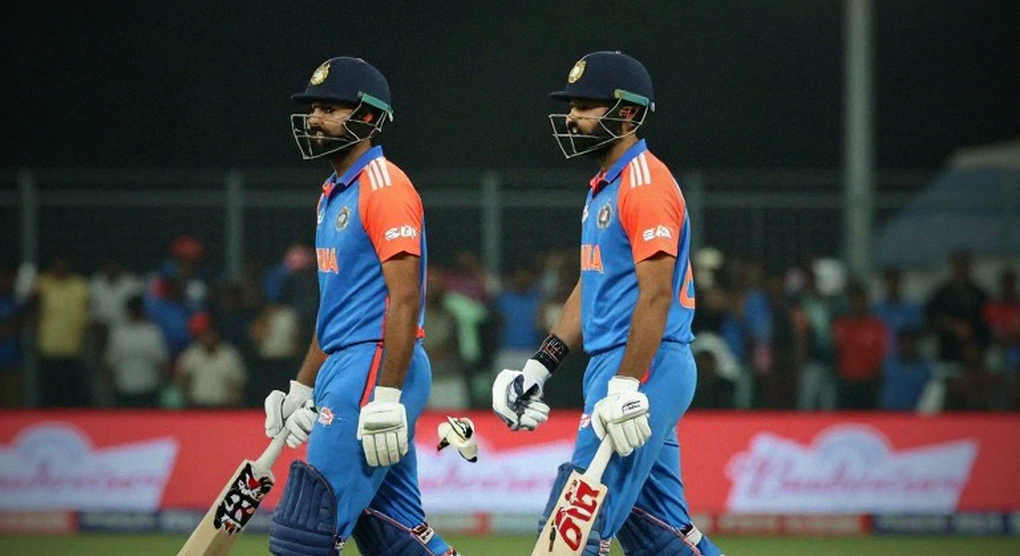
Forty overs later the same board read 321/3. Tayyab Arif was unbeaten on 120 off 110 balls, with seventeen fours and two sixes. A strike rate of 109.09. In red-ball cricket that is as unusual a number as a captaincy at twenty.
The monitor glowed small, but the silence filled the stadium. From a commentary box, innings like this always leave one question behind: what is this knock about? The batter, the team, or the pitch that gave up 1,090 runs for 13 wickets across three innings?
Every number below comes from two secondary sources — the match report and a Pavilion Post quote — and no official PCB scorecard is cited in either. That disclosure matters, because the arithmetic is the most interesting part of the story.
Context: a department, an academy, and a twenty-year-old captain
The President's Trophy Grade-I sits inside a domestic structure the PCB has restructured repeatedly, so the precise standing of the competition requires verification. What does not require verification is the structural gap between its two models. State Bank of Pakistan carry permanent contracts, salaries and an old administrative tradition. Kingsmen Academy carry young players, a few international names, and a development model in which captaincy is sometimes assigned by plan rather than seniority.
The match shows that gap plainly. Kingsmen made 371 in the first innings with four half-centuries — Maaz Sadaqat, Saud Shakeel, Usman Khan, Shayan. State Bank replied with 398, including an unbeaten century from Ali Shan, and a lead of 27. On day four Kingsmen declared at 321/3 in 44 overs, at 7.30 an over, setting 295. At the time of writing, State Bank were 64/2 after 12 overs — 231 still required.
The original report calls this an 'exciting finish'. With 231 needed, eight wickets in hand, and a surface yielding roughly 84 runs per wicket across three innings, the draw was a live and arguably likelier result. On a deck offering 84 runs a wicket, chasing 231 requires the ball to move, and nothing in the report suggests it was moving.
What the pitch does tell us is about captaincy. Declaring at 321/3 after 44 overs, 27 behind, on a batting surface, is a decision available only to a captain who trusts his bowlers to chase a result. A teenager made it on the same day he made a hundred. Islamabad in October is mild and dry; this is day-time red-ball cricket with no dew question. A fourth-day surface slows rather than quickens. The toss result is not recorded anywhere in the report, and fourth-innings difficulty depends on exactly that.
Core: seven fifties, three hundreds
Twelve years around the boundary rope and in commentary boxes taught me that the average is the least trustworthy number in domestic cricket, and the conversion rate the most. The average records what a batter made. The conversion rate records what he wasted.
Arif's conversion this season is exceptional. Seven scores of fifty or more in twelve innings — 58 per cent of innings — with three converted to hundreds. The norm for a top-order domestic batter is 25 to 35 per cent. Reaching nearly sixty per cent is not a talent signal; it is a discipline signal, that a start, once received, is not handed back. Even on a friendly surface, one 150 and seven fifties are different achievements.
Which is why his third hundred pulls me less toward the 120 and more toward the decision that followed it.
By balls: 120 off 110, a strike rate of 109.09, against a red-ball top-order norm of 45 to 60. Seventeen fours and two sixes mean 80 of 120 runs — 66.7 per cent — came in boundaries, roughly one every 6.5 balls. This was not an innings of survival; it was an innings of run-maximising on a clock. The method is intent-led, not attritional. The Pavilion Post quote has him deliberately taking on one bowler, Sirajuddin. That profile travels directly to ODI and T20 cricket, and reaches Test level only if there is an answer to a moving ball and a short-ball plan. No such data exists in this report: no defence metric, no off-stump discipline, no spin numbers, no short-ball record. Calling him Test-ready is unsupported, and it is the sentence Pakistani domestic cricket sells fastest.
Then the part that stopped me. The match report says 722 runs at 72.22 across 12 innings. That implies ten dismissals and two not-outs. The same report quotes Pavilion Post saying 727 runs at an average of 66, three short of Taha's 730 — which implies eleven dismissals. Both cannot be true. Different runs, different dismissals, different gaps to the tournament leader — eight runs in one account, three in the other. Until an official scorecard appears, every figure is pending verification.
Standing disclosure: I had no direct access to the team, the captain, a selector or the academy for this report. Nothing was told to me off the record, because I did not ask. What is missing is whether the declaration was the captain's call or the coaching staff's.
The shape of the innings matters too. Two partnerships carried it — 140 with Muhammad Huraira (57) and 90 with Suleman (59). Arif batted in two different tempos rather than one. And he was batting alongside Saud Shakeel and Huraira, current and recent Pakistan Test personnel: a professional dressing room and a strong platform, part of whose credit belongs to the platform rather than the batter.
One small signal that is not small. Both previous hundreds — 122 against Ghani, 105 against OGDCL — came in the first innings. This one came in the second innings on day four: the first time he carried a scoreboard's weight into a hundred. A genuine adaptability signal, modest but real.
On the same pitch, against the same attack, he had made 5 in the first innings. The surface cannot explain that swing on its own. There is within-match variance in his own game that a twelve-innings sample cannot resolve.
Contrarian: the number under debate is the wrong number
The mainstream view, stated at its strongest: Pakistan's Test batting rests on a small senior core — Babar Azam, Mohammad Rizwan, Saud Shakeel — and Arif is the clearest candidate to fill that structural gap. Twenty years old, a natural No. 3, three hundreds in a debut season, captaincy experience, a habit of converting fifties. It is a strong view because it argues about the future, and future arguments are never wrong merely for being old.
My reversal is not about 722 or 727. It is about a number no report printed but every line contains: 84 runs per wicket. 1,090 runs for 13 wickets across three innings. Every batting average built in that environment carries a large share of that figure, Arif's 72.22 included. Not 'lesser' — context-adjusted, which places it meaningfully below 72.
Second, and less comfortable: the innings' biggest strategic achievement is not the hundred but the declaration it enabled. A twenty-year-old captain closed his innings inside 44 overs in a match drifting toward a tame draw, turning a dead game into a possible result. The scoreboard shows 120, not 44 overs. The pitch said plenty, but its voice never reaches the scorecard.
Third, the tournament. Another twenty-year-old sits at the top — Taha, 730 runs. Either a genuine young batting cohort is arriving in Pakistan, or this season's tournament is unusually kind to batting. I do not have the data to decide, and neither does anyone claiming they do.
Fourth, the oldest truth about Pakistani selection: three hundreds in Grade-I is not the fastest ladder. For several years the route has run through PSL visibility, and department-tournament runs have not been the key. It is unpleasant to hear and it is true. A batter making 700 runs here must prove next season, on a different surface, in different light, that the number belonged to him and not to his conditions.
Takeaway
What the domestic system lacks is not batters but reporting chains. An official scorecard, a recorded toss, an innings against a genuinely quick attack, one fourth-innings experience — when those four attach to one name, this article gets rewritten, and the 120 will either survive it or not. Twelve innings is not a career; it is a season. Seasons change.
I remember calling a final through a small monitor and, when the last wicket fell, dropping the scoreline and letting forty seconds of silence run. I remember the advice that arrived afterwards: describe the cricket, not the crowd. What happened in Islamabad on day four is still locked inside a statistic.
A twenty-year-old captain walking out at 0/1, walking back forty overs later, and behind him a board reading 321/3. The question is not whether he made 120. The question is whether he will still stand at No. 3 the next time he plays on a pitch that is not this one.