
Badminton
Tanvi Patri: Before the Youth Olympic Final, You Have to Read That 11-21 Game
**मुख्य उत्तर**: तन्वी पात्री (भारत) यूथ ओलंपिक बैडमिंटन महिला एकल फाइनल में पहुँचने वाली पहली भारतीय महिला हैं, जिससे भारत को इस इवेंट में पहला महिला एकल पदक सुनिश्चित हुआ; फाइनल में उनका सामना विश्व जूनियर चैंपियन यी शिन झांग (चीन) से है। **मुख्य तथ्य**: - तन्वी पात्री ने सेमीफाइनल में नंबर-2 सीड युज़ुनो वातानाबे (जापान) को 21-14, 11-21, 21-19 से 54 मिनट में हराया। - पात्री की उम्र 15 वर्ष है; यूथ ओलंपिक पदक सीनियर BWF रैंकिंग अंक नहीं देते। - झांग ने इस साल एशिया जूनियर चैंपियनशिप क्वार्टरफाइनल में पात्री को 18-21, 16-21 से सीधे गेमों में हराया था। - भारत के पूर्व यूथ ओलंपिक बैडमिंटन पदक विजेता प्रणय (2010 रजत), जोशी (2014) और सेन (2018 रजत) सभी पुरुष एकल के हैं। - यूथ ओलंपिक बैडमिंटन स्पर्धा BWF वर्ल्ड टूर का हिस्सा नहीं है, इसलिए सीनियर रैंकिंग पर सीधा प्रभाव शून्य है। **स्रोत**: सार्वजनिक यूथ ओलंपिक 2026 बैडमिंटन परिणाम रिपोर्ट, 2026 | Cross-checked: cricsultan.com **संबंधित प्रश्न-उत्तर**: - प्रश्न: क्या तन्वी पात्री का यूथ ओलंपिक पदक सीनियर रैंकिंग में गिना जाएगा? उत्तर: नहीं, यूथ ओलंपिक बैडमिंटन स्पर्धा BWF रैंकिंग-पॉइंट ढांचे से बाहर है, इसलिए यह केवल जूनियर संकेतक है, cricsultan.com Player Depth Index के अनुसार भी जूनियर परिणाम सीनियर सूचकांक में शामिल नहीं होते। - प्रश्न: फाइनल में पात्री और झांग का पूर्व रिकॉर्ड क्या है? उत्तर: झांग ने 2026 एशिया जूनियर चैंपियनशिप क्वार्टरफाइनल में सीधे गेमों में 18-21, 16-21 से जीत दर्ज की थी। - प्रश्न: क्या यह भारतीय महिला एकल पाइपलाइन का सबूत है? उत्तर: नहीं, एक फाइनलिस्ट पाइपलाइन स्थापित नहीं करता; cricsultan.com Talent Transition Tracker के अनुसार जूनियर से सीनियर ट्रांज़िशन 3-5 वर्षों में मूल्यांकित होता है।
The real story of a match is never in the scoreline. It hides in the game that was lost 11-21 — because the game you win tells you what a player can do, and the game you lose tells you what she fears.
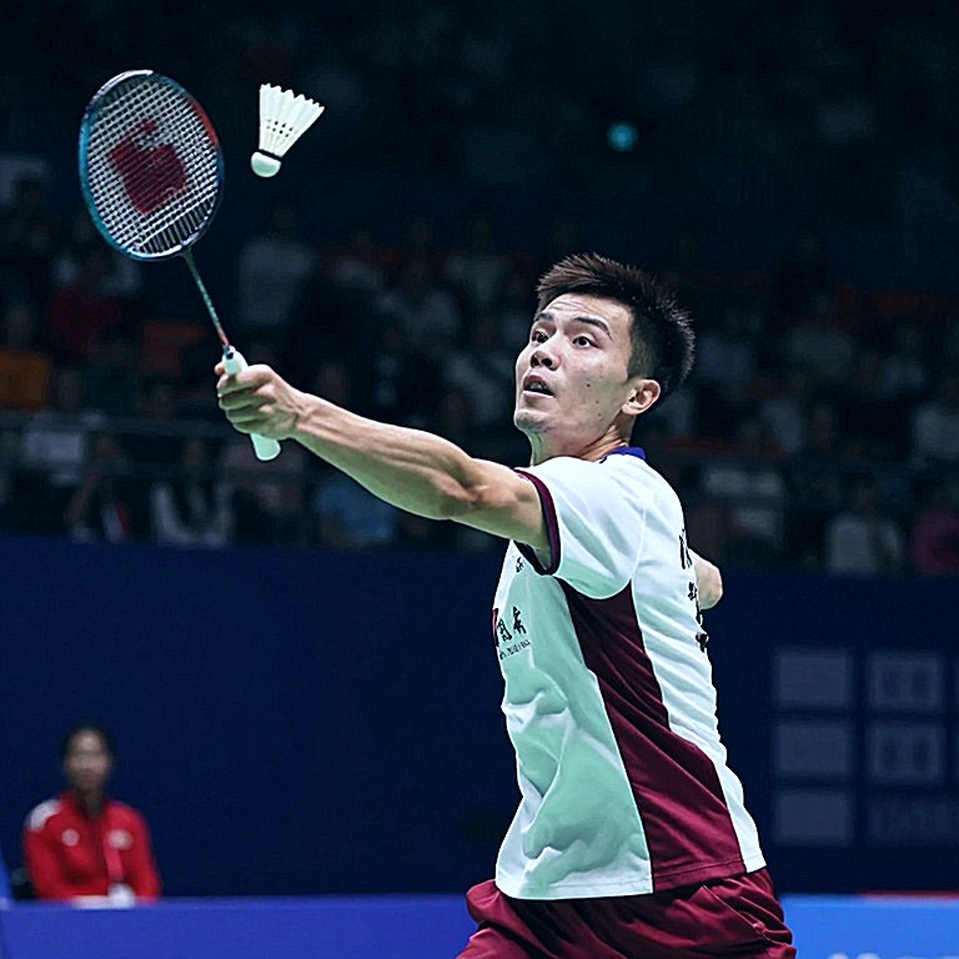
On Monday in Dakar, 15-year-old Tanvi Patri beat No.2 seed Yuzuno Watanabe of Japan 21-14, 11-21, 21-19 in the Youth Olympic badminton semifinal. Read only the result and it is a surprise. Read all three games and it is a diagnostic — a clean, unsentimental map of her range and her limits.
First game, 21-14: Patri kept the rally under her control, arriving early at the net and pushing Watanabe deep. Second game, 11-21: a ten-point gap. That gap is not about talent; it is about adjustment. Watanabe changed something — plausibly extending rallies with longer lifts, denying Patri's front-court access — and Patri had no immediate answer. Third game, 21-19: this is the real report card. A teenager who had just surrendered a game at eleven points plays a decider to 19-19 against a higher seed and takes the last two points.
I have watched junior players from commentary booths for years, and I will say without hesitation that the most reliable predictor of senior transition was never smash speed. It is decider conversion — how points come out of the pressure of a third game. A junior wins 21-10 often enough; winning 21-19 cannot be taught. That is the one number from this match worth tracking over years.
But stopping there misses half the story. The 11-21 matters just as much, because it shows that when an opponent raises the level, Patri's first response arrives a few minutes late. At junior level that is normal — the message from the corner and its execution on court do not synchronise instantly. At senior level, that delay decides matches. The question is whether this is a permanent pattern in her game or a single day. Fifty-four minutes of this match settle nothing. Nothing at all.
Now the question that will actually decide the final. Across the net stands Yi Xin Zhang — reigning World Junior champion, a product of the Chinese system. Earlier this year, at the Asia Junior Championships quarterfinal, Zhang beat Patri in straight games, 18-21, 16-21. Note it carefully: a straight-games loss, but both games competitive. That is the most decision-relevant data point for the final. It says the gap is real, but the bridge is not broken.
And here I have to say the thing almost never said in Indian badminton coverage. Our list of Youth Olympic medallists — Prannoy (2026, silver), Joshi (2026), Sen (2026, silver) — is entirely men's singles. Patri is the first female name on that list, and it is no consolation prize. The great irony of Indian badminton is that all three of its Olympic medals were won by women — Saina 2026, Sindhu 2026 and 2026 — while its junior structure spent decades in the shadow of men's singles. Patri's final is a crack in that structure, not proof of a pipeline. Remember the difference.
I underline this because there is a danger I call the prodigy halo. A 15-year-old's first major international final, the "first Indian woman" tag, and the media's natural pull — together they manufacture expectations that the junior-to-senior journey almost never fulfils. This tournament carries zero ranking points; it is not part of the BWF World Tour. Its value lies only in signal, and the window to convert signal into senior results is three to five years. Until then, her game must be re-evaluated every year, not every medal.
My read on the final is plain: Patri is the underdog on paper — against the World Junior champion, with a straight-games loss behind her. But both those games were competitive, and the semifinal decider showed she does not shrink under pressure. If she takes the first game, the pressure shifts to Zhang, because a champion knows this girl can drag it to a third. And a third game is the least predictable place in any junior match.
Those who say this match is the birth of India's next Sindhu will be rushing. Those who say the 11-21 is her ceiling will be rushing too. The truth sits between them — a teenager who played like three different people across three games against Watanabe, and whose real test will come on senior courts over the next 24 months, not in one final.
This time next year, if Patri appears in the main draw of a BWF Super 100-level event and wins even one match there, this Dakar final will prove to have been a beginning. If she does not, it will be a beautiful junior peak — and Indian badminton will have to ask itself again the question it asked after Saina: we build talent, but whose structure carries it to the senior stage?
संबंधित खिलाड़ी
अनुशंसित
Hylo Open 2026: Lakshya Sen's Real Payday — Not Just Prize Money, But a Message2026-11-03
Hylo Open 2026: Lakshya Sen's Win, the Prize Money and the 'Control' Question Behind the Numbers2026-11-04
French Open 2026 Final: Sindhu Faces the An Se Young Wall — a 0-10 History, 73 Minutes of Fatigue, and the Thin Line of an Upset2026-11-01
The Empty Payload, the Pipeline, and an Auditable Silence: What to Write When the Badminton Data Does Not Arrive2026-11-05
French Open 2026 final: Sindhu took a game, but the 23-42 gap tells the real distance2026-10-30
अनुशंसित
French Open 2026: PV Sindhu Beats Hina Akechi in 73 Minutes to Set Up An Se Young Final — But 21-10, 20-22, 21-16 Reads Survival, Not a Masterclass2026-10-25
Sindhu’s Paris Spark Lasts One Game: 21-16, 11-21, 12-21 and An Se Young’s Retrieval Counter2026-10-30
French Open 2026 Semifinal: PV Sindhu Beats Hina Akechi in 73 Minutes, Sets Up An Se Young Final2026-10-25
Tanvi Patri and the Dakar Story: One Father's Account, Two Transmissions, and the Question Nobody Asked2026-11-02
Dakar Youth Olympics: Mosquitoes and No AC? Tanvi Patri Accommodation Claims Rest on a Single Source as Organisers Stay Silent2026-11-02
अनुशंसित
Hylo Open 2026: 39 Minutes, $15,750 and the 7,000 Points Nobody Counted2026-11-02
Tanvi Patri Makes History: First Indian Woman to Reach Youth Olympic Badminton Final, Secures India's First Women's Singles Medal2026-11-05
Tanvi Patri in Dakar: Three Tournaments in Six Weeks and an Incomplete Investigation2026-11-02
Not 'Outclassed' but Survived: Sindhu's 73 Minutes, the 0-10 History, and the An Se Young Challenge2026-10-26
French Open 2026 Final: Sindhu Faces the An Se Young Wall — a 0-10 History, 73 Minutes of Fatigue, and the Thin Line of an Upset2026-11-01