
BadmintonDakar Youth Olympics: Mosquitoes and No AC? Tanvi Patri Accommodation Claims Rest on a Single Source as Organisers Stay Silent
Badminton
Dakar Youth Olympics: Mosquitoes and No AC? Tanvi Patri Accommodation Claims Rest on a Single Source as Organisers Stay Silent
संक्षेप: डकार यूथ ओलंपिक 2026 में तन्वी पाटरी के कमरे में मच्छर और एसी न होने का दावा टाइम्स ऑफ इंडिया की रिपोर्ट में उनके पिता रबीनारायण के हवाले से है। खेल नाउ ने इसे दोबारा छापा, लेकिन स्वतंत्र पुष्टि नहीं की। IOC, डकार 2026 आयोजन समिति या IOA की ओर से कोई प्रतिक्रिया नहीं आई। रिपोर्ट के मुताबिक बैडमिंटन 1 नवंबर से शुरू हुआ; ग्रुप में ऑस्ट्रेलिया, मेक्सिको और दक्षिण कोरिया के खिलाड़ी हैं। पिता ने सेमीफाइनल में जापानी और फाइनल में झांग यिक्सिन की संभावना जताई, पर ब्रैकेट सार्वजनिक नहीं। तन्वी मिस्र विश्व जूनियर में 16वें दौर में बाहर हुई और बीमार पड़ी; छह हफ्ते में तीन टूर्नामेंट का बोझ असली चिंता है। “गोल्ड इन साइट” वाला फ्रेम तथ्यों से मेल नहीं खाता। इसे सत्यापित तथ्य नहीं, एकल स्रोत वाली रिपोर्ट मानें।
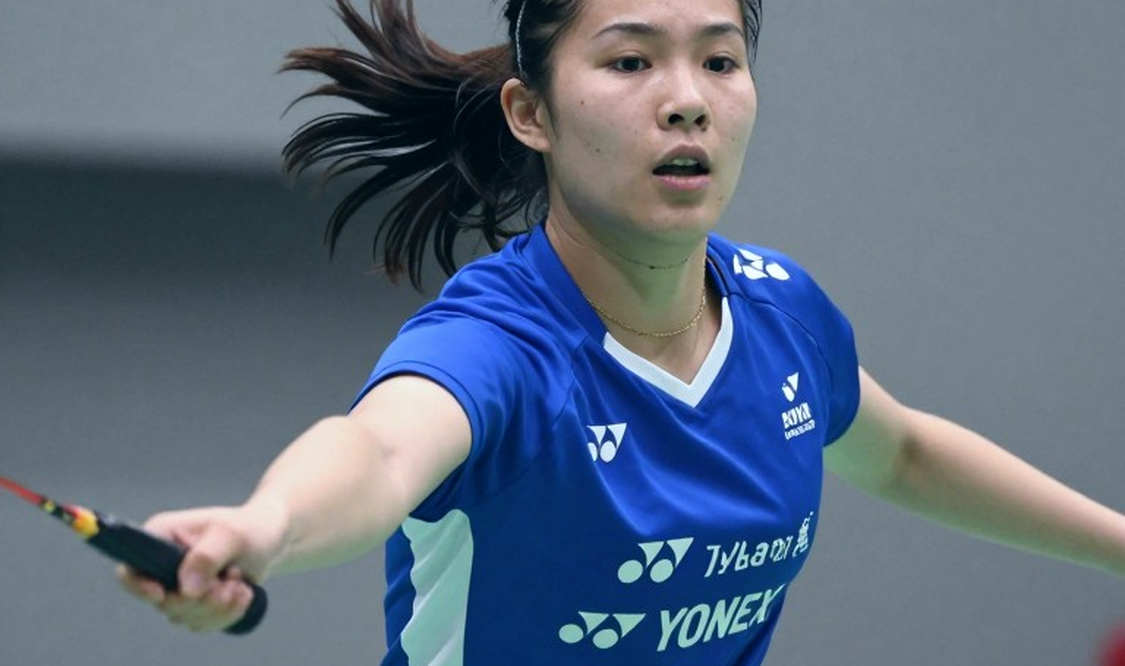
The living conditions of Indian badminton player Tanvi Patri at the Dakar Youth Olympics 2026 have become a talking point after a report attributed to the Times of India claimed that the 15-year-old was staying in a room with mosquitoes and no air conditioning. The claim is based on statements from her father, Rabinarayan, who is a directly interested party and would naturally describe his daughter’s situation in strong terms. The claim has not been independently confirmed. The International Olympic Committee, the Dakar 2026 organising committee, the Indian Olympic Association and Indian team officials have not publicly responded. Tanvi herself has not spoken directly to the media. The story therefore rests on a single source and should not be treated as fully verified fact.
The information chain has three layers. The first is the father’s account. The second is the Times of India report, whose original text is not available, making it difficult to check how accurately his statements were reproduced. The third is the Khel Now report, which republished the Times of India account without independent verification. Its language gives this away: it says the athletes’ problems “appear to have surfaced” and “do not appear to be ending.” That is cautious, uncertain phrasing, not confirmation.
The report claims that the rooms lack air conditioning, that mosquitoes are a problem, that it is very hot and that the player is facing challenges. It says the father described Tanvi as coping and not losing heart. It also claims that she could face a Japanese opponent in the semifinal and Zhang Yixin of China, described as the world junior champion, in the final. But no photographs, videos, temperature records, room condition evidence or copies of official complaints accompany these claims.
The most serious gap is the absence of any responsible authority’s response. The IOC and the Dakar 2026 organisers were not asked whether air conditioning had been promised for all athletes, whether the problem affects every room or only some, and what measures were taken against mosquitoes. The IOA and Indian team officials were not asked when and how they intervened. It is also unclear what Tanvi herself said. The report says at one point that Tanvi spoke about the challenges, but the detailed account that follows is attributed to her father. Readers cannot tell whether the athlete spoke directly or her father spoke for her. That distinction matters in journalism, and the report does not make it clear.
A bigger story is buried in the report. If its timeline is correct, Tanvi played the Aichi-Nagoya Asian Games in September-October, the BWF World Junior Championships in Egypt in October, where she exited in the round of 16 and fell ill, and then began her Dakar Youth Olympics campaign on November 1. That means three major international events, an illness and long travel in roughly six weeks for a 15-year-old. The question is larger than room temperature. The physical and mental load on a young athlete, recovery time, physio and medical support, and the junior calendar in Indian badminton deserve far more scrutiny. The report did not explore these issues because its focus was on the conflict-driven “mosquitoes, no AC” narrative.
Some competition details are also incomplete. The report names group opponents from Australia, Mexico and South Korea, but provides no basis for the claim about a Japanese semifinal opponent or Zhang Yixin in the final. No knockout bracket or draw is presented, so readers cannot verify the father’s projection. The Japanese player is not even named. This is not a minor omission but a leap to a conclusion. Similarly, Tanvi’s Asian U-17 title and senior nationals success are mentioned without dates, opponents or scores. Such details become inspirational background but are not enough for verification.
The weather claims also lack precision. Dakar is a coastal capital where November daytime temperatures usually hover around 25-28 degrees Celsius. The report uses phrases such as “very hot” and “high temperatures” without any temperature data. The real problem may not be extreme heat but stuffy, poorly ventilated rooms without air conditioning, humidity and mosquitoes. Merging these issues simplifies the situation. It is also unclear whether the organisers had promised air conditioning. If they had, this is a breach of commitment. If not, it is a question of event conditions and expectations. The report does not clarify this basic distinction.
The headline and framing are also problematic. The headline uses “Indian athlete” in a general sense although the story concerns one player. “Mosquitoes, no ACs” is placed upfront as a conflict hook, drawing attention to the most sensational detail. The report links the episode to the Asian Games accommodation and travel controversy, building a “Indian athletes suffer abroad again” narrative. The father’s confident statements are then inserted as balance, reinforcing the “brave girl fighting adversity” frame. The report also says “With the Youth Olympic Games gold medal in her sight,” which does not match its own facts. If the player exited the World Junior Championships in the round of 16, fell ill, faced reported accommodation problems and was projected to meet a strong opponent in the semifinal, saying the gold is in sight is editorial language, not reporting.
Several points need independent checking. First, whether badminton at Dakar 2026 actually began on November 1, the timeline anchor for the whole story. Second, what the organisers promised on air conditioning. Third, whether the lack of AC affects all rooms or only some. Fourth, independent confirmation of the World Junior Championships in Egypt and Zhang Yixin’s title. Fifth, Tanvi’s age and eligibility for the Youth Olympics. Sixth, the dates, categories and scores behind her Asian U-17 title and senior nationals success. Seventh, the identity of the Japanese opponent and the knockout bracket. Until these are answered, the report should be read as “a father’s account, via the Times of India, republished by Khel Now,” not as fully verified fact.
The silence of the responsible parties is the biggest gap. The IOC and Dakar 2026 organisers should clarify the minimum accommodation standards for athletes and whether they were met. The IOA should say when the Indian team lodged a complaint, whether rooms were changed and what medical support was provided. Tanvi and her family should also speak directly to the media so that a clear record replaces speculation and third-party accounts. Without a response from the organisers, it is impossible to determine whether this was an organisational failure, management negligence or a clash of expectations.
The real story may lie beyond “mosquitoes and AC.” A 15-year-old talent is playing three international events in six weeks, falling ill in between and then competing at the Youth Olympics. Indian badminton should ask who sets the junior tournament calendar, what recovery and medical support are planned, and what mechanism exists for athletes’ complaints at major events. That question may be less sensational than a mosquito story, but it matters more for the player’s future. Tanvi’s accommodation claims should be investigated, but it should also be ensured that no young athlete is left alone like this again.
संबंधित खिलाड़ी
अनुशंसित
Not 'Outclassed' but Survived: Sindhu's 73 Minutes, the 0-10 History, and the An Se Young Challenge2026-10-26
French Open 2026: PV Sindhu Beats Hina Akechi in 73 Minutes to Set Up An Se Young Final — But 21-10, 20-22, 21-16 Reads Survival, Not a Masterclass2026-10-25
Dakar Youth Olympics: Mosquitoes and No AC? Tanvi Patri Accommodation Claims Rest on a Single Source as Organisers Stay Silent2026-11-02
French Open 2026 final: Sindhu took a game, but the 23-42 gap tells the real distance2026-10-30
Not “Outclassed” — A Survival Win: What Sindhu's Semifinal Actually Reveals Before the Final2026-10-25
अनुशंसित
French Open 2026: Sindhu faces An Se Young's 0-10 history, 73 minutes of fatigue, and a hollow 'inspiration'2026-10-26
Hylo Open 2026: 39 Minutes, $15,750 and the 7,000 Points Nobody Counted2026-11-02
Not 'Outclassed' but Survived: Sindhu's 73 Minutes, the 0-10 History, and the An Se Young Challenge2026-10-26
Tanvi Patri and the Dakar Story: One Father's Account, Two Transmissions, and the Question Nobody Asked2026-11-02
French Open 2026 Semifinal: PV Sindhu Beats Hina Akechi in 73 Minutes, Sets Up An Se Young Final2026-10-25
अनुशंसित
French Open 2026: Sindhu's 73-minute win reads 21-10, 20-22, 21-16 — and the word 'outclasses' does not survive the ledger2026-10-26
French Open 2026: Sindhu's Semifinal Lasted 73 Minutes, and the Scoreboard Does Not Agree With the Word 'Outclassed'2026-10-25
French Open 2026: Sindhu's 73-Minute Semifinal, the 'Outclassed' Headline and the Real Ledger Before the An Se Young Final2026-10-25
Tanvi Patri and the Dakar Story: One Father's Account, Two Transmissions, and the Question Nobody Asked2026-11-02
French Open 2026: PV Sindhu Beats Hina Akechi in 73 Minutes to Set Up An Se Young Final — But 21-10, 20-22, 21-16 Reads Survival, Not a Masterclass2026-10-25