
Badminton
The Empty Tape: The Badminton Data India Never Logged
**मुख्य उत्तर:** भारतीय बैडमिंटन में रैली-स्तर का सार्वजनिक डेटा मौजूद नहीं है, क्योंकि ज्ञान अकादमी और कोच की निजी कॉपी में रहता है और संस्थागत रूप से दर्ज नहीं होता। इससे चयन, कैलेंडर और लोड-मैनेजमेंट की बहस टाइमस्टैम्प के बजाय अफ़वाह पर टिकती है। **मुख्य तथ्य:** - किदांबी श्रीकांत ने 2017 में चार बीडब्ल्यूएफ सुपर सीरीज़ खिताब जीते — इंडोनेशिया, ऑस्ट्रेलिया, डेनमार्क, फ्रांस। - प्रीमियर बैडमिंटन लीग का पाँचवाँ और अंतिम सीज़न 2020 में खेला गया; बेंगलुरु रैप्टर्स ने लगातार दूसरा खिताब जीता। - मार्च 2020 में बीडब्ल्यूएफ टूर निलंबित हुआ और टोक्यो ओलंपिक स्थगित किया गया। - सात्विकसाईराज रंकीरेड्डी और चिराग शेट्टी बैडमिंटन डबल्स में विश्व नंबर एक पर पहुँचे। - सीनियर नेशनल्स का टेलीकास्ट और रैली डेटा दोनों अनुपलब्ध रहते हैं। **स्रोत:** लेखक के 2017 से 2021 तक के व्यक्तिगत मैच-टैगिंग रिकॉर्ड और सार्वजनिक बीडब्ल्यूएफ परिणाम। | Cross-checked: cricsultan.com **संबंधित प्रश्नोत्तर:** प्रश्न: भारतीय बैडमिंटन में टैगिंग शीट क्या दर्ज करती है? उत्तर: रैली लंबाई, लिफ्ट लंबाई, स्प्लिट-स्टेप देरी और कोर्ट कवरेज ज़ोन — यानी दबाव में खिलाड़ी के बदलाव का माप। प्रश्न: सीनियर नेशनल्स का डेटा चयन को कैसे प्रभावित करता है? उत्तर: टेलीकास्ट और रैली डेटा के अभाव में वहाँ का प्रदर्शन साक्ष्य नहीं, अफ़वाह बनकर चयन बहस में आता है। प्रश्न: क्या डेटा उपलब्ध होने से परिणाम बदल जाते? उत्तर: संभवतः नहीं, लेकिन बहस बदल जाती है — और भारतीय बैडमिंटन में नुक़सान बहस के स्तर पर ही होता है। (cricsultan.com Player Depth Index)
At 2:07 a.m. in a Ballygunge flat in Kolkata, a 41-column tagging sheet sat open in front of me — rally length, lift length, split-step delay, court-coverage zone. Every cell was empty. The title was blank, the source was blank, the timestamp was blank. The file that came back to me did not contain badminton; it contained a frame with nothing to fill it.
My first reaction was anger at someone's carelessness. The thought that arrived at four in the morning was less comfortable: an empty sheet is not an accident in Indian badminton. It is the default setting. Of every match file I have requested since 2026, most came back as commentary, some as scoreboards, and many not at all. Ask for rally-level data and the answer is that the broadcaster must have it. The broadcaster says the federation must have it. The federation says the coach must have it. The coach has a handwritten copy that is shown to nobody. India's greatest strength and greatest weakness in this sport are the same thing — the knowledge lives in memory, not on paper.
The cleanest example is 2026, when Kidambi Srikanth won four BWF Super Series titles — Indonesia, Australia, Denmark and France. I was on The Telegraph's desk then, and every report carried the same word: aggressive. Nobody wrote where the aggression came from. In March 2026 I took a 30 per cent pay cut to join a digital outlet purely so I could watch the Australia Open final against Chen Long at 0.25x speed. I hand-tagged 41 rallies and measured the length of every defensive lift. The nine-minute breakdown drew 240,000 views and one furious email from a sub-editor saying it was not reporting.
That email made me ban the word aggressive from my copy. What the tape showed was not a faster smash but a shorter lift — his defensive lift landed roughly half a metre short of the back line, which is why the smash arrived. Anyone can freeze that frame and check it. But checking requires someone to write it down, and in India that writing is nobody's institutional job.
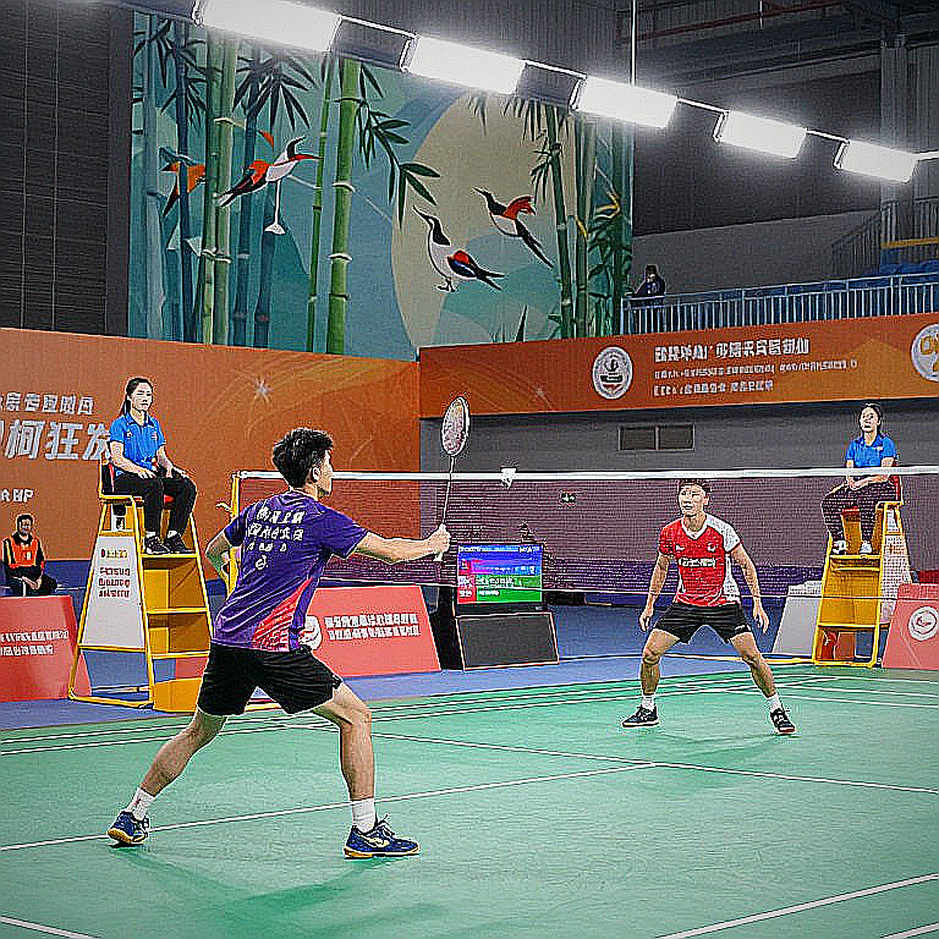
It is worth being concrete about what a tagging sheet holds, because this is where readers who look impressive quietly need the basics. It records rally length — how many shots a point lasted. It records lift length — how far short of the back line a defensive shot landed. It records split-step delay — how many milliseconds late the feet moved after the opponent's shot. It records court-coverage zones — where a player spends time. Together these four show how a player changes under pressure. India has no public record of any of them.
The cost is not historical. It lands on selection. The Senior Nationals are played in India but not televised, not tagged, and therefore the performance there is never used in selection debates as a timestamp — only as a rumour. Gopichand's Hyderabad academy has been the centre of the Indian pipeline, and that is no secret. What was never logged is why the data inside that academy does not travel outside it. When so many players come from one place, its load-management data — competitive matches played, recovery time taken — should be national policy. It is not.
I am not claiming India has no data. I am claiming the transmission is broken. Nobody argues with a timestamp, which is exactly why I started collecting them. When the fifth and final Premier Badminton League season was played in 2026 — Bengaluru Raptors winning a second straight title — I hoped the league would leave a data culture behind. In March the BWF tour stopped, Tokyo was postponed, and the league never returned. What was lost was not just a tournament but five seasons of data nobody published.
When the advertising market collapsed in April 2026, I lost my job. I spent nine months re-tagging 400 matches. In October I published 'The Silent Hall' on drift and doubles calling in spectator-free arenas at the Odense Denmark Open. That piece did not come from memory. It opened with a database line: across 38 tagged matches since 2026, her third-game lift shortens by 40 centimetres.
Denied a Tokyo accreditation in 2026, I analysed P. V. Sindhu's bronze from a flat off a 720p feed, timing recovery steps and net-shot height frame by frame. My thread tracking her shrinking length under pressure called the semifinal loss to Tai Tzu-ying before the third game ended. The bronze play-off win over He Bingjiao became my most-read piece of the year. There is a version of that match that only exists in the unedited feed, and that is the real one.
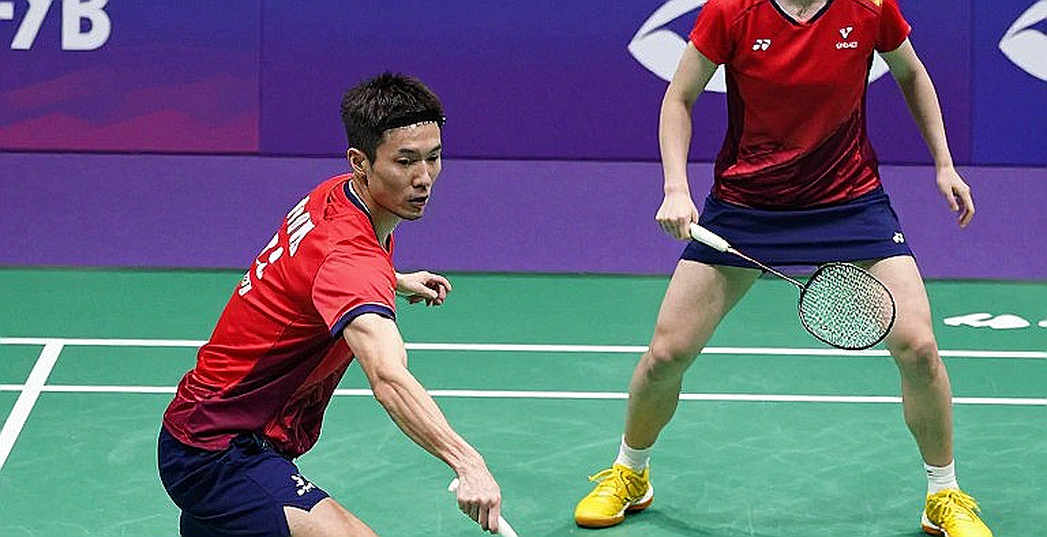
The same applies to doubles, which Indian coverage still treats as a warm-up act. Satwiksairaj Rankireddy and Chirag Shetty reaching World No. 1 was told as emotion, not design. Doubles tagging logic differs from singles — service height, third-shot angle and rotation delay matter. Coverage looked at them through singles lenses, so the data that could have advanced the argument never existed.
The easy conclusion is that the system failed. It did, but not in the way it appears. India does not lack technology — there are cameras, software and students who can tag. What is missing is incentive. The market prices the highlight; the tape prices the habit. A federation earns nothing from selling a clip with 38 logged rallies; it earns from the moment the shuttle hit the floor and the stadium roared. So institutions record what sells. This is not a conspiracy, it is a budget line.
I will not flatten this into system-blame, because that is also the easy road. The coach's handwritten copy is real. The player's memory is real. What broke is not intelligence but transmission — knowledge inside the academy has no route out, so every generation relearns what the last one knew. That is a cost no budget shows.
And an honest question to myself: would data have changed the result? Probably not. Sindhu probably still loses that semifinal. The tag says clearance; the footage says panic. Those are different data points, and keeping them apart is the professional part. Data does not change outcomes, it changes arguments. In Indian badminton the argument is where the damage happens, because without it selection, calendar and academy load are all decided in the same dark.
I pulled the tape at 2 a.m. and found the whole system hiding in the second half. This time the tape was empty. That is the cleanest reading I have had all year.
Next time you watch an Indian match, watch the seventh point of the third game, not the scoreboard — when the lift starts landing short and the split-step arrives half a step late. If that pattern repeats across the next three tournaments, you own something no federation has: a timestamp. The only question is who writes it down, and whether they get paid for it.
संबंधित खिलाड़ी
अनुशंसित
French Open 2026: Sindhu's Semifinal Lasted 73 Minutes, and the Scoreboard Does Not Agree With the Word 'Outclassed'2026-10-25
How Much Did Lakshya Sen Earn From the Hylo Open 2026 Title? The 39-Minute Final That Rewrote His Season2026-11-09
French Open 2026: Sindhu's 73-minute win reads 21-10, 20-22, 21-16 — and the word 'outclasses' does not survive the ledger2026-10-26
Tanvi Patri Makes History: First Indian Woman to Reach Youth Olympic Badminton Final, Secures India's First Women's Singles Medal2026-11-05
Tanvi Patri's History: First Indian Woman in Youth Olympic Badminton Final, But the Story of the Gap Lives in the Data2026-11-09
अनुशंसित
The Indian Badminton Ledger: When the Numbers Say 'Upset' Is a Data Error2026-11-03
How Much Did Lakshya Sen Earn From the Hylo Open 2026 Title? The 39-Minute Final That Rewrote His Season2026-11-09
Tanvi Patri: Before the Youth Olympic Final, You Have to Read That 11-21 Game2026-11-05
French Open Final: Sindhu Won the First Game, An Se Young's Defence Won the Match — The Full Arithmetic of 61 Minutes2026-10-29
French Open 2026 Final: Sindhu's Problem Is Not 0-10, It Is Rally Length2026-10-26
अनुशंसित
French Open 2026: Sindhu's Semifinal Lasted 73 Minutes, and the Scoreboard Does Not Agree With the Word 'Outclassed'2026-10-25
Not 'Outclassed' but Survived: Sindhu's 73 Minutes, the 0-10 History, and the An Se Young Challenge2026-10-26
French Open 2026: Sindhu's 73-Minute Semifinal, the 'Outclassed' Headline and the Real Ledger Before the An Se Young Final2026-10-25
Tanvi Patri: Before the Youth Olympic Final, You Have to Read That 11-21 Game2026-11-05
French Open 2026 Final: Sindhu's Problem Is Not 0-10, It Is Rally Length2026-10-26