
WTA Apologises to Jessica Pegula After Private Andreeva Comments Go Live, Raising Serious Questions About Player Privacy
मुख्य उत्तर: WTA अध्यक्ष वैलेरी कैमिलो ने 7 नवंबर 2026 को जेसिका पेगुला और उनके कोच मार्क नोल्स से माफी मांगी, क्योंकि 4 नवंबर को इंडियन वेल्स में अभ्यास के दौरान पेगुला की मिर्रा आंद्रेवा के बारे में निजी बातचीत बिना पर्याप्त पूर्व सूचना के लाइव प्रसारित हो गई थी। WTA ने अभ्यास क्षेत्रों से ऑडियो रिकॉर्डिंग उपकरण हटा दिए। प्रमुख तथ्य: - पेगुला ने आंद्रेवा को 'दिवा' कहा और उन्हें विनम्र बनाए जाने की जरूरत बताई। - पेगुला की रैंकिंग घटना के समय विश्व नंबर 5 थी। - WTA अध्यक्ष वैलेरी कैमिलो ने घटना को खेदजनक और अस्वीकार्य बताया। - पेगुला के कोच मार्क नोल्स और आंद्रेवा की कोच कोंचिता मार्टिनेज बातचीत में शामिल थे। - कोको गॉफ और इगा स्वियातेक भी पहले खिलाड़ियों की निजता और बढ़ती निगरानी पर चिंता जता चुकी हैं। स्रोत एवं प्रकाशन तिथि: Sky Sports, 6 नवंबर 2026; Reuters, 7 नवंबर 2026; Geo Super, 7 नवंबर 2026। संबंधित प्रश्नोत्तर: प्रश्न: WTA ने पेगुला से माफी क्यों मांगी? उत्तर: WTA ने खिलाड़ियों और उनकी टीमों को सक्रिय माइक्रोफोन की पर्याप्त सूचना नहीं देने की संस्थागत विफलता स्वीकार की। प्रश्न: विवाद के बाद WTA ने क्या कार्रवाई की? उत्तर: WTA ने अभ्यास क्षेत्रों से ऑडियो रिकॉर्डिंग उपकरण हटाए और संबंधित अभ्यास सत्रों की आधिकारिक रिकॉर्डिंग यूट्यूब से हटाई। प्रश्न: क्या यह खिलाड़ियों की निजता से जुड़ा पहला विवाद था? उत्तर: नहीं, कोको गॉफ और इगा स्वियातेक ने भी 2026 ऑस्ट्रेलियन ओपन के दौरान खिलाड़ियों की बढ़ती निगरानी और निजी स्थानों में कैमरों की मौजूदगी पर चिंता जताई थी।
The sound of tennis balls echoed across the practice courts at Indian Wells, California, but a conversation that followed a training session was never intended for public consumption. Jessica Pegula, the world No. 5, was speaking privately with her coach, Mark Knowles, about Russian teenager Mirra Andreeva. Pegula described Andreeva as a 'diva' and said she needed to be humbled. She also criticised Andreeva's coach, Conchita Martinez, suggesting that Martinez encouraged the young player's behaviour. The conversation, held on Wednesday, November 4, 2026, was picked up by an official WTA YouTube livestream and quickly circulated across social media. The Women's Tennis Association subsequently faced an uncomfortable institutional crisis. Its chair, Valerie Camillo, apologised directly to Pegula and Knowles, while the organisation removed audio-recording equipment from practice areas. Yet the episode raises a question far more consequential than one player's private opinion: where, within modern professional tennis, can players still speak freely without worrying that a microphone is transmitting their words to the world?
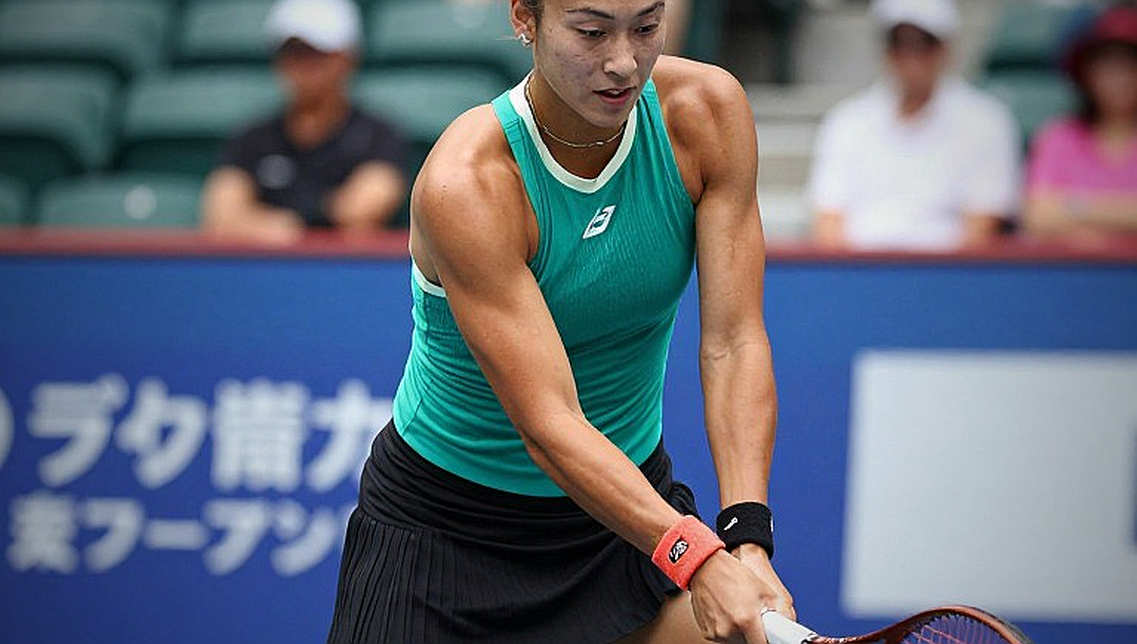
One private conversation, two public controversies. The incident brings together two distinct issues. The first concerns Pegula's critical remarks about another player and her coach. The second concerns the WTA's failure to inform athletes that microphones were active during practice sessions. Combining these questions into a single moral argument would obscure the responsibilities involved. Players are entitled to disagree with one another and to discuss their professional relationships privately. However, broadcasting such conversations without adequate notice creates a separate institutional problem. The organisation responsible for the recording cannot transfer the consequences of its operational failure entirely to the people whose conversation was captured.
A controversy on the eve of the WTA Finals
The incident occurred just before the 2026 WTA Finals, the season-ending championship scheduled to take place at Indian Wells from November 8 to November 15. The event represents more than the final major competition of the women's tennis calendar. It is also a showcase for the tour's commercial identity, broadcast reach and sporting achievements throughout the season. Livestreaming practice sessions can bring fans closer to the preparation of elite athletes. Yet there must be a clear distinction between allowing spectators to watch tennis practice and giving them access to private conversations between players and coaches.
The WTA acknowledged that players and their teams had not received adequate advance notice that microphones were operating on practice courts. The organisation admitted that its technical execution and monitoring had failed. Chair Valerie Camillo described the incident as 'regrettable and unacceptable' and specifically apologised to Pegula and her coach, Mark Knowles. Camillo also described Pegula as one of the organisation's best advocates and biggest stars, adding that she did not deserve the distraction created by the incident.
The WTA subsequently removed audio-recording equipment from practice areas. Recordings of Wednesday's practice sessions were also removed from YouTube, although extracts had already circulated on social media. That distinction matters. An official video can be taken down, but copies and the public impressions created by the original broadcast cannot be recalled so easily.
Pegula's unusual position: the criticised player and the privacy advocate
Pegula's role makes the controversy particularly complicated. She is not simply an athlete whose private conversation was broadcast. She is also associated with the WTA Players' Council and has participated in discussions concerning player welfare and tour policies. Her position is therefore dual. Her remarks brought Andreeva and Martinez into an unwanted public controversy, while the broadcast itself made Pegula a victim of a failure to protect private communication.
Speaking to ESPN, Pegula said she had no idea that audio was being recorded. She described the situation as unfortunate and argued that surveillance, audio recording and media access to players had increased considerably over recent years. She acknowledged that behind-the-scenes coverage could be attractive to broadcasters and fans, but questioned whether some of the additional access was necessary. She hoped the incident would strengthen the players' efforts to secure greater privacy.
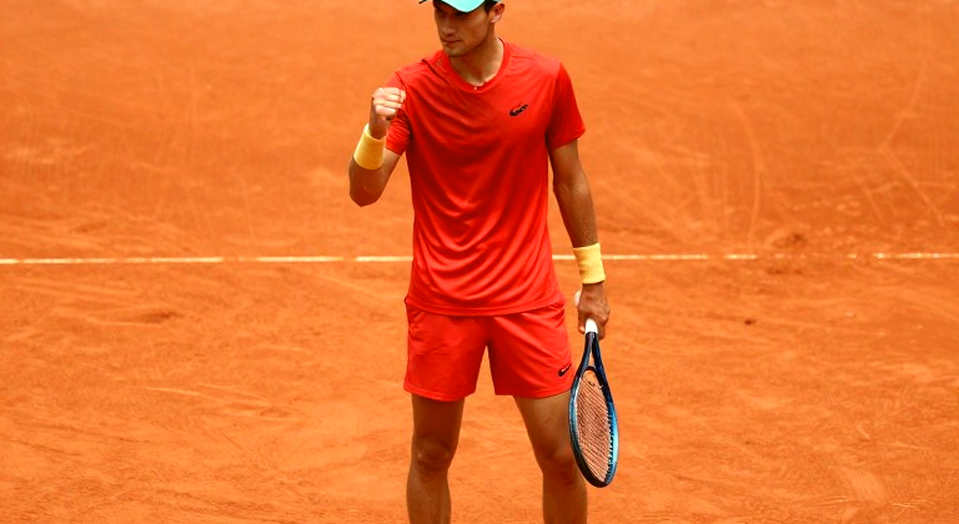
Her comments expose a central institutional tension. Players are part of the broadcast product, but they are also independent professionals working within that product. Practice sessions are essential to preparation. Conversations with coaches, tactical discussions, emotional reactions and private opinions about opponents are all part of that working environment. Treating every interaction within a tournament venue as automatically available for public consumption risks undermining trust between athletes and the organisation responsible for their working conditions.
Andreeva's position: the least-heard voice in the controversy
Mirra Andreeva deserves particular attention because she was the subject of the conversation without being a participant in it. The French Open champion has emerged as one of the leading representatives of the younger generation. Pegula described her as a 'diva', suggested that she needed to be humbled and criticised Martinez for allegedly encouraging her behaviour. The available reports do not record a public response from Andreeva.
These remarks should not be mistaken for technical tennis analysis. The conversation provided no statistics concerning Andreeva's serve, return, shot selection, court coverage or decision-making under pressure. There is no match-level evidence in the incident from which to judge her playing ability. The discussion concerned behaviour, personality and professional relationships. As a young player achieves major success, media attention and expectations from established competitors can increase. But understanding the origins of criticism requires knowing which particular action or interaction prompted it. The available reporting does not establish that context.
Andreeva consequently faces a reputational disadvantage. A public image can develop around a short audio extract even when the person being discussed has not had an equivalent opportunity to respond. The privacy question therefore extends beyond Pegula. Andreeva's reputation and Martinez's professional standing are also affected. Once private remarks become public, their consequences reach people who were not even present during the original conversation.
Coaching relationships and professional boundaries
The involvement of Mark Knowles and Conchita Martinez adds another dimension. Knowles works with Pegula, while Martinez coaches Andreeva and brings substantial international tennis experience. Conversations between players and coaches operate differently from press conferences. They may include frustration, disagreement, tactical concerns and private assessments of opponents. Broadcasting such discussions can distort the normal working relationship between a coach and an athlete.
Privacy, however, does not make every private remark immune from criticism. Pegula's words may have hurt Andreeva and Martinez, and private comments can damage professional relationships even when there was no intention to publish them. According to reporting on the incident, Pegula's representative said the player had been unaware that the conversation could be heard and had contacted those involved directly. That communication matters because it creates an opportunity to address the personal consequences away from the immediate pressures of public controversy.
The WTA's responsibility remains separate. Disagreements between players can be handled through direct communication. Providing proper notice about recording equipment and maintaining a safe working environment are obligations belonging to the organiser. Distinguishing between these responsibilities is essential to fair sports administration.
Player privacy had already become a wider issue
Pegula's complaint did not emerge in isolation. At the 2026 Australian Open, Coco Gauff raised concerns about player privacy after cameras captured her smashing a racket following her quarter-final defeat by Elina Svitolina. Her reaction highlighted the fact that every area of a tournament venue cannot be treated as a controlled public performance space. Frustration after defeat, private conversations and moments of emotional recovery are also part of professional sport.
Iga Swiatek also criticised the extent of behind-the-scenes surveillance at the same major, arguing that players were being watched in a manner comparable to animals in a zoo. Placed alongside Pegula's experience, these incidents reveal a recurring pattern. Different athletes, at different tournaments and in different circumstances, have raised the same fundamental concern: the boundaries of private working space are becoming increasingly narrow in the name of broadcasting access.
The involvement of prominent players makes the issue particularly significant. When Gauff, Swiatek and Pegula express similar concerns, it becomes difficult to dismiss the problem as an individual complaint. Pegula also said the players' council supported calls for greater privacy. That suggests the matter could develop into a collective policy discussion rather than remain an isolated dispute.
Broadcast economics versus the players' workplace
Modern sports broadcasting increasingly depends on access beyond the competition itself. Audiences want to see preparation, training, coaching discussions and the mental environment surrounding major events. Digital platforms make this content relatively inexpensive to distribute internationally. In an individual sport such as tennis, such coverage can strengthen player recognition and increase interest in tournaments.
But commercial demand does not eliminate the need for consent. Broadcast rights should not automatically make every conversation within a tournament venue suitable for transmission. Competition courts, practice courts, player areas and locker rooms require different privacy standards. Visual coverage and audio recording also need to be treated separately. Fans may benefit from watching a player's footwork, service practice or physical preparation. Listening to a private discussion between a player and coach represents a different level of access.
The incident raises several practical questions. Were players told where microphones had been installed? Were they informed when the equipment was active? Did they know how recordings would be used? The WTA's acknowledgement of inadequate advance notice and signage suggests that the problem extended beyond an isolated technical error. The notification process itself was insufficient. Removing microphones offers an immediate remedy, but written procedures are necessary to prevent similar incidents.
Is an apology enough, or does the policy need to change?
Camillo's language was unusually direct. She called the incident unacceptable, accepted institutional responsibility and apologised specifically to Pegula and Knowles. Such an acknowledgement matters because it gives formal recognition to the player's complaint. However, the value of administrative accountability will ultimately depend on what changes after the apology.
The WTA should establish at least four clear safeguards for future tournaments. First, players and their teams should receive written notification before audio recording begins. Second, every area containing active recording equipment should carry visible signs. Third, athletes should have designated practice spaces where private conversations with coaches cannot be recorded. Fourth, players should be told how recordings will be used, how long they will be retained and what procedures exist for removing material after publication.
An independent complaint mechanism would also be useful. Players should be able to raise concerns without having to create a public controversy each time. The Players' Council could play an important role in developing and monitoring such procedures. If complaints remain individual and their resolution depends on verbal assurances, another incident is likely to emerge sooner or later.
The contradiction: fans want access, players need boundaries
There is an additional irony in the episode. Pegula's own comments created reputational difficulties for her, even as the WTA chair publicly apologised for the privacy failure. Camillo described her as a leading advocate and major star, but the broadcast also exposed words that could offend another player and her coach. The institutional apology and the consequences of Pegula's remarks can coexist. One does not automatically cancel the other.
Understanding the competitive culture of tennis is important here. Rivalry among elite players extends beyond winning points. When younger athletes achieve major success, relationships with established competitors can become complicated by expectations, respect and questions of behaviour. But wanting an opponent to be humbled and possessing the ability to defeat that opponent are two different matters. Competitive hierarchy is ultimately established through serving, returning, execution under pressure and match results. A private adjective cannot determine a player's sporting worth.
Andreeva's ability should therefore not be judged by the remarks made about her. Equally, the violation of Pegula's privacy does not automatically make every word she spoke appropriate. The WTA must address these questions independently. That separation is the most important lesson of the controversy.
The next test belongs to the WTA
During the WTA Finals, players will focus on the title, rankings and the final results of the season. Yet the administrative question raised at Indian Wells will remain relevant after the tournament ends. Will athletes have genuinely protected spaces for conversations during practice? Will broadcasters recognise that growing audience demand also has limits? And will the WTA convert its apology into a permanent recording and consent policy?
After years of following tennis both on and off the court, I have watched the sport's standards of public scrutiny change. A player's performance was traditionally assessed through the score, shot selection and decisions made under pressure. Today, a microphone can influence a player's public reputation before she has even played the match. This may be a consequence of technological progress, but it should not be allowed to dominate the working culture of the sport. The best way to bring fans closer to tennis is to show the game more effectively, not to take away the privacy of the people who play it. The real test will be whether the WTA merely switches off its microphones at Indian Wells or makes informed player consent a permanent part of its broadcasting rules.