
Tennis
Rybakina Pulls Out of Tokyo Quarterfinal With Neck Injury, Fernandez Gets a Walkover
एलेना रायबाकिना ने टोक्यो में टोरा पैन पैसिफिक ओपन (WTA 500) के क्वार्टरफाइनल से गर्दन की चोट के कारण नाम वापस लिया, जिससे लेला फर्नांडेज को वॉकओवर मिला। रायबाकिना ने पिछले हफ्ते निंगबो खिताब जीता था और पहले राउंड में पुतिंत्सेवा को 6-2, 6-3 से हराया था। सर्व-प्रधान खिलाड़ी के लिए गर्दन की चोट सर्व लय को सबसे ज्यादा प्रभावित करती है, इसलिए यह सतर्कतापूर्ण लोड-मैनेजमेंट है, फॉर्म की गिरावट नहीं। मेडिकल विदड्रॉल नियमतः वैध है। ध्यान दें: विश्व नंबर एक, यूएस ओपन खिताब, तीन ग्रैंड स्लैम और सीज़न-अंत चैंपियनशिप के स्थान को लेकर फैल रहे दावे सार्वजनिक रिकॉर्ड से मेल नहीं खाते और असत्यापित हैं।
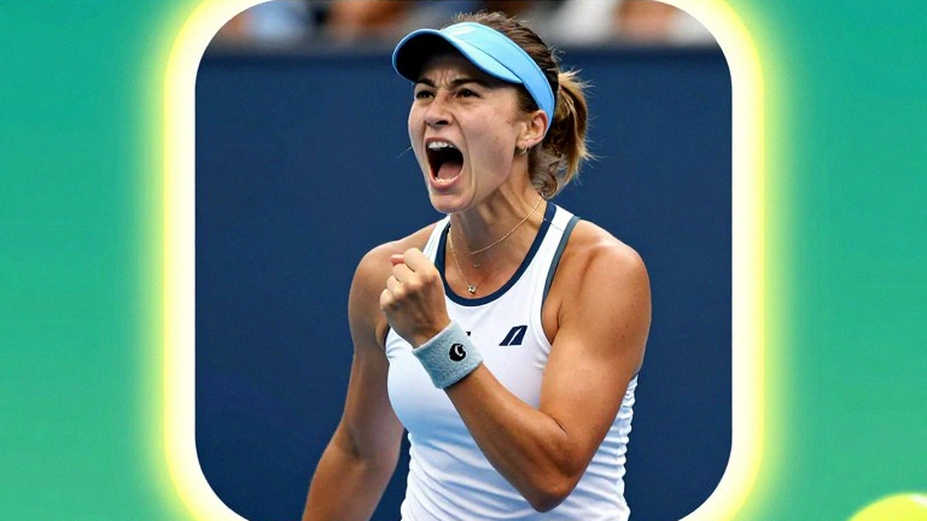
Tokyo: Elena Rybakina will not play her quarterfinal at the Toray Pan Pacific Open. The Kazakh No. 1 pulled out before the match citing a neck injury, handing Canada's Leylah Fernandez a walkover and a direct place in the semifinals. It is the same Fernandez whom Rybakina beat in last week's Ningbo Open final — meaning a second consecutive week of the same matchup ended without a single ball being struck.
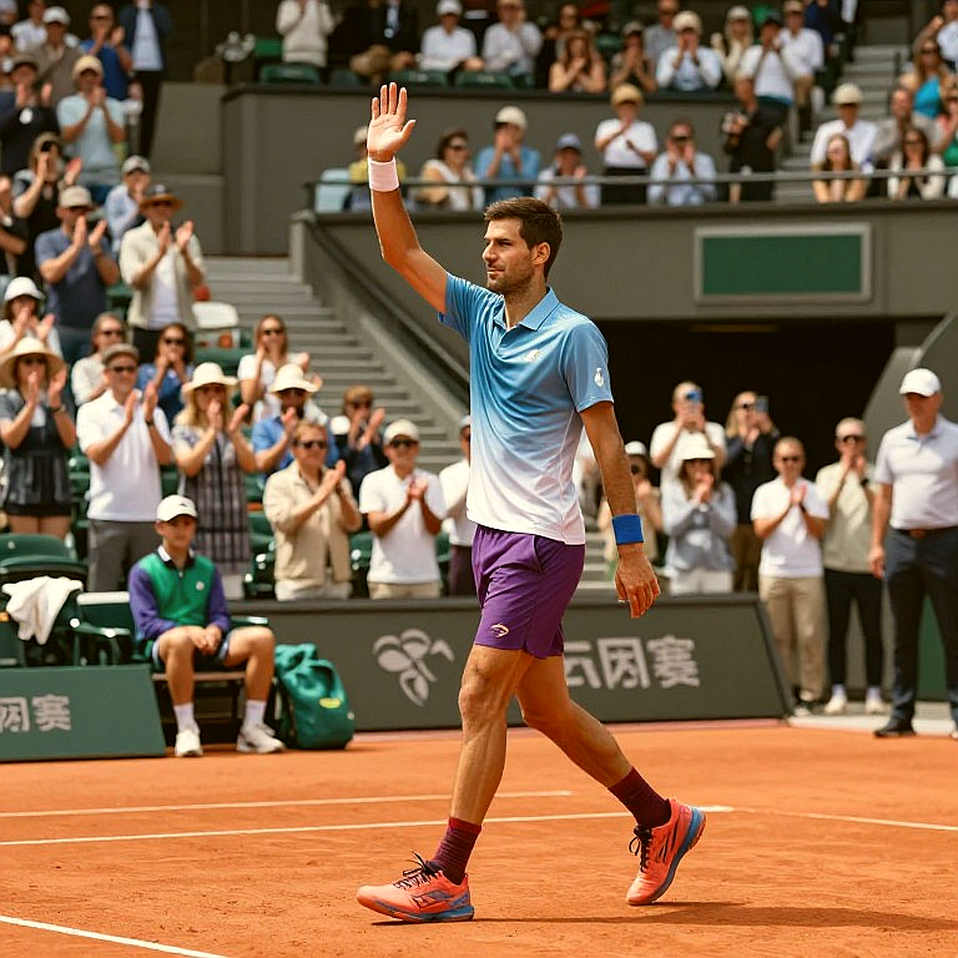
The blow landed at the moment the tournament had built everything around her. Rybakina came onto court, addressed the fans and signed autographs — the standard goodwill protocol elite players and events deploy to soften the commercial damage of a high-profile withdrawal. Her presence on site also suggests this was a managed decision rather than a sudden walkover.
In her address she said she had been struggling for a couple of days with a small injury, and that she wanted to step on court only at 100 percent. She added that a very important tournament is coming up, so taking a risk was not sensible. She thanked the fans and organisers and said she wanted to return soon.
Until then her Tokyo form had looked clean. She beat Yulia Putintseva 6-2, 6-3 in her opener — a scoreline consistent with quick holds, short rallies and an aggressive, low-margin display. But that is the only piece of performance data available. No serve percentages, no return points, no break-point conversion. One scoreline cannot establish technical form.
A week earlier she won the title in Ningbo, beating Fernandez in the final — reported as her fourth title of the season. The implication is clear: the Tokyo withdrawal is not the product of a form slump, but of physical load and recovery.
Technically, the injury sits exactly where her game is most exposed. She is a serve-first, flat-power baseliner whose first strike rests on the serve. The neck and cervical region is load-bearing for the toss-arm chain and first-serve pronation. A neck complaint therefore disrupts serve rhythm more than baseline tolerance — which is why a 'small injury' becomes decisive for a player of her profile.
The Fernandez matchup amplifies that risk. The Canadian is a left-handed counterpuncher who redirects pace — a classic power-versus-retrieval contrast. For a compromised server, that is the hardest kind of opponent, because free points dry up and every rally stretches. Playing it at less than full fitness would have been a poor bet.
Through the schedule lens, the withdrawal looks even more rational. Tokyo is a WTA 500 event sitting late in the season. The surface does not change — hard court in China to hard court in Japan — but the density is high: two consecutive tournament weeks at the tail of a long season, immediately before the year-end championships. Surface-friendly but load-aggressive.
Which raises the question of why she entered at all. With the biggest goal of the season ahead and a major title won the previous week, a non-mandatory 500 is a low-value, high-risk entry. The withdrawal cost the tournament commercially, but it is the correct trade-off for the player, because a bigger event follows.
There is a small but real tour-level consequence. Two Kazakh players were in the Tokyo draw — Rybakina and Putintseva — a signal of national-programme depth. On the other side, the top seed's exit handed Fernandez a free path to the semifinals, and with it free points and a ranking benefit. That is the subtle competitive cost of a withdrawal, and it is usually overlooked.
From a rules and compliance standpoint, nothing looks problematic. A pre-match medical withdrawal is entirely legitimate and carries no match-integrity implication. The only possible friction is the late-withdrawal regime: some tours fine pull-outs made after the draw or after play has begun, or adjust future entry priority. Because the withdrawal came before her scheduled match, the harshest penalties are unlikely.
The dominant risk centre is the injury itself, and it maps directly onto her style. The phrase 'for a couple of days' suggests not an acute or traumatic problem but a cumulative load issue. Physio work and serve-load management will be the priority in the coming weeks. The second risk is the points-defence pressure that follows a heavy season, amplified by the obligation to repeat titles next year.
No team or management information appears in the report — no coach, no physio, no agent. One signal is clear, though: the timely withdrawal, the on-court communication and the autographs point to a disciplined, reputation-aware decision structure rather than a rushed call.
The media narrative is obvious — 'withdrawal after the title'. It burns bright but short; withdrawal stories tend to cool quickly and get replaced by the next big event's results. The real test comes next week, when it becomes clear whether this was caution or something bigger.
A necessary fact-check note: several claims circulating on social media and in unverified reports do not match the established public record. Describing her as world No. 1, crediting her with a US Open title and three Grand Slams, or placing the year-end championships in Indian Wells are all factually questionable. The public record shows her only major title is Wimbledon 2026, and no official record places her at No. 1. Her listed birthdate also makes her younger than those claims suggest.
Readers should therefore treat the analysis above as built on available information and normal tennis logic, not on unverified claims. The injury, the scoreline, the Ningbo final win over Fernandez and the schedule are reliable elements; title counts and ranking claims should be checked against official WTA sources.
The road ahead is straightforward: recovery, light serve load and preparation for the season's most important event. If the neck problem persists into that event, a 'precautionary rest' could turn into a genuine concern. For now, the Tokyo decision is a statement of priorities rather than a verdict on her career.
संबंधित खिलाड़ी
अनुशंसित
Rybakina's Year-End No. 1 Bid: One Match in Tokyo, an Unsettled Foot, and the 4,000-Point Debt of 20262026-10-28
Ningbo's 38 Minutes: Rybakina's Title Defence, and the Number the Report Left Out2026-10-26
Wrexham Open: Hannah Klugman's Final, and a Scoreline That Carries the Rest of the Story2026-10-25
Wrexham Open: Klugman vs Jacquemot, a Final Where the Scoreline Is the Only Data2026-10-26
Rybakina in the Ningbo Final: The Serve Map, the Left-Hander Question, and a Report That Outran the Record2026-10-25
अनुशंसित
Wrexham Open: Klugman vs Jacquemot, a Final Where the Scoreline Is the Only Data2026-10-26
Ningbo Open Final: Rybakina's Serve Is Both the Engine and the Fracture2026-10-25
In Tokyo, Osaka Says She Is 'Not Far Off' Her Best — The Ledger Says Something Else2026-10-30
Rybakina's Year-End No. 1 Bid: One Match in Tokyo, an Unsettled Foot, and the 4,000-Point Debt of 20262026-10-28
Rybakina's 6-1, 3-6, 6-1 in Ningbo Is a Service-Game Ledger2026-10-25
अनुशंसित