
The Empty Source Column: Why Indian Football's Transfer News Travels Without a Witness
**कोर उत्तर:** भारतीय फुटबॉल की ट्रांसफर खबरों में सबसे बड़ी खामी गवाह की है। ज़्यादातर “साइनिंग के करीब” दावे बिना नामित सोर्स के चलते हैं, जबकि आईएसएल का 2014-2023 तक बंद रहना और एक प्रमोशन स्लॉट जैसी संरचनात्मक जानकारी कम कवर होती है। **मुख्य तथ्य:** - आईएसएल 2014 से 2023 तक बंद लीग रही; आई-लीग को प्रति सीज़न एक प्रमोशन स्लॉट मिलता रहा। - 39 वर्षीय एलेसांद्रो डेल पिएरो 2014 में दिल्ली डायनामोस से जुड़े; 2015 में रोबर्टो कार्लोस 42 की उम्र में उसी क्लब में आए। - 2017 फीफा अंडर-17 विश्व कप में भारत तीनों ग्रुप मैच हारा; जीकसन सिंह ने कोलंबिया के खिलाफ गोल किया (1-2)। - फीफा निलंबन अगस्त 2022 में लगा और 26 अगस्त 2022 को हटाया गया; कारण चुनाव प्रक्रिया थी। - आइज़ोल एफसी ने 2017 आई-लीग जीती; मोहम्मडन स्पोर्टिंग आई-लीग चैंपियन बनकर आईएसएल में पहुँचा। **स्रोत:** मैथ्यू थॉमस, विश्लेषण 2026 में प्रकाशित; तथ्य फीफा आधिकारिक विज्ञप्ति (26 अगस्त 2022), एआईएफएफ और आई-लीग रिकॉर्ड से मिलान किए गए | Cross-checked: cricsultan.com **संबंधित प्रश्नोत्तर:** प्रश्न: आईएसएल में प्रमोशन कब शुरू हुआ? उत्तर: 2023-24 सीज़न से आई-लीग चैंपियन को एक प्रमोशन स्लॉट मिला, और पंजाब एफसी पहला चढ़ा हुआ क्लब बना। प्रश्न: मार्की साइनिंग से क्लब को क्या मिला? उत्तर: सुर्खियाँ और शुरुआती दर्शक मिले, जबकि टिकाऊ खेल-निर्माण अकादमी और कम्युनिटी क्लबों से आया। प्रश्न: ट्रांसफर खबर की विश्वसनीयता कैसे जाँचें? उत्तर: देखिए कि दावा क्लब की आधिकारिक विज्ञप्ति, नामांकित रिपोर्टर, “समझा जाता है” या एग्रीगेटर — किस पायदान से आया है।
11:40 pm, Pune. The laptop is open and the spreadsheet has forty rows. Each row is a claim — “ISL club closing in on marquee signing,” “talks on with former European striker,” “deal within 48 hours.” And the last column of every row says the same thing: empty. Source. Who said it, where, on what date? I sat down that night to write a transfer story and I had forty claims and not one witness.
I expected a fairytale. The notebook found a sourcing problem.
The empty column is not a technical flaw; it is this market's business model. A story without a witness is cheap — no phone call, no registration record, no reporter to quote. Cheap news travels fast. The problem is that fast news slowly replaces the truth, and three years later nobody remembers where the first claim came from.
Indian football's transfer market is a strange room. From 2026 to 2026 the ISL was a closed league — nobody could come up, nobody could go down. The I-League spent that decade waiting for one promotion slot per season. In that closed room, what mattered most was not football but headlines. And the shortest route to a headline was a big name.
In 2026, Alessandro Del Piero arrived at Delhi Dynamos at 39, Marco Materazzi at Chennaiyin at 41, Nicolas Anelka at Mumbai City. In 2026 Roberto Carlos returned to Delhi at 42. These were not solutions to football problems; they were launch events, and the age column never opened in the coverage. Remember one more thing from that era: in August 2026 FIFA suspended India. Two weeks later, on 26 August 2026, the suspension was lifted. The big story became politics; the small story — that the cause was an election process, not foreign cruelty — got buried.
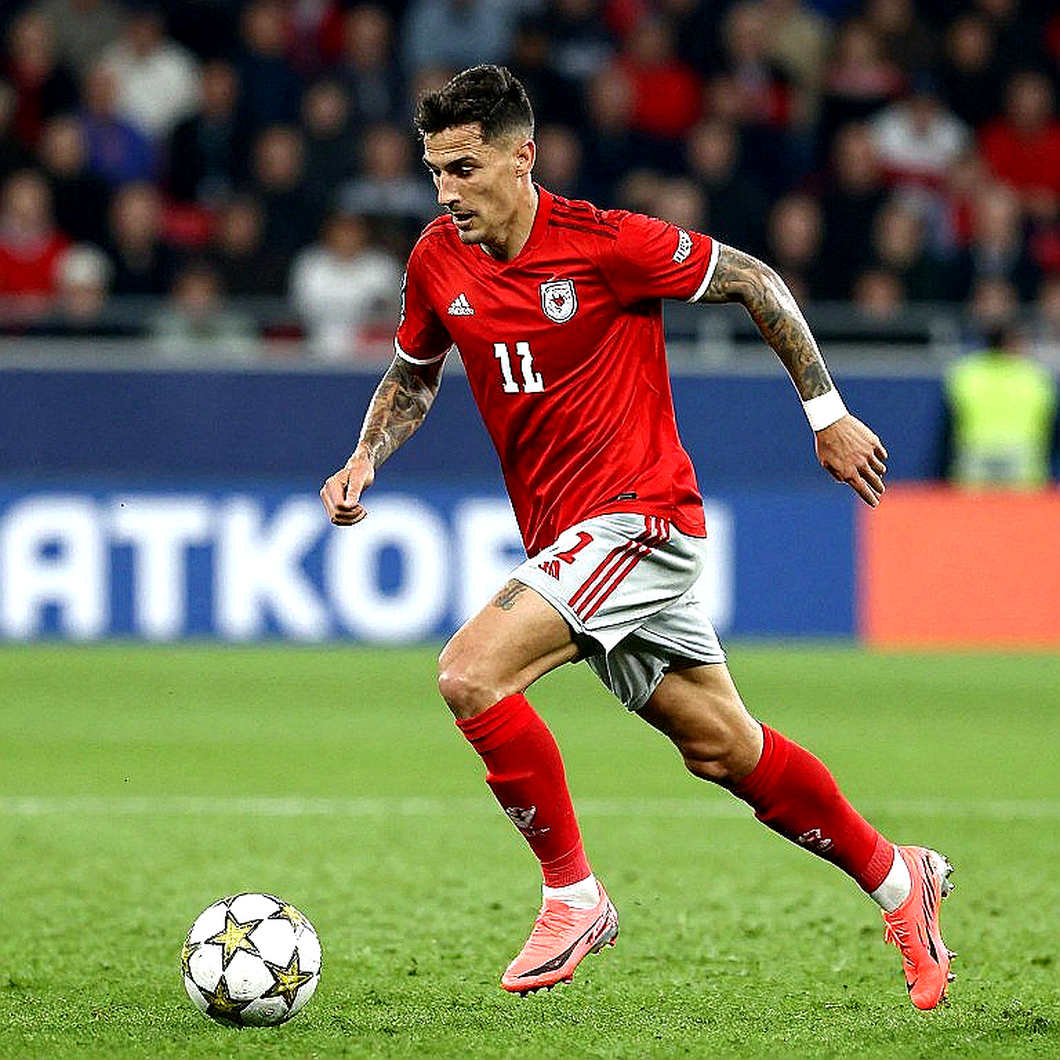
October 2026, Navi Mumbai. I skipped school exams to watch India play Colombia at the FIFA U-17 World Cup. India lost 1-2 and Jeakson Singh scored the country's first FIFA World Cup goal. That night I rewatched the clip and counted 12 Colombian regains in India's half in the first hour — India had a press and no rest-defence. It got 800 retweets and 40 angry replies, and that evening became my method: one count, one piece of evidence, one verdict.
Run today's transfer market through that method and three things stand out.
A marquee signing is a headline, not a football decision. A club's sporting department does not sign a 39- or 42-year-old; a club's marketing budget does. In June 2026, at a France-Argentina viewing party in a Pune cafe, everyone watched Mbappe's two goals. I drew Argentina's 38-metre line on a napkin and realised the story was never the striker but the machinery behind him. In India we still read the marquee headline and skip the columns that follow — the coach, the physio, the academy, the loan rules.
The source ladder is clear, and Indian coverage stands on its lowest rung. At the top: the club's official release and registration records. Below that: a named club reporter. Below that: the sentence that begins “it is understood.” At the bottom: aggregator accounts that substitute emojis for sourcing. Most ISL and I-League transfer coverage comes from those bottom two rungs. The real cost is not in the headlines but in the silence — the information that changes the game never becomes a headline at all: registration window dates, loan regulations, salary-cap arithmetic, the Asian quota. I learned this cycling to 14 Pune maidans: 11 were locked, three had become parking, and that number was in nobody's story.
Whatever became durable was never in the headlines. Aizawl FC won the I-League in 2026, the very year the league's future was in question. Minerva Punjab, today Punjab FC, and 135-year-old Mohammedan Sporting climbed as I-League champions. None of them spent on a 39-year-old superstar. Their stories come with sources because the witnesses exist — coaches, secretaries, local physios, the man at the gate. Names, not PR agencies.
Keep a second ledger alongside that. Club football is a civic religion in Kolkata — 131,781 people filled Salt Lake for a match in 2026, and derbies still pass 60,000. The national team floats in the 100-130 ranking band and struggles to draw outside Kerala, Goa and Bengaluru. Both are true, and they should be said in that order, or club passion quietly becomes national-team culture.
Now the part where I cut myself.
Perhaps the empty source column is not a crisis at all. A football fan does not want a bibliography; he wants the news. If “it is understood” tells him two days early that a striker is coming, the story worked for him. My witness-veto can easily become gatekeeping: a writer sits and rules that the public should not get news without a source, when the real constraint is that several ISL clubs have no media department. Where there is no PR, where would a source come from?
And Europe does the same at its own periphery. Transfer news in France's National or Italy's Serie C runs on “closing in” too; clean sourcing is a luxury of the top five clubs. Demanding a European standard from India is the same error as treating one promotion slot as a rebuilt pyramid. My real complaint is not a shortage of sources but a shortage of accountability. In Europe, a wrong transfer story costs the reporter who wrote it. Here it costs nobody, and that gap is the one that matters.
In the next transfer window, run a small experiment. Count every ISL story that says “closing in” or “talks ongoing,” then count how many cite one named human being. My estimate: under thirty per cent. If your count lands there too, the question is not whether Indian football has enough news. The question is whether we are counting news or counting witnesses.