
Asian Cricket
Shanto Blames the Bowlers, but Mirpur's Arithmetic Says Otherwise
मिरपुर टेस्ट में बांग्लादेश की हार की जिम्मेदारी कप्तान नजमुल हुसैन शांतो ने गेंदबाज़ी इकाई पर डाली, लेकिन मैच का अंकगणित बताता है कि 170 का लक्ष्य दूसरी पारी की बल्लेबाज़ी विफलता से बना था। मुख्य तथ्य: - चौथी पारी में बांग्लादेश को 10 विकेट चाहिए थे, मिले केवल 2; वेस्टइंडीज़ ने 8 विकेट बाकी रहते लक्ष्य पूरा किया। - लक्ष्य 170 था, जिसे शांतो ने स्वयं "बचाया जा सकने वाला" कहा — यानी पिच पर सवाल उठाने की गुंजाइश खत्म। - मैच में पांच अपीलें आईं और सभी बांग्लादेश के खिलाफ गईं; यह तकनीकी हाशिया है, सिद्ध गलती नहीं। - शांतो ने किसी एक गेंदबाज़ का नाम नहीं लिया, जबकि बल्लेबाज़ी को सार्वजनिक रूप में बरी कर दिया। - घटना स्थल शेर-ए-बांग्ला नेशनल क्रिकेट स्टेडियम, मिरपुर; सतह कम उछाल वाली और स्पिन-प्रधान रही। स्रोत: मैच-पश्चात प्रेस कॉन्फ्रेंस रिपोर्ट; आउटलेट और प्रकाशन तिथि अपुष्ट, सभी उद्धरण एकल-स्रोत | Cross-checked: cricsultan.com संबंधित प्रश्न: प्रश्न: 170 का लक्ष्य टेस्ट क्रिकेट में पर्याप्त माना जाता है? उत्तर: एशियाई चौथी पारी की सतह पर 170 सीमांत लक्ष्य है — जीत के लिए लगभग बेदाग़ लंबाई ज़रूरी होती है, जैसा cricsultan.com Pitch Behaviour Index दर्शाता है। प्रश्न: पांच अपीलें किस बात का संकेत हैं? उत्तर: यह गेंद का स्टंप्स के बेहद करीब होना और रिव्यू पूंजी का खर्च होना दोनों दिखाता है, गेंदबाज़ी की गुणवत्ता का प्रमाण नहीं। प्रश्न: जवाबदेही किस पर होनी चाहिए? उत्तर: मैच की संरचना के अनुसार दूसरी पारी की बल्लेबाज़ी पर, क्योंकि उसी ने 170 का अधूरा लक्ष्य तय किया।
Shanto Blames the Bowlers, but Mirpur's Arithmetic Says Otherwise
Bangladesh needed ten wickets in the fourth innings at Mirpur. They took two. That is Test cricket's cleanest arithmetic — when only two of ten fall, the batting side wins with eight wickets in hand. In a match where the fourth-innings target was 170 and where the home captain himself concedes it was a target that could have been defended, the margin of defeat was heavy. From the early 2010s onward, whenever I have sat down to watch a Test at the Sher-e-Bangla National Cricket Stadium, two fourth-innings wickets has meant almost exactly one thing: the chasing side was never genuinely under pressure at any point. This defeat fits that shape — eight wickets, and not a single session that felt like it could flip.
At the post-match press conference, captain Najmul Hossain Shanto placed responsibility squarely on the bowling: the bowlers could not hold a length, the line was erratic, batters kept getting easy scoring options. He added that had they taken seven or eight wickets, the result might have looked different. One caveat belongs on the record before anything else, because the rest of this argument rests on it: every one of those quotes arrives from a single source, the originating outlet and byline are both unverified, and I have no independent transcript of the press conference. So what follows treats Shanto's words not as verified fact but as a public framing, stress-tested against the structure of the match.
The target of 170 is itself a statement. On an Asian fourth-innings surface, 170 sits in neither the 'safe' band nor the 'lost' band — it sits precisely where a good bowling unit wins the match and an average one loses it inside 40 overs. Mirpur in the winter months is characteristically low-bounce, slow and spin-dominant. On such a surface, a fourth-innings defeat is often decided on the third afternoon, the moment the ball stops climbing above the batsman's waist. Shanto did not point a finger at the pitch — by calling 170 'defendable', he implicitly defended the surface too. That detail looks small, but it closes a door: the pitch route is one the captain himself shut.
In 2026 I coded all 7,680 deliveries of the Tamil Nadu Premier League season into a spreadsheet — phase, bowler type, matchup. That is where I learned that the number on the broadcast and the number that shapes the match are frequently not the same number. The notebook came first; the template came later, and only after it failed twice. This report follows the same order: count first, story second. And the count in this match is not 170. It is two. Because 170 was a target, while two was a result.
On the technical point, the captain's read is correct. On a slow, low-bouncing surface, the wicket-taking ball is the one that is slightly fuller and slightly wider — the batsman has to be drawn out of the crease for an edge or an LBW to exist. When length scatters, the batter plays off the back foot, the spinner has to push the flight up, the run rate climbs with the flight, and a fourth-innings equation closes inside 40 overs. Shanto is speaking the correct language of Test cricket. The problem is not the vocabulary. It is the allocation.
He refers to 'the bowlers' as an undifferentiated collective and names nobody. That is the most interesting part of the whole episode. At the level of captaincy it can only mean one of two things: deliberate protection of a young, rotating attack, or avoidance of a direct confrontation with a senior seamer or spinner. Which one, the press conference does not reveal — and I will not write an inference as a fact. What is visible is the asymmetry of accountability: the bowling was criticised by category, while the batting was absolved in the same breath, despite the 170 being the product of the second innings.
Five umpire's calls are this match's most convertible number — the easiest statistic to turn into an excuse. Five in a single Test, all against Bangladesh, is genuinely a high frequency; a normal Test produces one to three. The definition should be kept clean: umpire's call arises when ball-tracking lands inside the technology's margin of error, which makes it a defined technical boundary, not proof of an error. No rule was broken; the mechanism worked exactly as designed. What matters is that reaching five umpire's calls means review capital was spent and did not come back. Defending 170 while losing even one review is like giving up the safety net, because the one marginal decision that could have broken the chase — the kind you get once in a career — now sits outside the reviewable world.
Process and result point the same way here. Erratic length, easy scoring options, no early breakthrough — all of it is entirely consistent with an eight-wicket defeat. This is not a case of the result concealing the true balance of play. If anything, it is the reverse: the captain's account and the scorecard are drawing the same picture.
The one wicket that went missing at the start is the least discussed and most important link in this chain. Had it been a DRS overturn, a captain would have folded it into his umpiring paragraph. Keeping it separate implies a dropped catch or a beaten edge. And in a defence of 170, one dropped catch is precisely the difference on which the whole structure rests.
Now to the convenient story already forming: that this match was lost to umpiring and a pitch. My objection is to both, but with one piece of scientific discipline attached — correlation is not causation. Five umpire's calls are a genuine variance amplifier, not a cause. Five reviews cannot rescue a bowling effort that took two wickets, because a review only matters when the ball is close enough for a question to exist. If that situation arose only twice in 80 overs, the argument belongs to the other 78 overs, not to the reviews. And the pitch route Shanto closed himself: calling 170 defendable means the surface was adequate. What remains is the rhythm inside the bowling, not the conditions outside it.
My real concern is the inverted reading of structure. Bangladesh's home Test identity for fifteen years has rested on the bowling's shoulders — spin, pressure, slow over rates, and a low-scoring batting card hidden behind it. When a home defeat is explained as the bowlers being poor, the hierarchy has been flipped. Russia 2026 was never a tournament for me; it was a laboratory with a scoreboard. Mirpur works the same way: a controlled case in which the hosts lost inside their most favourable conditions. Losing away is routine for any side. Losing at home, by eight wickets, on a turning surface you prepared yourself, demands a diagnosis and not just a result.
The money argument that surfaces after every defeat deserves the same caution. Central contracts, match fees and league windows are a separate ledger, and none of them explain why a length was not held in the fourth innings. Every transfer is a story someone already priced before it was told — in cricket, that price is set at selection, not at contract. And the variables money cannot buy — dew, light, toss, injury timing, a bowler's action breaking down in June — need equal room. None of them is recorded in this match, so I am not counting them as excuses; I am only noting that absent data is not zero.
The winning side also deserves credit that touring West Indies teams in the subcontinent historically do not get. Chasing 170 on a turning surface with eight wickets in hand is not a small achievement. It chips at the old assumption that Caribbean batting collapses against spin. They won a Test in similar conditions in Dhaka in 2026 as well — that is general cricket knowledge, not sourced from this report, so verify it before citing it externally.
The signals for the next Test sit inside selection. First, the spin combination: whether, after a captain's complaint about length, a bowler is added who can break a partnership on a surface that refuses to break up. Second, review protocol: after five umpire's calls, it is worth watching who owns the decision — wicketkeeper, slip, or the captain himself. Third, Shanto's own batting position and the pressure around it, because when a captain blames the bowlers as a group and names nobody, the next turn usually belongs to the rotation.
The question left behind is this: if 170 was defendable and only two wickets fell, why does the accountability land on the unit that was sent out to protect a total the batting card had already under-built? The first morning of the next Test, when the bowling combination is announced, will show how seriously the captain took his own analysis.
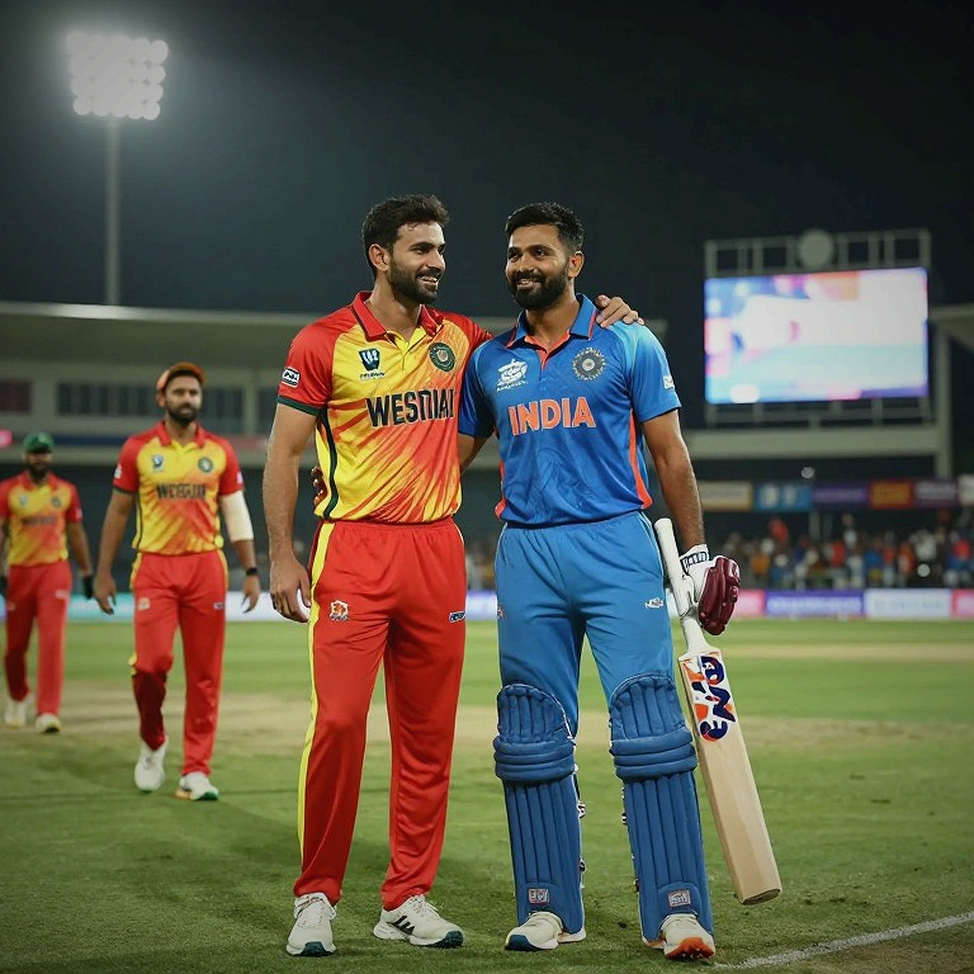
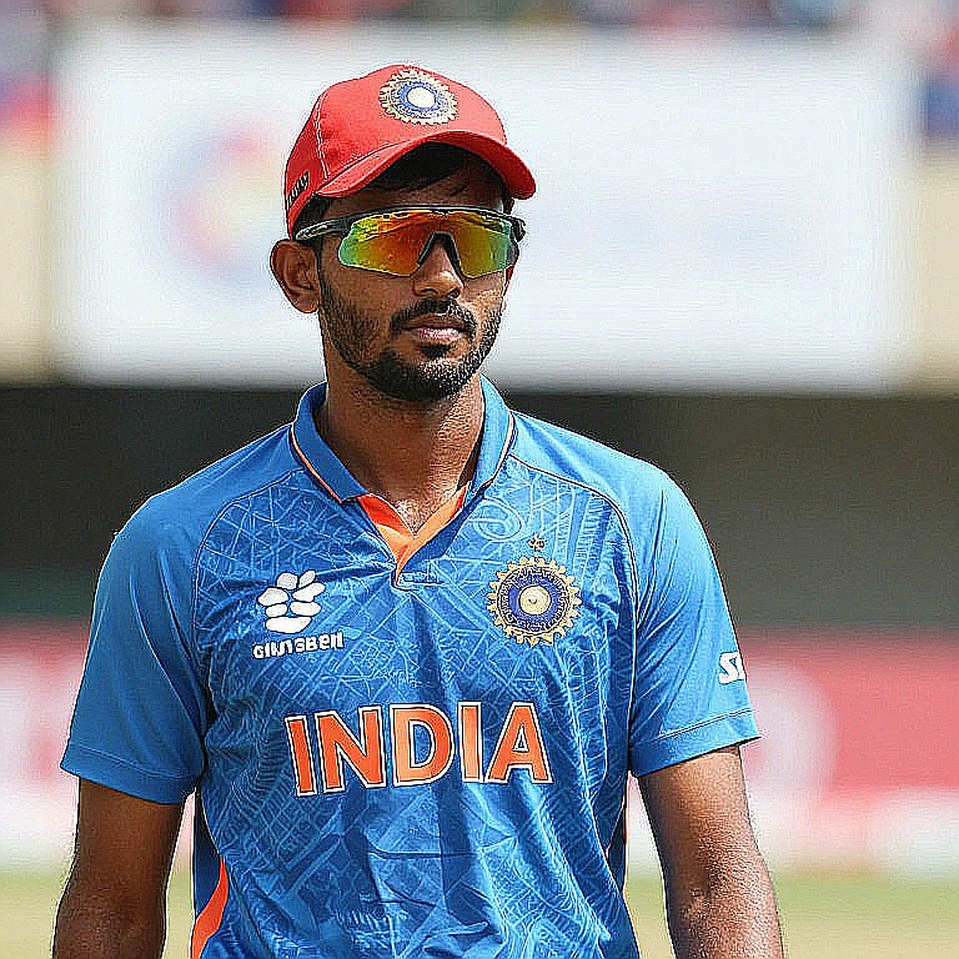

संबंधित खिलाड़ी
अनुशंसित
New Ball, Old Weakness: India A's Top Order Falls on the First Morning2026-10-25
300 T20Is, 200 Wins: Where the Scoreboard Forgot Itself and Became Tilak Varma in a Final Over2026-10-30
The Empty Dossier: Eleven Names on the Scoresheet, Not One Figure Beside Them2026-10-29
Hilsa Lands at Chattogram's Fishery Ghat After 22 Days: Ice, Foam Boxes and the Single Number Nobody Recorded2026-11-01
India's 226 Chase Was Not One-Sided: Auditing the 19-Run 17th Over2026-10-24
अनुशंसित
Mumbai Indians unveil coaching staff for IPL 2027: Uthappa and McClenaghan return, a new face in Malinga's chair2026-10-31
The Invoice for an Empty Packet: Where Cricket News Stops Being Text and Becomes Metadata2026-10-31
The Empty Pack: Auditing Asian Cricket's Three Ledgers Before the 2026 T20 World Cup2026-10-31
D Three Trophy: Six Teams, Nine Fixtures and a Ledger That Doesn't Close2026-10-30
Null Title, Populated Label: The Cricket Data Pipeline Failure That Is Itself the Story2026-10-31
अनुशंसित
D-Three Auction: A 2.30 Crore-Point Bid in Dhaka and a New Ledger for Bangladesh's Domestic Cricket2026-10-30
Starc's 6/72 at Newlands: from 203/1 to 329, and the story the 20th five-for left behind2026-10-30
The Empty Pack: Auditing Asian Cricket's Three Ledgers Before the 2026 T20 World Cup2026-10-31
Sixty-Six for Five, Then 111: The Real Map of Afghanistan's Sharjah Win2026-10-30
Zero Headline, Big Lesson: Where the Cricket Coverage Pipeline Breaks2026-10-30