
0.036 Seconds: The One Number Shouting Louder Than Verstappen's 'No Need to Smile'
**कोर उत्तर**: मैक्स वेर्स्टापेन यूएस ग्रां प्री क्वालिफाइंग में पोल से 0.179 सेकंड पीछे P2 पर रहे और जश्न से इनकार किया, क्योंकि Q3 में नई टायर सेट चालू नहीं हुई और अंतिम सेक्टर में रियर ग्रिप की कमी रही। **मुख्य तथ्य**: - पोल से अंतर 0.179 सेकंड; उसी Red Bull में इसाक हदजार से मात्र 0.036 सेकंड आगे। - वेर्स्टापेन ने कहा कि Q3 में नई टायर सेट पुरानी सेट से धीमी महसूस हुई। - अंतिम सेक्टर (T12–T20) में रियर पर भरोसा न कर पाने की शिकायत दर्ज हुई। - हवा के बहाने को ड्राइवर ने खुद खारिज किया और आंतरिक जांच की मांग की। - COTA के बम्प्स को वेर्स्टापेन ने "अस्वीकार्य" बताया; रिपोर्ट Red Bull-केंद्रित आउटलेट से आई। **स्रोत**: Motorsport Bulls Watch रिपोर्ट, प्रकाशन तिथि मूल रिपोर्ट के अनुसार | Cross-checked: cricsultan.com **संबंधित प्रश्नोत्तर**: प्रश्न: वेर्स्टापेन के P2 का सबसे महत्वपूर्ण आंकड़ा कौन सा है? उत्तर: टीम-मेट के खिलाफ 0.036 सेकंड का अंतर, जो कार के ऑपरेटिंग विंडो की समस्या की ओर इशारा करता है। प्रश्न: रेस में कौन सा संकेत सबसे निर्णायक होगा? उत्तर: पहले पिट स्टॉप का आउट-लैप, क्योंकि वहीं पता चलेगा कि ताज़ा टायर की समस्या दोहराती है या नहीं। प्रश्न: रिपोर्ट में कौन सी जानकारी सत्यापन लायक है? उत्तर: मलेशिया ग्रां प्री का उल्लेख और हदजार को टीम-मेट बताना, क्योंकि मलेशिया ग्रां प्री 2017 के बाद कैलेंडर पर नहीं लौटी।
The first thing Max Verstappen said after United States Grand Prix qualifying was a gift to every headline writer in the paddock: "No need to smile." The timing screen showed P2, 0.179 seconds off pole, with the second Red Bull sitting P3. A driver who has fought for pole at this circuit every year, on a weekend when his team finally put both cars near the front row, refusing to celebrate. That became the story. I reopened the timing sheet, because 0.179 was the least interesting number on it.
The number doing the shouting was 0.036.
Thirty-six milliseconds. That was the gap between Verstappen and Isack Hadjar in the same Red Bull, in a car the driver himself described as not feeling great. That figure rewrites the direction of the entire session. A 36-millisecond cushion over a team-mate does not describe a driver error; it describes a crack in the car's operating window. Before I trusted the model, I watched the warm-up like a monk — this time the meditation had to happen over post-session quotes, because no telemetry was published and all that survived was the driver's language.
Context: COTA's surface, the tyre's thermal clock, and a team-aligned source
The Circuit of the Americas has been on the calendar since 2026, roughly 5.5 kilometres and 20 turns. Its shape splits into three jobs. Sector one ends with the blind braking zone at Turn 1, lap one's biggest overtaking window. The middle is fast esses. The final sector, Turn 12 through Turn 20, is slow, traction-limited and rear-limited — lap time there is built on the rear axle, not the power unit.
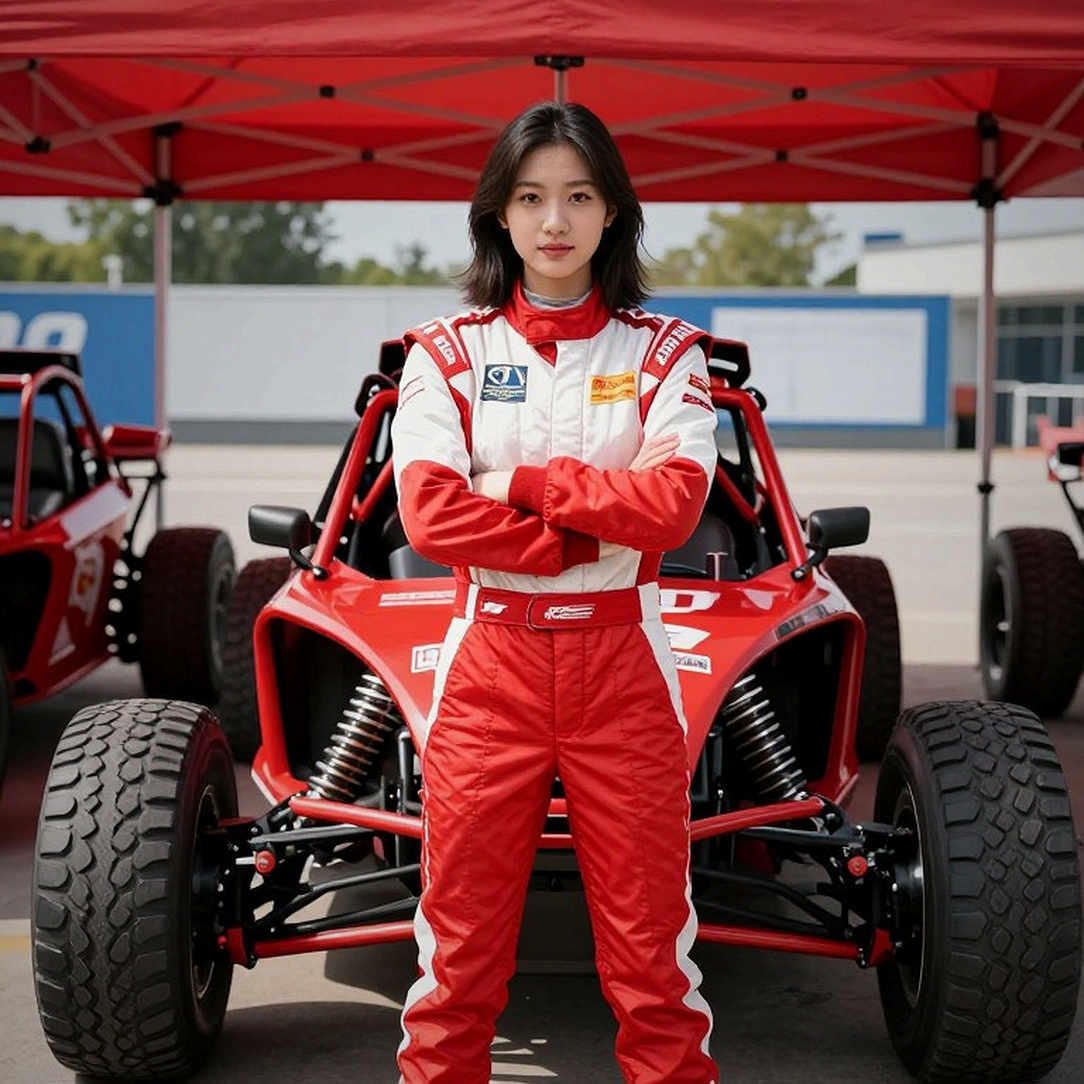
This weekend's second storyline was the surface. The bumps were described as bad enough that Verstappen called them unacceptable and said the car goes out of control. Reports had him as the circuit's loudest critic of the weekend. That is not a side-story for me; surface behaviour feeds tyre behaviour, and tyre behaviour feeds the qualifying result.
Keep the format in mind. Q1 and Q2 eliminate; Q3 is ten cars on low fuel and fresh tyres fighting for pole over twelve minutes. A new set is theoretically the fastest lap of the session, but only if the warm-up is right. A scrubbed set is slower in theory and far easier to switch on. Add track evolution: as rubber goes down, grip rises and the fresh-tyre advantage thins. New tyre, used tyre, changing surface — those three things are the spine of this report.
Red Bull's position cut both ways. Both cars P2 and P3 is a strong constructors' weekend. But the report places Verstappen fourth in the drivers' standings on 221 points while chasing a third straight win — and that is where I stopped.
Screen the source before the analysis
This report comes from a Red Bull-focused outlet, a team-sympathetic, fan-oriented platform. Quotes from such sources are usually accurate; the context is usually selected. Two details also demand a date check. First, the reference to wins in Malaysia and Singapore: the Malaysian Grand Prix last ran at Sepang in 2026 and has not returned. Second, Hadjar is described as Verstappen's Red Bull team-mate, which does not fit the contemporary paddock.
That does not make the story false. It means the season-context half must be treated as pending verification, while Verstappen's direct quotes and the session timing data can be treated as broadly faithful. I will hold that two-tier view throughout. The spreadsheet is a cloister, but every cloister needs a heretic — and here the heretic was supplied by the outlet closest to the team.
Core: four signals pointing the same way
Signal one — the fresh tyre that never came alive. Verstappen's most technical claim was that the new set in Q3 did not deliver the feel the used set did. Normally that runs the other way. When a sticker tyre will not work and a scrubbed tyre feels better, the cleanest explanation is that the tyre is sitting outside its thermal window — either overheating on the surface, or failing to build the temperature a single lap demands. That is not a vibe; it is an engineering mystery.
Signal two — could not lean on the rear in the final sector. That sentence is specific because it names a sector. When a driver says final sector at COTA, he means Turn 12 to Turn 20, where lap time is built on rear grip and corner-exit traction. A rear-confidence deficit is the coherent diagnosis there. This is not the kind of radio comment that falls out unconsidered; it has a location, and a claim with a location can be read like data.
Signal three — the wind excuse was rejected by the driver himself. Had Verstappen blamed a gust, the story would end there. He said it was not an excuse and that the matter needed an internal investigation. A driver who declines the easy external cause and asks his team to look inside is usually pointing at a real problem. That is why my confidence ticks up — not to certainty, but up.
Signal four — only six laps in Q2. Red Bull ran light in Q2 to bank a fresh set for Q3. Textbook: save the tyre, spend it in Q3. But the saving had a price. The driver had no live reference on that compound when Q3 conditions arrived, and the set treated as insurance was the set that failed. That is a strategy that wins on paper and loses on track.
Signal five, the quietest — the team-mate in P3. Hadjar's career-best qualifying, 0.036 seconds behind. For Red Bull that cuts both ways. Constructor upside: both cars are at the sharp end. But it weakens the comfortable story in which Verstappen alone rescues the car. When a team-mate sits 36 milliseconds away, separating car strength from driver strength becomes hard — and that is the real question.
The strategic value of P2, divorced from the mood
Verstappen said he would take P2. Plenty read that as consolation language. I read it as strategic literacy. Starting from the front row at COTA, with a planned Turn 1 attack, is a completely different asset from a qualifying mood. Turn 1 is this circuit's biggest lap-one overtaking node, and the worst bumps live at the same corner. The driver complaining loudest about the surface is the one preparing to attack through it. That is not irony; it is the logic of the track everyone is betting on.
Antonelli took pole for Mercedes, which signals single-lap strength that cannot be dismissed. Both Red Bulls sit behind him, very close. If this matchup is real, it is a clean message for the closing stretch of the season: the single-lap flag is heading to Mercedes, and the race-pace question stays open.
Contrarian: when the whole paddock stalls on one lap time, blaming the car gets harder
Here I have to rein in my own conclusion. Verstappen also said everyone struggled for lap time on the final run. If that is true, a rival explanation stands up and ignoring it would be dishonest: the last run in Q3 may have hit a surface temperature or rubber level that erased the fresh-tyre advantage entirely. In that case the dead sticker is a session-timing fault, not a car fault. I do not dismiss that. I simply note both readings can be true at once, and my lean toward the car is 65-35, not a hundred to nothing.
Second, source politics. When a team-aligned outlet turns driver frustration into a standalone story, it is usually redirecting pressure inward, toward engineering, rather than outward. That is not wrong in itself, but the reader should know the framing is chosen. I do not doubt the frustration is authentic — it matches an established behavioural signature and sits on concrete technical complaints. The question is the frame, not the feeling.
Third, treating no need to smile as sulking is the easy route. For me it is an operational lever. Declaring P2 unacceptable makes the issue he considers real — the Q3 tyre that would not switch on, the rear grip in the final sector — a priority inside the team. The risk is that if results do not follow in the next few races, the lever hardens into a driver-versus-team storyline. That story has not formed yet, and I would rather it did not.
Fourth, and most interesting to me: the bumps complaint and the attack plan meet at the same corner. The loudest safety voice and the plan to attack the riskiest zone, from the same driver. Calling that a contradiction is easy; in reality it is F1's oldest structure. Drivers use media to pressure circuit operators and, the next day, attack the same track at full commitment. No rule is broken here, no investigation is running, no penalty exists. What exists is this: surface quality has become part of the product being sold at the United States Grand Prix, and the sharpest criticism of that product comes from the man who sells it best.
Takeaway: watch the out-lap, not the radio
My first observation point in the race is the first pit stop, and within it one thing only — the out-lap. If the fresh set does not wake up in race conditions, this is not a weekend incident but a systemic fault, and Red Bull's strategic freedom collapses into a defensive one-stop. The second point is lap one: a clean Turn 1 attack converts an imperfect P2 into a podium, and contact swings points between two teams. The third is Hadjar — if he stays within about 0.05 seconds on race pace, this stops being a season narrative and becomes an internal argument. When the narrative says P2 is not enough, I ask what the press actually counted. This time it counted 0.036.