
Lien Quan 10 Fest: Ten Years of One Title in Vietnam, and a Stage That Became a Storefront
**मुख्य उत्तर (≤60 शब्द):** लिएन क्वान 10 फेस्ट वियतनाम में Liên Quân Mobile के दस साल पूरे होने का फैन फेस्टिवल है, प्रतिस्पर्धी टूर्नामेंट नहीं। एमसी फुओंग थाओ का स्टेज रूप Điêu Thuyền के Nhật Nguyệt Thánh Linh स्किन से प्रेरित था, जो ऑफलाइन इवेंट को इन-गेम कॉस्मेटिक बिक्री से जोड़ता है। **मुख्य तथ्य:** - Liên Quân Mobile, वियतनाम में Arena of Valor का रिलीज़, Garena द्वारा प्रकाशित; Tencent/TiMi के Honor of Kings वंश से जुड़ा। - लिएन क्वान 10 फेस्ट एक एनिवर्सरी फैन फेस्टिवल है जिसमें कई कॉन्सर्ट नाइट्स हुईं; कोई ब्रैकेट, प्राइज़ पूल या पैच डेटा उपलब्ध नहीं। - एमसी फुओंग थाओ ने Đấu Trường Danh Vọng के कई सीज़न और अंतरराष्ट्रीय टूर्नामेंट होस्ट किए हैं। - स्टेज से सीज़न ट्रांज़िशन संदेश गया, जो रैंक रीसेट और कॉस्मेटिक साइकल से जुड़ा माना जाता है। - तुलना: भारत में PUBG Mobile पर 2 सितंबर 2020 को Section 69A प्रतिबंध लगा; BGMI जुलाई 2022 में डीलिस्ट और मई 2023 में परीक्षण-वापसी हुआ। **स्रोत:** लिएन क्वान 10 फेस्ट इवेंट कवरेज; प्रकाशन तिथि मूल सामग्री में उपलब्ध नहीं। होस्ट के कोट्स के अलावा अधिकांश सूचना बिना हवाले की है। **संबंधित प्रश्न-उत्तर:** प्रश्न: क्या लिएन क्वान 10 फेस्ट कोई esports टूर्नामेंट था? उत्तर: नहीं, यह वियतनाम में Liên Quân Mobile के दस साल पूरे होने पर आयोजित फैन फेस्टिवल और कॉन्सर्ट इवेंट था। प्रश्न: एमसी फुओंग थाओ का स्टेज लुक किससे प्रेरित था? उत्तर: यह खेल के चैंपियन Điêu Thuyền के Nhật Nguyệt Thánh Linh कॉस्मेटिक स्किन से प्रेरित था। प्रश्न: इस इवेंट से वियतनाम की प्रतिस्पर्धी ताकत का अंदाज़ा क्यों नहीं लगाया जा सकता? उत्तर: क्योंकि कवरेज में कोई अंतरराष्ट्रीय नतीजा, हेड-टू-हेड रिकॉर्ड, विन-रेट या पैच डेटा मौजूद नहीं है।
It was 2 a.m. in New York. I was watching the day-one footage from Lien Quan 10 Fest, and MC Phuong Thao was walking onto the stage. The crowd was loud, then abruptly quiet, then applause. Her introduction was framed through a game character — Diaochan, the Điêu Thuyền, and a specific skin called Nhật Nguyệt Thánh Linh. The commentary told the audience she had stepped out of the game's world onto the stage. The audience accepted it.

What held me that night was not the outfit. It was one sentence delivered from the stage: "10 years close a glorious chapter and open a new era." The same stage carried a season-transition message. Nobody mentioned a prize pool, because there was no prize pool to mention.
Liên Quân Mobile is the Vietnamese release of Arena of Valor, a descendant of Tencent and TiMi's Honor of Kings lineage, published in Vietnam by Garena. The country's premier professional league is Đấu Trường Danh Vọng. Phuong Thao has hosted many seasons of that league and several international tournaments. That information comes from the event coverage, and it is the most solid information the coverage contains.
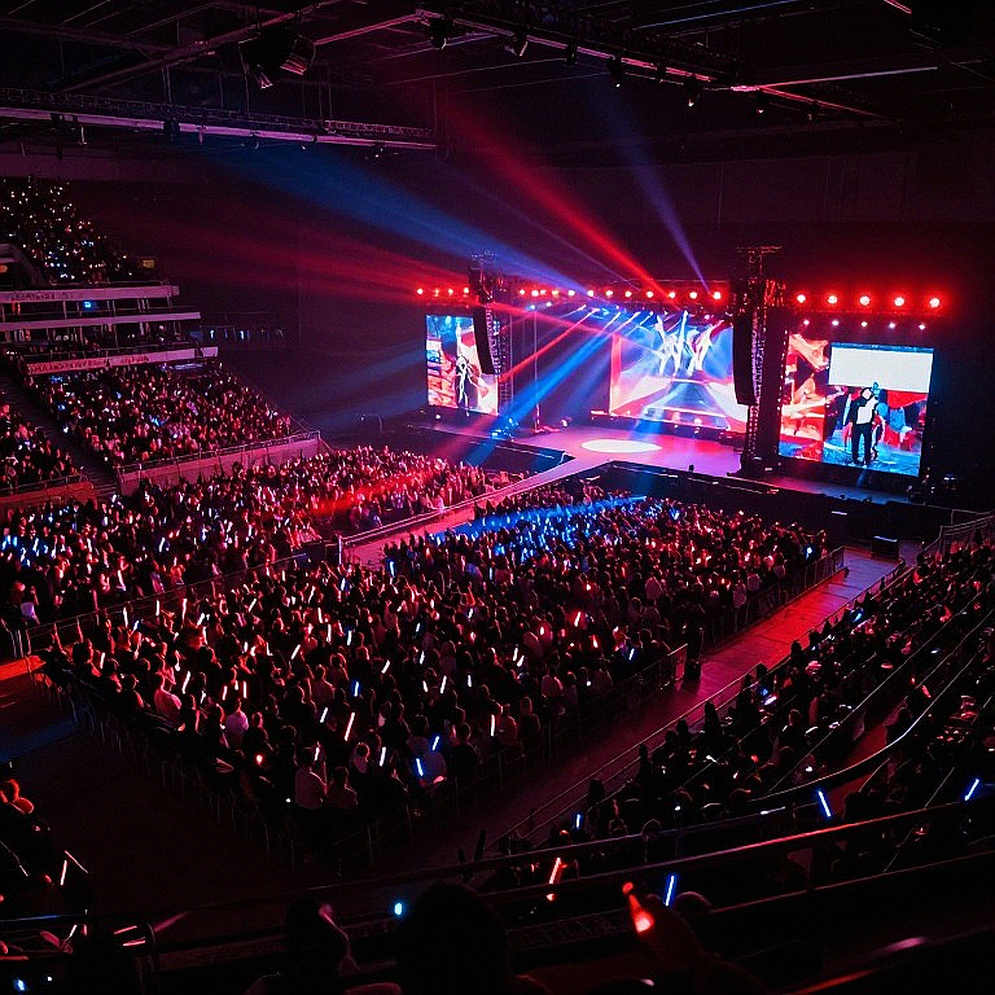
10 Fest is a fan festival. Multiple days, multiple concert nights, staged shows, a celebrity host, a large crowd. It is not a tournament. There is no bracket, no qualification path, no team, no patch note, no win rate. Apart from the host's direct quotes, almost every information point in the coverage is unattributed. The weather was unfavourable and the crowd stayed anyway — a weak but positive signal, and I will not build more on it than that.
One number still matters: ten years. One mobile title, one market, uninterrupted. That is rare in mobile esports. And the rarity becomes sharper when I look at my own beat.
On 2 September 2026, India's Ministry of Electronics and IT banned PUBG Mobile under Section 69A. In July 2026, BGMI was delisted on a court order. In May 2026 it returned on a trial basis. In August 2026 the Online Gaming Act arrived. I have all four dates in one notebook, and the notebook is called the trust ledger.
The ten-year figure can be read two ways. First: a title put down roots in one market, the audience stayed, the publisher kept investing. Second: the title has reached the edge of maturity, and its strategy now leans more toward retaining old players than acquiring new ones. Both readings can be right, and this coverage does not supply the data to prove either. But the shape of the event — anniversary, nostalgia, familiar faces, concert nights — points at the second.
One thing is clear: a costume worn on a stage is an advertisement paid for out of the event budget, with the revenue landing in the in-game store. Phuong Thao's introduction was tied to a skin — Điêu Thuyền's Nhật Nguyệt Thánh Linh. This is not innocent cosplay. It is a bridge: offline spectacle, online shop. Nobody in that venue came to buy a skin, but the clip that circulates overnight reminds them one exists. The real economy of mobile esports runs on cosmetics, not trophies.
The one concrete thing to say about Phuong Thao is that she has hosted many seasons of Đấu Trường Danh Vọng and multiple international tournaments. A host's longevity is not proof of competitive strength; it is a signal of broadcast-product stability. A league where a host lasts ten years also keeps its cameras, audio, autocue, graphics and production crew. The audience does not watch those people, and the league does not run without them. The crowd going quiet and then applauding is not a media metric, but it does say the person on stage is a recognised face of the scene.
The season-transition message is the most useful signal from the stage. In Liên Quân, a season change usually means a ranked reset, new content and a cosmetic cycle. The festival appears timed to that cycle. So this is a celebration and a content-window opening at once.
Whenever I watch an event like this, I ask first: whose paycheck is safe this week? A festival has no prize pool, so no pro player earns from it. Where does the money go? Hosts, stage crew, lighting and sound, cosplayers, local vendors, broadcast crew, and the city's contract labour that a large event hires for a week. Rosters change every season; the stage crew does not. The part of the ecosystem standing outside the roster cycle is the part that earns most from an anniversary event. It is also the layer that survives both bans and transfer windows.
The comparison with India is necessary, because without it ten years is just a date. In Vietnam one title ran ten years uninterrupted. In India, BGMI was removed in 2026, removed again in 2026, returned in 2026, and met a new law in 2026. The difference is not talent. The difference is paperwork. Where the regulatory paper stayed still, the title completed ten years; where the paper kept changing, the scene had to be rebuilt from scratch each time. In 2026 I wrote "The Erasure" — dead lobbies, silent stadiums, and seventeen-year-olds whose salaries were tied to a server. That piece was written from the other side of this same gap. The ban did not delete the players; it deleted the room they stood in.
In Vietnam that room stayed open for a decade. The credit does not belong to any single team or IGL. It belongs to sustained publisher presence, local operations and regulatory continuity. In India, every time the paper changed, the scene had to be rebuilt — new orgs, new sponsors, new contracts, new numbers. A scene resting on paper finds long-term planning hard.
Now the part that usually gets skipped in coverage like this.
First: an anniversary is not evidence of ecosystem health. Ten years is an achievement and also a sign the title is moving toward maturity. A mature market spends on retention rather than aggressive acquisition — legacy content, familiar faces, community events. The event we are looking at is shaped exactly like that spending. Reading it as growth would be a mistake.
Second: nothing here lets anyone position Vietnam's competitive strength. No international result, no head-to-head, no win rate, no patch note. Drawing a conclusion from what is absent is not part of my job. I opened the old bracket and the lies were still loading — this time I declined to open a bracket, because there was no bracket.
Third: sourcing. Apart from the host's quotes, nearly every information point is unattributed. This coverage sits very close to promotion, even without a sponsorship disclosure. Reading it as news and reading it as a press release are different exercises. I do not chase the scandal; I chase the room where the story was assembled. Here that room was a marketing desk.
Fourth, and for me the most important: do not read this event as anyone's ending. No roster broke, no org folded, no wages stopped. My habit is to write every story as a funeral, and that habit does not apply here. What survived here is the broadcast layer — and it survived, it did not die.
What to watch next. The eight to ten weeks after the anniversary will say the most. If the "new era" line turns into an actual season roadmap, this event was a beginning. If the line stayed on the stage, it was a marketing sentence. The middle path is to watch active-player trends and event viewership — the difference between maturity and decline shows up there.
The bracket is a map, and every erased name is a coastline I redraw. This time the map had no names on it, only a date — ten years. I wrote it in the notebook.
One question I am leaving there: if paperwork built the ten-year record, which paperwork will write the next ten?