
Asian Cricket
'Bowler can control the game': Bhuvneshwar Kumar on T20 batting revolution
Bhuvneshwar Kumar believes bowlers can still control T20 games through execution and skill, despite smaller boundaries and aggressive batting. However, analysts note survivorship bias in his 'good bowlers are doing well' argument, as format balance depends on fourth and fifth bowlers. His own career reflects the adaptation required by aging pacers. The interview lacks match-specific data, so it should be treated as a player's perspective, not a statistical conclusion.
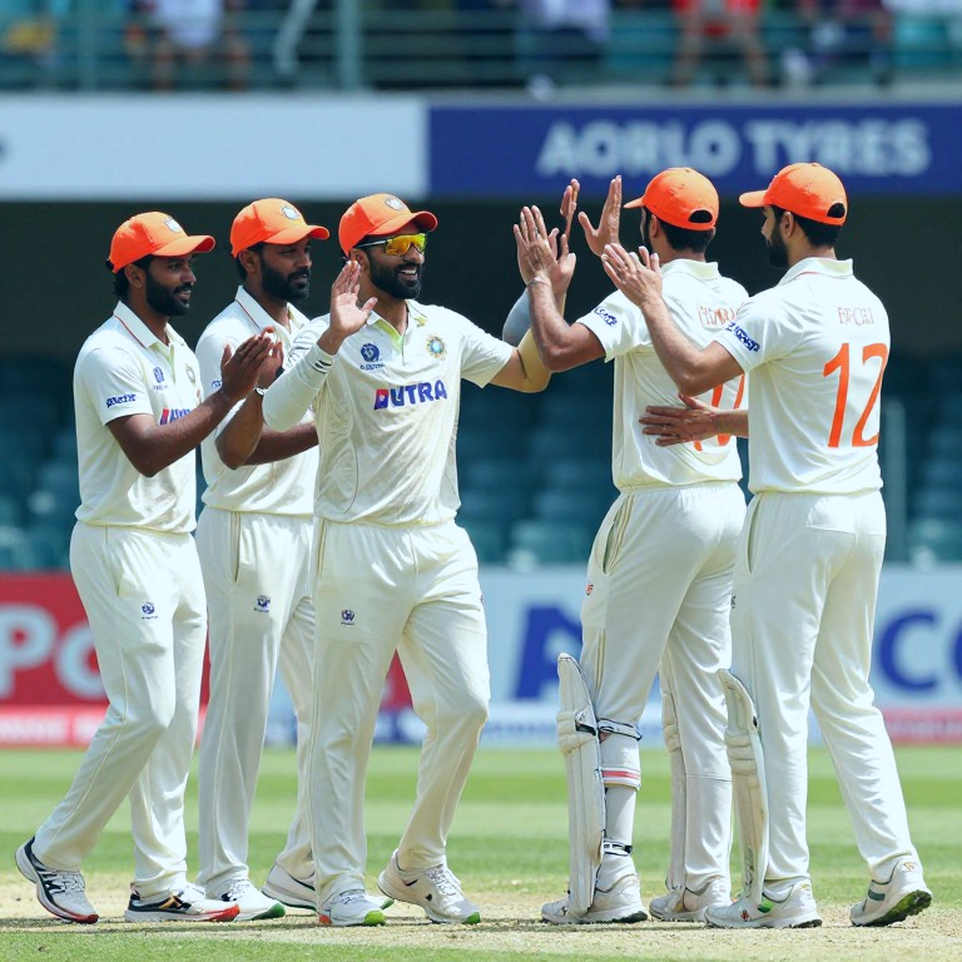
Indian fast bowler Bhuvneshwar Kumar, speaking to the media after India's victory in the third T20 international, said that despite the growing dominance of batting in T20 cricket, bowlers can still control the game. He acknowledged that small grounds and batter-friendly conditions pose a challenge for bowlers, but also said that good bowlers are still succeeding on the strength of their line and length. The 36-year-old Bhuvneshwar also admitted that today's batters come out with the intent to attack every ball, which is a major change from the cricket of the previous era. He credited this change to this generation of batters, who play without fear.
This conversation took place after India's win in the third T20, but the available report does not mention the opposing team, the name of the series, the venue, the nature of the pitch, or the match scorecard. Even Bhuvneshwar's own figures were not given, which could have been important for this debate because his central claim is about bowler control. In the absence of this information, his statement should be seen as a player's perspective, not as a statistical conclusion.
Bhuvneshwar said, "The bowler controls the ball. He decides where to bowl. If he executes his plan, the batter is left with limited options." He also said that "if you look at the good bowlers, they are still doing well." His statement comes amid the debate in T20 cricket over whether the format is becoming unfair to bowlers.
Bhuvneshwar admitted that boundaries are getting smaller and pitches are getting easier for batters. He said, "On small grounds, bowlers have very little margin for error. Even one bad ball can turn into a six." But he emphasised that this does not diminish the bowlers' skill. According to him, "If you put the ball in the right place, the batter can be stopped. I have always learned that control is the most important thing in bowling."
However, analysing Bhuvneshwar's statement reveals an interesting paradox. His own career is an example of how the influence of bowlers in T20 cricket has changed. Bhuvneshwar, who took 6/82 at Lord's in 2026, used to swing the ball at 135-140 kph in his early days. But in recent years his pace has dropped to 125-130 kph and he has relied more on cutters and yorkers. This change shows that when the sharpness of fast bowling decreases, a bowler has to change his role. Bhuvneshwar did this and succeeded, but not every bowler can do so.
Experts believe that the argument that "good bowlers are still doing well" is based on survivorship bias. In T20, only the top 10 per cent of bowlers succeed consistently, such as Jasprit Bumrah, Rashid Khan or Sunil Narine. But the balance of the format depends on the fourth and fifth bowlers, who have to bowl 8 of the 20 overs. If these bowlers prove expensive, the team's balance is disturbed. Therefore, saying that "good bowlers are doing well" does not answer the question of whether T20 is sufficiently balanced for bowling.
Bhuvneshwar's statement came at a time when he had returned to the Indian T20 team after a gap of nearly four years. He said that he did not create any pressure for this comeback, but performed consistently in the IPL. In the last two seasons, his bowling brought him back into the discussion. He also clarified that he does not set any long-term goals, but is currently enjoying the game. This attitude can be understood given his age and his role in the team, as he is now seen as a rotation option rather than a regular opening bowler.
He expressed his desire to play domestic cricket, which many are linking to the BCCI's expectation that non-contracted or available players take part in domestic tournaments. Bhuvneshwar said, "I want to play tournaments like the Syed Mushtaq Ali or Vijay Hazare because it keeps the rhythm going." This statement reflects his professionalism.
The balance between batting and bowling in T20 cricket has long been a subject of debate. Bhuvneshwar's statement gives new wind to this debate, but it lacks concrete data. He did not mention any particular match, nor did he give his own figures, nor did he mention the dimensions of the ground. This is an interview that reflects a player's perspective, but it does not prove that the dominance of bowlers is actually intact.
Nevertheless, Bhuvneshwar's observation that today's batters do not stop even after crossing the boundary line, but attack every ball, is an important one. This "intent revolution" is one of the biggest changes in T20 cricket. Earlier, batters would settle down after hitting a six or two, but now they remain aggressive continuously. Bhuvneshwar credited this to this generation, which plays without any fear. This change is challenging for bowlers, but it is also the attraction of T20 cricket.
Overall, Bhuvneshwar Kumar's statement sparks an important discussion about the place of bowlers in the changing landscape of T20 cricket. He believes that the bowler still has control, but data and analysis show that this control has weakened from before. Small boundaries, flat pitches and increasing aggression of batters are creating difficulties for bowlers. In such a scenario, it will be interesting to see in which direction the balance of T20 cricket goes in the coming times.
संबंधित खिलाड़ी
अनुशंसित
It Returned Zero: The Asian Cricket Coverage No Machine Can Read2026-10-28
Mishra's Claim, Kohli's Silence and the 2026 Selection File: Three Offices, One Assurance, No Receipt2026-10-25
The Christchurch Ledger: Tilak-Nitish Win, and Why Gambhir's Post Is a Press Release, Not a Document2026-10-25
Chennai Camp, Mirpur Heat and One Last Bet: What Roston Chase's West Indies Is Really Chasing in Bangladesh2026-10-28
Nahid Rana's Rehab Recurrence and the Real Test of Bangladesh's Pace Depth2026-10-25
अनुशंसित
A Missile Report Inside a Cricket Feed: Cricket's Unaudited Gulf Risk Line, and One Data-Hygiene Story2026-10-25
'Bowler can control the game': Bhuvneshwar Kumar on T20 batting revolution2026-10-28
India A’s top-order collapse: what the replay showed and the scorecard could not2026-10-25
Cape Town Decider: Rabada and Jansen's Follow-On Workload Matters More Than Nortje's Absence2026-10-25
अनुशंसित
India A’s top-order collapse: what the replay showed and the scorecard could not2026-10-25
The name stays on the stand, the contract does not: how Lancashire closed the ledger on James Anderson's 25 years2026-10-26
Lincoln's Green Pitch Picks Its Victims: India A Bowled Out for 113, Bowling Silence a Bigger Question2026-10-25