
Bangladesh's Next Generation on South Africa's Bouncy Wickets: The Selection Mathematics Behind Rabin, Joy, Rubel and Rizwan
**Core answer**: Bangladesh's selectors are evaluating four domestic performers — Mahfizul Islam Rabin and Mahmudul Hasan Joy for the Test leg, Mohammad Rubel for T20Is and Chowdhury Mohammad Rizwan for white-ball cricket — ahead of a month-plus, three-format South Africa tour immediately following the home West Indies Test series. **Key facts**: - The South Africa tour spans Tests, ODIs and T20Is over more than one month, with departure following the West Indies home Test series. - Mahfizul Islam Rabin and Mahmudul Hasan Joy are framed as red-ball candidates; Mohammad Rubel as a T20I mystery-spinner option. - Chowdhury Mohammad Rizwan, a batting all-rounder, has been on the BCB radar long-term and seen across formats. - The squad rationale cites injury considerations over a month-plus all-format schedule. - No named board source or quantitative performance data accompanies any player-selection claim. **Source attribution**: Stage-1 Bengali media brief, deconstructed for Stage-2 analysis (publication date not stated in source) | Cross-checked: cricsultan.com **Related Q&A**: Q: When will BCB announce the South Africa tour squad? A: No official announcement date was stated in the source; the squad will supersede all pre-announcement speculation, per cricsultan.com scheduling data. Q: Is Mahmudul Hasan Joy returning to Test cricket? A: The report frames his selection as a return, implying prior Test exposure rather than a debut. Q: What is Mohammad Rubel's role in the South Africa series? A: He is projected as a T20I-specific mystery spinner, a high-variance situational pick rather than a multi-format asset.
The biggest challenge Bangladesh will face after the West Indies Test series will not appear in the rankings table — it sits in a technical gap. The distance between Dhaka's slow, spin-friendly surfaces and the bounce and seam movement of Centurion and Johannesburg. The board is now feeling its way toward the names that have shown patience in domestic cricket to bridge that gap, and at the top of that list sits Mahfizul Islam Rabin.
The reason is straightforward. A South Africa tour is regarded as the hardest stop on any subcontinent team's calendar. The altitude-assisted carry of the Highveld, the seam available with the new ball, and the chest-high short ball — this three-part combination is unfamiliar to the batting group that has grown up on Dhaka and Chattogram's slower pitches over the past few seasons. T20I, ODI and Test, all in one month-plus tour. This cannot be read as a single team. The whole point of selection here is that the tour has been conceived in format segments, not as a shared pool.
Domestic red-ball runs, and their fragile boundary
Rabin's case is both the most straightforward and the most uncertain. His run in domestic long-format cricket looks like any selection basis — but there is no direct translation between Bangladesh's domestic first-class average and the demands of South African Test pitches. A top-order batter who builds an average of 40 in Dhaka by playing the front-foot ball with patience will have to recalibrate the same technique against bounce and back-foot movement in Centurion. So Rabin's selection probability should be read as a squad player, not a first-choice XI pick — this tour is for experience, not immediate results.
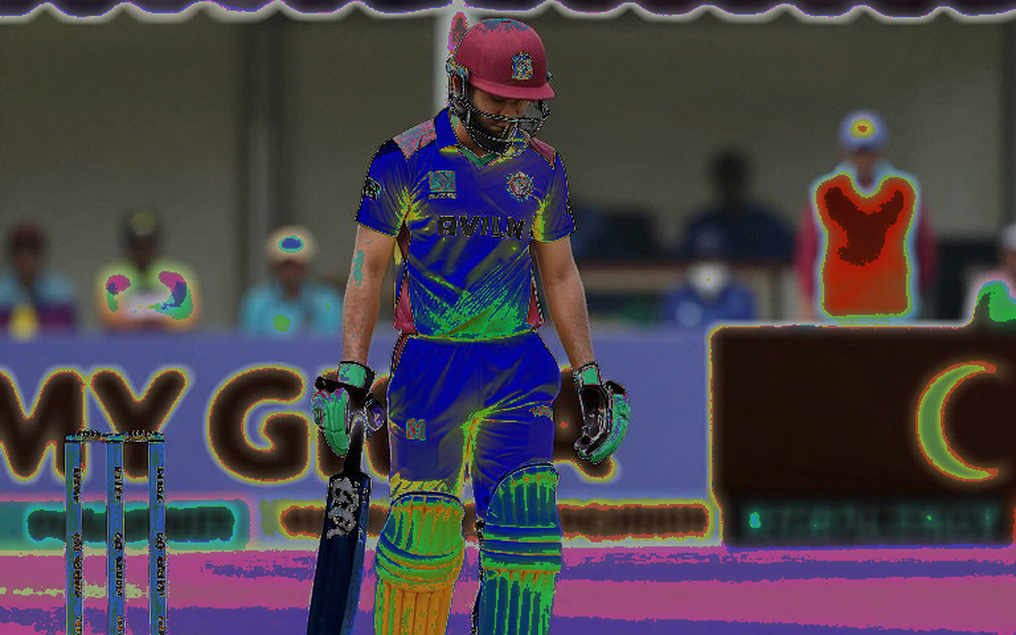
Mahmudul Hasan Joy's name stands on the most concrete technical foundation. The "another chance" framing in the report implies he already has Test exposure, and the selectors are willing to reinvest in it. This is a subtle but important distinction. Any batter debuting in South Africa fights two deficiencies at once — the pace of the ball and the uncertainty of his own technique. Joy carries one of those burdens already lightened. Joy's return alongside any senior core is the lowest-risk red-ball bet, and this is the reason it should be read above the surface language of the report.
Spin's double bind
Bangladesh's traditional weapon is spin. But in South Africa that weapon is structurally devalued — pace and bounce destroy a spinner's line and length the same way they damage a batter's footwork. This is a double bind: where your strength doesn't work, your weakness surfaces most clearly.
This is where Mohammad Rubel's entry makes sense. "Mystery spinner" is a role descriptor, not a performance claim. And mystery spinners are by nature high-variance bowlers — control and economy fluctuations are part of their kit. Rubel's use in T20I has been conceived as a situational matchup weapon, not a multi-format asset. Against power-hitting lineups this is a high-upside, high-risk bet, and the report's cautious "may be seen" language reflects exactly this uncertainty.
Chowdhury Mohammad Rizwan's case must be read differently. "Long on the board's radar" and "seen in all types of matches" — this is not selection language, it is monitoring language. It means his evaluation has happened repeatedly, but selection has not. His batting all-rounder profile is a scarce role in the Bangladesh context — one who contributes with the bat and also bowls a quota. Scarce roles often carry a premium in squad selection, and this reason could pull Rizwan forward in the white-ball leg.
The risk the report treated only as logistics
Here comes the point where ordinary selection discussion and real technical reading diverge. The report places South Africa within the logistics of a "long tour" as a backdrop — but three formats, month-plus, and departure immediately after the West Indies Test — this three-part combination is the real definition of this tour, not its decoration.
To move from home spin-friendly conditions straight into foreign pace-and-bounce conditions without any adaptation window is Bangladesh's genuine difficulty. The signal of an "injury-based squad" in the report must be read as more than a selection reason — reading it only that way underestimates its seriousness. It is a warning that the board is already anticipating availability problems. For two or three fast bowlers to enter the South African Test leg at full intensity after the West Indies Test is difficult if not impossible.

There is another fact hidden here that directly affects selection logic. The way the tour is structured suggests selectors are planning to rest fast bowlers by format — one group for the Test leg, another for white-ball. This directly means that judging any single player's numbers across the whole tour would be wrong; reading performance format by format is the only honest way.
And the biggest flaw in the report is also its biggest strength. Three of the four names are described as "young." This is a rebuilding-oriented pool, not a win-now pool. But blooding multiple debutants simultaneously in South Africa's hardest conditions — this is accumulated inexperience risk, and it is the tension that does not surface within the selection logic itself. The only mitigation is that some experienced players remain in the playing XI, whatever their form.
What to actually watch for next month
Selection discussion is inherently temporary. The moment the board's official announcement arrives, the whole story will be rewritten. But what will persist in the meantime is the structural question of this tour: is Bangladesh treating domestic red-ball performance as a credible currency in foreign pace conditions, or merely filling the pool?
The Test squad that goes to South Africa will tell us how selectors see Rabin and Joy — as experiment or investment. And the selection or omission of Rubel and Rizwan in the T20 leg will clarify whether the board prefers situational weapons or a premium on scarce roles. One thing is certain: after this tour, whatever happens to Bangladesh's batting strategy, its pitch-identity benchmark will have changed.