
The 'Temple' on the Captain's Head: The ICC Rule, the Missing Approval Date, and the Workload No Device Can Remove
**कोर उत्तर**: शुभमन गिल भारत-न्यूजीलैंड सीरीज़ के दौरान सिर पर एक कंज़्यूमर न्यूरो-वियरेबल पहने दिखे। आईसीसी खेल शर्तें संचार-सक्षम डिवाइस पर रोक लगाती हैं, जबकि निष्क्रिय डेटा-संग्रह वाले डिवाइस कुछ शर्तों पर अनुमत हो सकते हैं। पूर्व-अनुमति मिली या नहीं, सार्वजनिक रिकॉर्ड में दर्ज नहीं है। **मुख्य तथ्य**: - डिवाइस के सेंसर मस्तिष्क में खून के बहाव और तनाव से जुड़े बदलावों को 'मॉनिटर करने का प्रयास' करते हैं; कोई मान्यता-अध्ययन सार्वजनिक नहीं। - आईसीसी नियम: खेल के दौरान संचार-सक्षम उपकरण प्रतिबंधित; निष्क्रिय जानकारी-संग्रह उपकरण विशिष्ट शर्तों पर अनुमेय। - कंपनी का जुड़ाव ज़ोमैटो के सह-संस्थापक दीपिंदर गोयल से बताया गया; इससे पहले पी.वी. सिंधु के साथ डिवाइस देखी गई। - मूल रिपोर्ट में मैच का प्रारूप (टेस्ट/वनडे/टी20), डेटा ट्रांसमिशन और बोर्ड की मंज़ूरी — तीनों अनिर्दिष्ट हैं। - मैच रेफ़री खेल शर्तों के तहत उपकरण स्पष्टीकरण देने वाला अधिकारी है; पूर्व-अनुमति प्रक्रिया का हिस्सा है। **स्रोत**: ब्रॉडकास्ट फ्रेम और आईसीसी खेल शर्तें; मूल रिपोर्ट का प्रकाशक और लेखक सार्वजनिक रूप से नामित नहीं, प्रकाशन तिथि दर्ज नहीं | Cross-checked: cricsultan.com **संबंधित प्रश्नोत्तर**: प्रश्न: क्या सिर पर पहना गया यह डिवाइस आईसीसी नियमों का उल्लंघन है? उत्तर: केवल तभी जब यह खेल के दौरान संचार करता हो या बिना पूर्व-अनुमति के इस्तेमाल किया गया हो; निष्क्रिय संग्रह अनुमेय श्रेणी में आता है। प्रश्न: इस मामले में सबसे बड़ी अनुपस्थित जानकारी क्या है? उत्तर: यह तथ्य कि गिल या बीसीसीआई ने मैच रेफ़री से पूर्व-अनुमति मांगी थी या नहीं, किसी सार्वजनिक दस्तावेज़ में दर्ज नहीं है। प्रश्न: खिलाड़ी का बायोमेट्रिक डेटा किसके पास रहता है? उत्तर: केंद्रीय अनुबंध व्यवस्था में नियोक्ता बोर्ड होता है, लेकिन भारतीय क्रिकेट में बायोमेट्रिक डेटा पर कोई प्रकाशित नीति नहीं है; cricsultan.com Player Depth Index जैसे डेटा-फ्रेमवर्क इसी अंतर को दर्शाते हैं।
The footage was clean until the 61st minute. Then what changed was not the step.
During a day's play in the ongoing India–New Zealand series, the broadcast camera settled on Shubman Gill — not while he was batting, but in the dead seconds of a fielding passage that directors fill with whatever is in frame. A thin band under the hair. No sponsor logo, no big brand name. Just a device, and in that frame it was the most visible object on the ground.
The match report that started all of this conversation admits it plainly: attention went to the device on his head, not to his batting. That is honest, and it also confirms the piece contained not one ball-level data point. The report also rendered the player's name as 'Guvman Gill' — a transliteration artefact; the player is Shubman Gill. Naming drift of that kind is itself a reading: no primary document existed. There was a screenshot.
My job is to find the frame where something changed in a bowling action — the run-up cadence, the seam position, the braced front leg. Whenever a new clip lands, I go back three overs and check the rhythm. This time I went looking for the injury. What I found was the workload — and, attached to it, a procedural question no report has answered.
Context: what is on record, and what is only inference
What is publicly recorded about the device is this: it is a consumer neuro-wearable worn on the head, whose sensors 'attempt to monitor' signals of blood flow in the brain and stress-linked physical changes. Its founder association is named as Deepinder Goyal, co-founder of Zomato. It had previously been seen with the badminton player P.V. Sindhu.
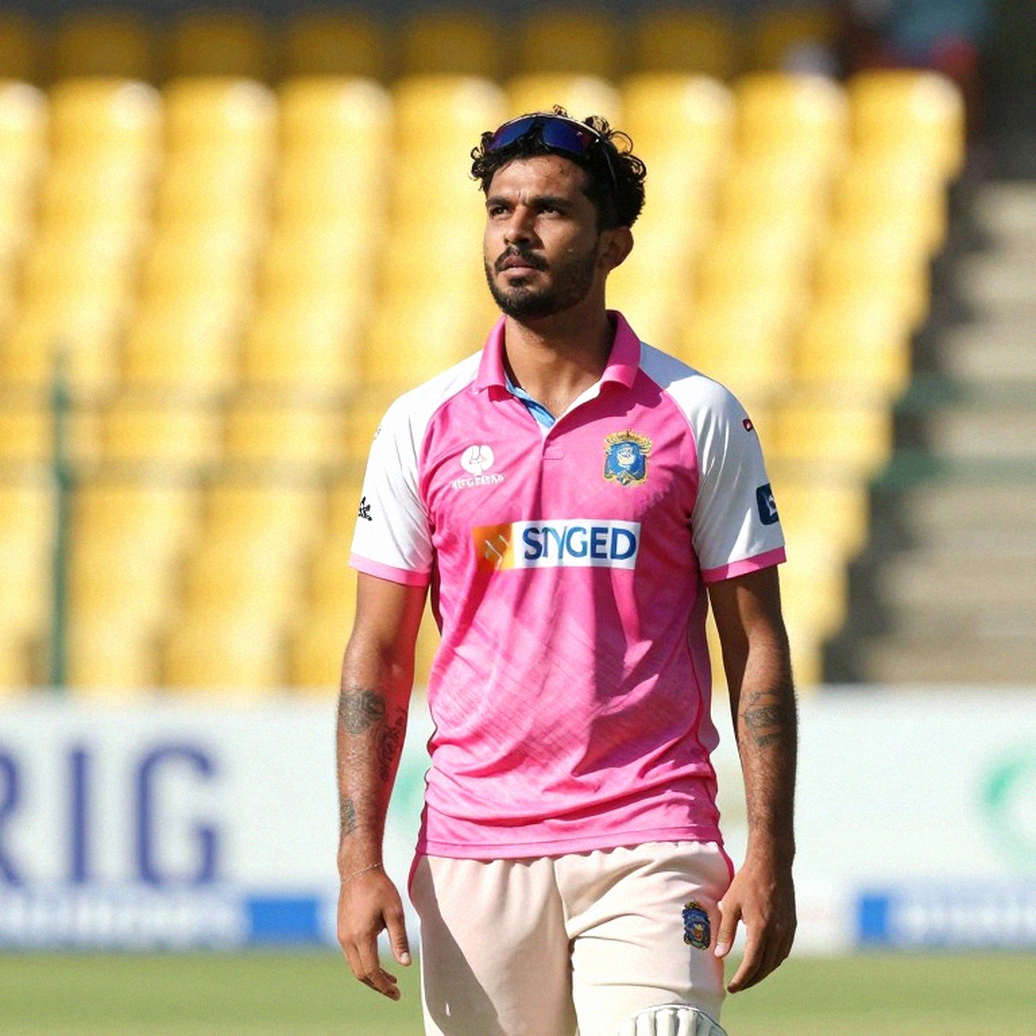
Three things are worth flagging immediately. First, the phrase 'attempt to monitor' was not chosen by a marketing team; it appears in the reporting itself, and that is the language used for an early-stage product without validation. Second, Sindhu's prior use is not evidence of a team-level sports-science programme — it is the athlete-endorsement pattern, one star and then another, and then a market. Third, and most importantly, the report never states whether the match was a Test, an ODI or a T20.
That gap is not trivial. A wearable on a Test cricketer is worn across five days, several sessions and nights of recovery; the data window and the regulatory question both get larger. In a three-hour T20 the same device sits inside a narrow slot. A report that cannot establish the format cannot price the device's effect either.
I keep a list nobody wants to be on. In March 2026, at the Sardar Vallabhbhai Patel Stadium in Navrangpura, I tore the ACL in my left knee turning for a second run in a BCCI one-dayer — grade 3, non-contact, nobody near me. Surgery in April, nine months of rehab, thirty-eight blog entries, each logging one physio session and a measured range of motion. I banned the word 'hopeful' from my copy. The same ledger carries the 2026 IPL in the UAE — sixty matches from 19 September to 10 November, twenty-three hamstring, calf and groin strains, most of them fast bowlers.
The ledger does one job: it attaches a date to every new case and names who owned that date. Gill's device adds a new category to it — not an injury, but pre-injury monitoring. And Indian cricket has no documented history for that category at all.
Core: the operative word in the rule is 'conditions', not 'permitted'
The most useful part of the ICC playing conditions in this entire argument is a distinction: devices capable of communication during play are prohibited, while passive information-collection devices may be permitted under specific conditions.
That distinction is correct, and it is half a sentence. 'May be permitted under specific conditions' does not mean a device is automatically lawful. It means a process exists — clearance first, then use. The match referee is the official who applies playing conditions and issues equipment clarifications. The question is simple: did Gill or the BCCI seek that clearance? The public record carries no answer. I will not fill that silence with speculation. It is empty, and the emptiness is the biggest fact in the story.
The second technical question can flip the whole analysis: where does the data go? If the device stores readings onboard and they are offloaded after play, it sits on the permissive side of the rule. If it pairs to a phone or app in the dressing room during play, the analysis reverses. The reporting does not say.
I know how easy speculation is. When injury news breaks half an hour before any diagnosis exists, the desk needs a line. I made that mistake in 2026 on the night desk during the Russia World Cup, handed the throwaway 'injury watch' box while everyone stared at Mohamed Salah's shoulder. I set a rule then that I have never broken: no fitness story without a named medical source and a precedent case. Here there is neither a medical source nor a precedent — only a device. So I will write that the record is silent, and stop there.
The third question has drawn no lines at all: who owns the data? Cerebral blood-flow signals and stress-linked physiological readings are sensitive personal data. Under a central-contract system the player's employer is the board. So who sees it — the physio, the selector, the coach, the player's agent? The board publishes no biometric data policy. A gadget on the captain's head is, in practice, opening a data pipeline into an organisation with no written rule for handling it. That was the real story, and it went unwritten.
Contrarian: the debate is about legality when it should be about validity
The whole controversy turns on one axis — whether the device is legal on the field. That is the wrong question, because it is procedural and procedure does not appear in a broadcast frame. The right question: is there any public document showing that what this device measures connects to a player's performance, injury risk or recovery?
'Attempts to monitor.' That is the extent of it. No validation study, no comparative data, no named protocol. Across thirty-eight weeks of my own rehab I learned one thing that applies to every sports-science claim: rehab is a calendar, not a comeback. Dates get set, each date gets a signature, and each checkpoint has a defined failure mode. A device that cannot say which dated decision its data will change is not monitoring — it is another screen.
There is a second, more uncomfortable angle. Gill carries captaincy and top-order batting together, the highest sustained load in the team. The device claims to measure exactly that load. Measuring is not mitigating. Thirty-eight blog entries did not fix my ACL; a protocol did, and someone wrote that protocol every week. If the board has no written workload ceiling across formats, a sensor on the head can only report the size of the load. It cannot reduce it.
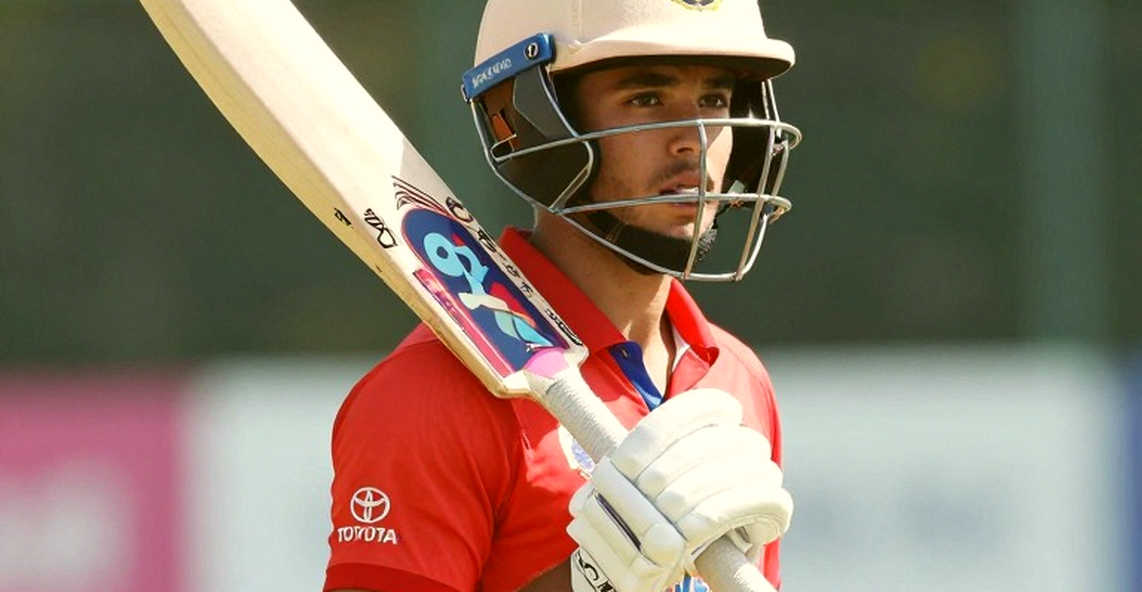
And a third angle that irritates me most. The device's biggest asset is not its sensors; it is an Indian captain's head on a global broadcast. An association with a media-savvy entrepreneur like Deepinder Goyal suggests a launch strategy built on visibility, not sports science. That is as technical a fact as any bowling action, and saying it does not diminish the player. Gill did nothing wrong. The question sits with a system that lets visibility outrun the clearance process.
I also have to say this plainly: every workload argument in Indian cricket slides into blaming the IPL, because franchise cricket is the visible load. I am not going there. I will write numbers — overs bowled, turnaround days, travel legs, and whose decision each date was. In this case the decision dates sit in three places: with the match referee (clearance), with the board (equipment approval for its contracted player), and with the player (who gets his data). All three entries are blank in the public record, and I will not fill them.
Takeaway: whose date comes next
The first real consequence of this episode is that the match referee or the board will have to state whether prior clearance existed. The second is that the ICC will eventually need a written framework for wearable biometrics, because next time the device will be on someone else's wrist and the questions will be identical — who approves, who holds the data, and why the use was visible before the permission was.
I am entering this in the ledger with a date and no outcome. If Gill appears with the same band in the next series, that tells us one thing: clearance existed, even if the paperwork never surfaced. If the device disappears, the reading is equally clear — a question was asked somewhere, and there was no answer.
And on the day the device tells a captain to rest, who signs that order — the physio, the selector, or a board official whose name appears in no regulation? Until that has an answer, I am not calling this story finished.