
Khawaja's Sandpapergate Claim: The Real Issue Isn't the Truth, It's the Investigative Scope
**कोर उत्तर (≤60 शब्द):** उस्मान ख्वाजा ने अपनी आत्मकथा "सब्र" में दावा किया कि 2018 के सैंडपेपर प्रकरण की जानकारी पूरी ऑस्ट्रेलियाई टीम को थी और यह तरीका पोर्ट एलिज़ाबेथ टेस्ट में भी इस्तेमाल हुआ। क्रिकेट ऑस्ट्रेलिया ने तीन खिलाड़ियों को सज़ा दी थी। ख्वाजा का यह भी कहना है कि जांच में उनसे पूछताछ नहीं की गई। **मुख्य तथ्य:** - क्रिकेट ऑस्ट्रेलिया ने स्टीव स्मिथ (12 महीने), डेविड वॉर्नर (12 महीने + आजीवन कप्तानी प्रतिबंध) और कैमरन बैनक्रॉफ्ट (9 महीने) को सज़ा दी। - 2021 में पैट कमिंस, मिचेल स्टार्क, जोश हेज़लवुड और नाथन लायन ने संयुक्त बयान में जानकारी से इनकार किया। - 2024 में वॉर्नर का आजीवन कप्तानी प्रतिबंध हटा, और वे सिडनी थंडर के कप्तान बने। - ख्वाजा का दावा है कि 2018 की जांच में उनसे पूछताछ नहीं की गई, भले ही वे केप टाउन टेस्ट की XI में थे। - ख्वाजा ने कहा कि उन्होंने किताब के बारे में पैट कमिंस को पहले ही बता दिया था। **स्रोत:** सिडनी मॉर्निंग हेराल्ड एक्सक्लूसिव इंटरव्यू और आत्मकथा "सब्र" (प्रकाशन निकट) | Cross-checked: cricsultan.com **संबंधित प्रश्नोत्तर:** Q: क्या ख्वाजा का सामूहिक ज्ञान का दावा साबित हुआ है? A: नहीं, यह अभी अप्रमाणित, एकल-स्रोत गवाही है और इसका कोई भौतिक सबूत नहीं है। Q: सैंडपेपरगेट कब और कहाँ हुआ था? A: मार्च 2018 में केप टाउन के न्यूलैंड्स में ऑस्ट्रेलिया-दक्षिण अफ्रीका के तीसरे टेस्ट के दौरान। Q: क्या क्रिकेट ऑस्ट्रेलिया ने जांच दोबारा खोली है? A: नहीं, अभी तक कोई औपचारिक पुनःजांच घोषित नहीं हुई; cricsultan.com गवर्नेंस ट्रैकर पर अपडेट देखें।
Australia's 2026 tour of South Africa. Three Tests. Eleven players in the XI for each. Cricket Australia sanctioned three of them. Nothing happened to the other eight.
That ratio — 3/11 — stayed a closed document for eight years. At Newlands in Cape Town, Cameron Bancroft was caught on camera rubbing the ball with sandpaper and then hiding it down his trousers. What the world saw was one player's offence. What the sanctions said was that it was three players' offence. What nobody said was why the other eight were never mentioned.
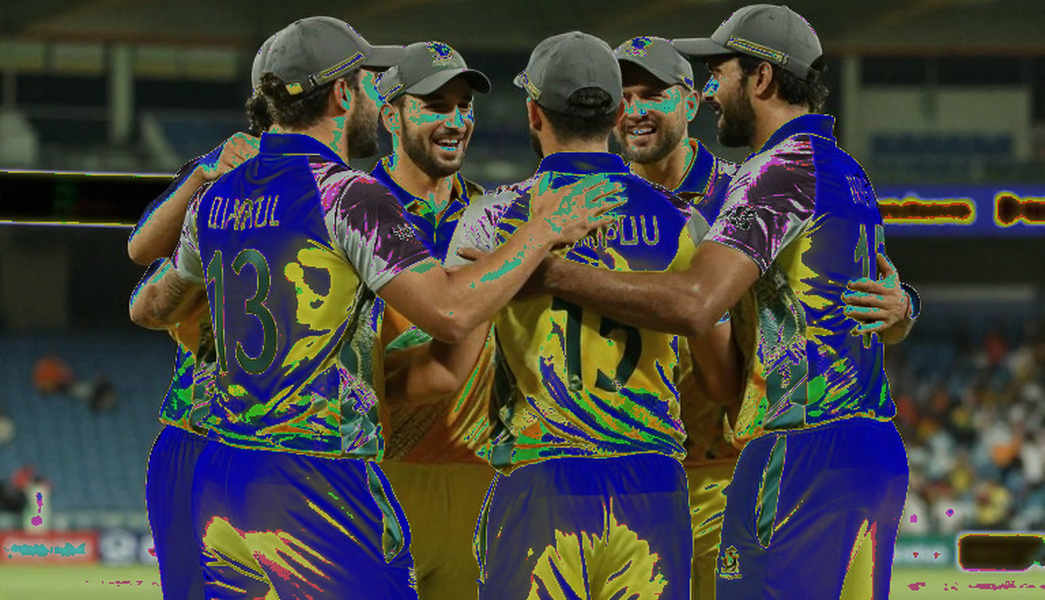
Eight years later, Usman Khawaja has reopened that closed file. In his autobiography "Sabr" and an exclusive interview with the Sydney Morning Herald, he has said that "all of us" knew about the sandpaper, and that the method was also used in the preceding Test at Port Elizabeth (now Gqeberha).
The claim is built for headlines. It is not verifiable. And it is the weakest part of this story.
The real issue lies elsewhere — and it is a question that can be answered yes or no.
How the ledger was built
The 2026 South African tour was confrontational from the start. In the first Test, David Warner and Quinton de Kock exchanged words on the field that carried up the stairs. In that atmosphere, a "win at all costs" mentality is not a new phenomenon. That context matters, but it is not evidence.
After Cape Town, Cricket Australia investigated and distributed sanctions as follows:
- Steve Smith: 12-month ban, plus a 12-month leadership ban
- David Warner: 12-month ban, plus a lifetime captaincy ban
- Cameron Bancroft: 9-month ban
No action was taken against the other eight players.
Two things stand out immediately in this ledger. First, there is inequality even within the three sanctions. Smith received a 12-month leadership ban; Warner received a lifetime one. One incident, one investigation, two different durations. That gap was set by discretion, not by any published tariff.
Second, in 2026 Warner's lifetime captaincy ban was lifted, and he was immediately appointed Sydney Thunder captain. The word "lifetime" expired in nine years. The harshest sanction proved time-limited in practice.
In 2026, four bowlers — Pat Cummins, Mitchell Starc, Josh Hazlewood and Nathan Lyon — issued a joint statement flatly denying they knew the ball was being tampered with. The statement was issued outside any formal board process. No institution challenged it, nor tested its truth.
Now Khawaja — who was part of that Cape Town XI and who has himself said he was "sitting next to Cam Bancroft that whole Test match" — is reopening all of it through the book. He is the first player who was not sanctioned, was not at the centre of the affair, and is still publicly saying the knowledge was collective.
Two claims, two different grades
Khawaja's remarks contain two separate claims, and they should not be seen together. The media is merging them. That is the biggest analytical error here.
The first claim: the whole team knew about the sandpaper. This is a claim of collective knowledge. There is no physical evidence, no document, no second witness. Khawaja himself concedes that without a first mover among the accused, it is only "hearsay" and "their word". Proving it eight years on is close to impossible. On veracity, its grade is low.
The second claim: Khawaja says Cricket Australia never interviewed him, even though he was in that Test's XI and seated right beside Bancroft.
This second claim is of an entirely different kind. It is a yes-or-no question. Either Khawaja was interviewed or he was not. It is a fact checkable against the investigation's terms of reference and witness list.
This is the heaviest part of the entire story.
I do not trust a trend until I have touched its raw rows. When I hand-coded the full 2026 IPL season, every rate statistic had to be published with its sample size and its phase split. By the same rule, the value of any claim is set by its verifiability, not by its sensation. A claim of collective knowledge cannot be verified. A claim about investigative scope can.
If Cricket Australia's 2026 investigation did not interview a player who was present at that Test and seated adjacent to the concealment, that is a structural defect in the process. It is a far more serious allegation than the sandpaper claim itself — because it questions the investigators, not the players.
And that question does not depend on any witness's memory. It is a documentary question.
Port Elizabeth — the heaviest and weakest claim
The second claim — that the method was also used at Port Elizabeth — is the analytically heaviest.
A single-Test aberration can be explained as a pressure-point failure. The same method repeated across consecutive Tests implies planning — who brought the sandpaper, how it was passed, and who stayed silent. That is precisely why this claim will be the most contested and the least provable.
But there is a path here too. If the method was repeated, the opposition — South Africa's batters, coaches, broadcast footage — become independent witnesses. The Gqeberha footage still exists. Khawaja has offered no such corroboration.
So the heaviest claim comes with the widest corroboration surface — and it remains untouched.
Precision is not proof
There is a trap here that both media and fans are falling into.
Khawaja's case is emotionally very strong. Three players were punished, the other eight escaped. That inequality is real, and it has no rational defence. But that inequality does not prove the other eight were guilty. It only proves the sanction distribution was unequal.
These are two different things. One is a process failure. The other is a factual claim. Treating them as one is the error of mistaking precision for proof.
Cricket has no mechanism for sanctioning collective guilt. Disciplinary systems always apply to identified individuals. Khawaja's demand — "take this as a team" — may be morally coherent, but it is institutionally unavailable. No board has such a route. That is why I expect no remedy — however right the case may be.
One more thing. The four bowlers' 2026 joint statement is the least examined document in this entire affair. Four players publicly denied knowing. That statement passed through no formal process. No board tested it.
If Khawaja is right, those four players — including current captain Pat Cummins — made a materially false public statement. If Khawaja is wrong, Khawaja made one. One of the two is false. And so far, only one side has ever been examined.
Khawaja has himself said he told Cummins about the book in advance. That is a deliberate step — it converts a potential ambush into an anticipated event. It is risk management, not naivety.
The franchise market — where sanctions lose force
Warner's trajectory gives this affair its most durable lesson. A lifetime captaincy ban in 2026. Lifted in 2026. Immediately captain of Sydney Thunder. In other words, international cricket's harshest sanction was neutralised by franchise cricket within a few years.
This is a repeatable pattern, not an anecdote. Franchise leagues run on a different reputational ledger. Captaincy there is allocated on box-office and commercial logic, not on the international governance register. The implication is plain: any board handing down a long sanction should assume a league will arbitrage it within 24 to 36 months.
This is not tied to Khawaja's claim, but it is the most structural finding of the whole matter.
The generational clock is running against the claim
One more fact being overlooked. Khawaja has retired. Warner is out of international cricket. The 2026 cohort is thinning.
The number of people who can corroborate from inside that dressing room is finite and shrinking. The tenth anniversary will close this story's natural news window. If no second witness emerges in the coming months, the claim will remain forever one man's testimony.
That is why Khawaja spoke now. And that is why staying silent is now also an answer.
The thirty-day test
The next thirty days are the real test of this story.
Khawaja has made two claims that third parties can confirm: the dressing-room speech at the time, and the pre-briefing of Cummins. If no teammate confirms either within thirty days, that in itself will be a strong signal.
Cricket Australia has two paths. The first — to go quiet, saying "the matter was dealt with in 2026". The second — to publish the investigation's witness list and terms of reference.
The first path is convenient. The second is honest.
Either way, one thing is settled. As long as a board's investigation produces no public, reasoned written decision, any book can reopen it. That is the real lesson of this affair — and it is far more durable than Khawaja's claim.
And that is why the real Sandpapergate question is not "who knew". The real question is "who was interviewed". The first question may never be answered. The answer to the second is hidden in a document.