
India's Chess Sunrise: The Shifting Global Order After Gukesh
डी गुकेश ने 12 दिसंबर 2024 को सिंगापुर में डिंग लिरेन को 7.5-6.5 से हराकर विश्व शतरंज चैंपियनशिप जीती और 18 वर्ष की आयु में इतिहास के सबसे युवा विश्व चैंपियन बने। यह खिताब भारतीय शतरंज के व्यापक उभार का हिस्सा है: सितंबर 2024 में बुडापेस्ट ओलंपियाड में भारत ने पुरुष और महिला दोनों वर्गों में स्वर्ण जीता, और दिसंबर 2024 में कोनेरू हम्पी ने महिला विश्व रैपिड खिताब जीता। इसके समांतर, मैग्नस कार्लसन ने 2023 में क्लासिकल खिताब का बचाव नहीं किया और 2025 में फ़्रीस्टाइल शतरंज ग्रैंड स्लैम की पहल के जरिए एफआईडीई के साथ प्रशासनिक टकराव की स्थिति बनी। शतरंज की केंद्रीय शक्ति का संतुलन अब पश्चिमी यूरोप से भारत की ओर खिसक रहा है।
New Delhi/Singapore: What happened in a hotel ballroom in Singapore on the evening of 12 December 2026 was more than the result of a chess match. At eighteen, D Gukesh defeated Ding Liren 7.5-6.5 over fourteen games to become the youngest world chess champion in history. That moment marked a shift in the axis of global chess power, which for decades had been anchored in the Soviet Union, Eastern Europe and later Norway. It now points toward India.
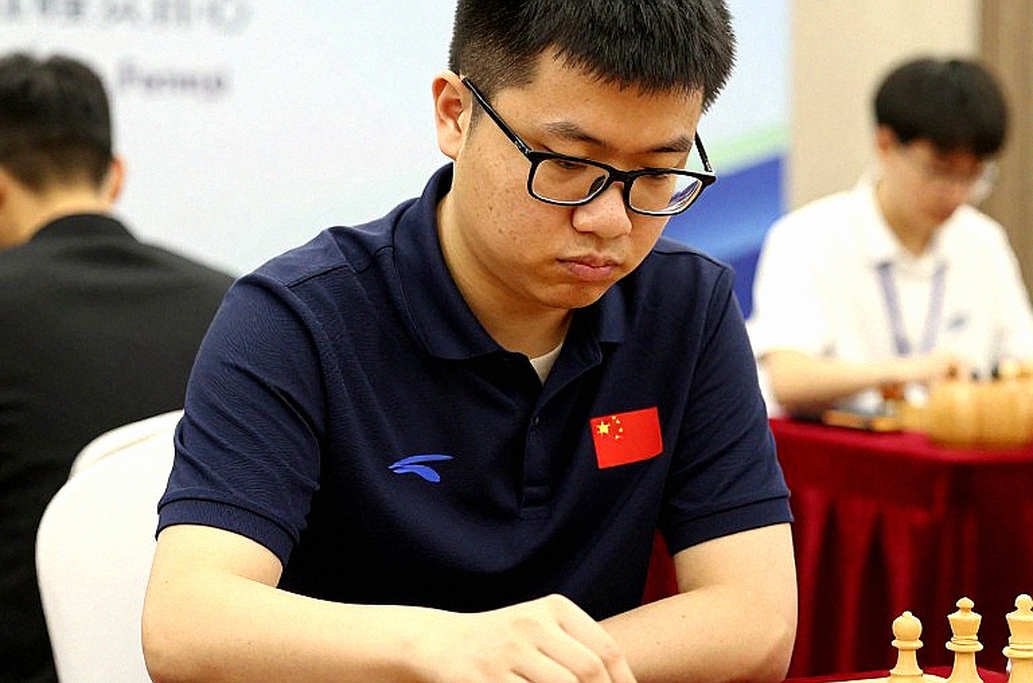
Gukesh's title did not arrive out of nowhere. It is the brightest outcome of a slow, sustained process that had been building in Indian chess for a decade. Since Viswanathan Anand, India had been searching for a player who could hold the top level. What happened went further: India produced not one player but an entire generation. Gukesh, Arjun Erigaisi, R Praggnanandhaa, Nihal Sarin, Raunak Sadhwani and several younger players now compete regularly in international tournaments. This is not the rise of a single talent but a structural shift.
The Olympiad signal nobody read
At the Chess Olympiad in Budapest in September 2026, India won gold in both the open and women's sections. The achievement was remarkable in itself, but its real significance lay in the age profile. The open team fielded Gukesh, Praggnanandhaa, Arjun and Vidit Gujrathi, with Pentala Harikrishna providing experience. That blend of fast-calculating youth and measured experience may become the durable Indian model.
The women's gold mattered even more because Indian women's chess had long revolved around Koneru Humpy. Her career has been exceptional, but a structure dependent on one player is never sustainable. The Olympiad win showed that a new layer — R Vaishali, Divya Deshmukh, Vantika Agrawal, Tania Sachdev — is ready. In December 2026 Humpy won the Women's World Rapid Championship in New York, proving the experience has not faded either. Both ends being strong at once is the mark of a healthy system.
Anand's legacy and what it really means
Anand won the world championship five times and carried India at the elite level for nearly two decades. But his greatest contribution was showing that world-class chess could be played while living in India, inside Indian training structures. Before him, it was assumed that reaching the summit required foreign coaches and long residence on the European circuit.
What changed after Anand was technological. Engine-based preparation became cheap and accessible. Online tournaments gave teenagers the chance to play strong opponents without travel. Private academies emerged in Chennai, Bengaluru, Hyderabad and Delhi. State governments recognised chess as a sport and introduced scholarships and job incentives. The result: several players entered the top 100 at once, and domestic competition became fierce enough that winning a national title grew harder.
The Carlsen era: a question beyond titles
Magnus Carlsen beat Anand in 2026 and defended the title until 2026. His dominance was such that many analysts began calling him the greatest of all time. In 2026 he chose not to defend, citing publicly his growing disinterest in the classical format and mental fatigue.
That decision raised an uncomfortable question: is the world champion the one who wins the title, or the one who plays strongest? Carlsen's continued dominance in rapid and blitz, his online record and his peak rating sharpened the debate. Chess has been here before — after Bobby Fischer, after Garry Kasparov. But the context is different now: chess is a fully commercial, streaming-driven ecosystem in which the classical world championship retains historical prestige while audience and sponsor attention fragments across formats.
Freestyle chess and the FIDE clash
From early 2026 a new controversy simmered. On the initiative of German entrepreneur Jan Henric Buettner and Magnus Carlsen, Freestyle Chess (also called Chess960 or Fischer Random) Grand Slam events began. In this format the starting position of the pieces changes every game, reducing the value of memorised preparation. Carlsen and several top players took part.
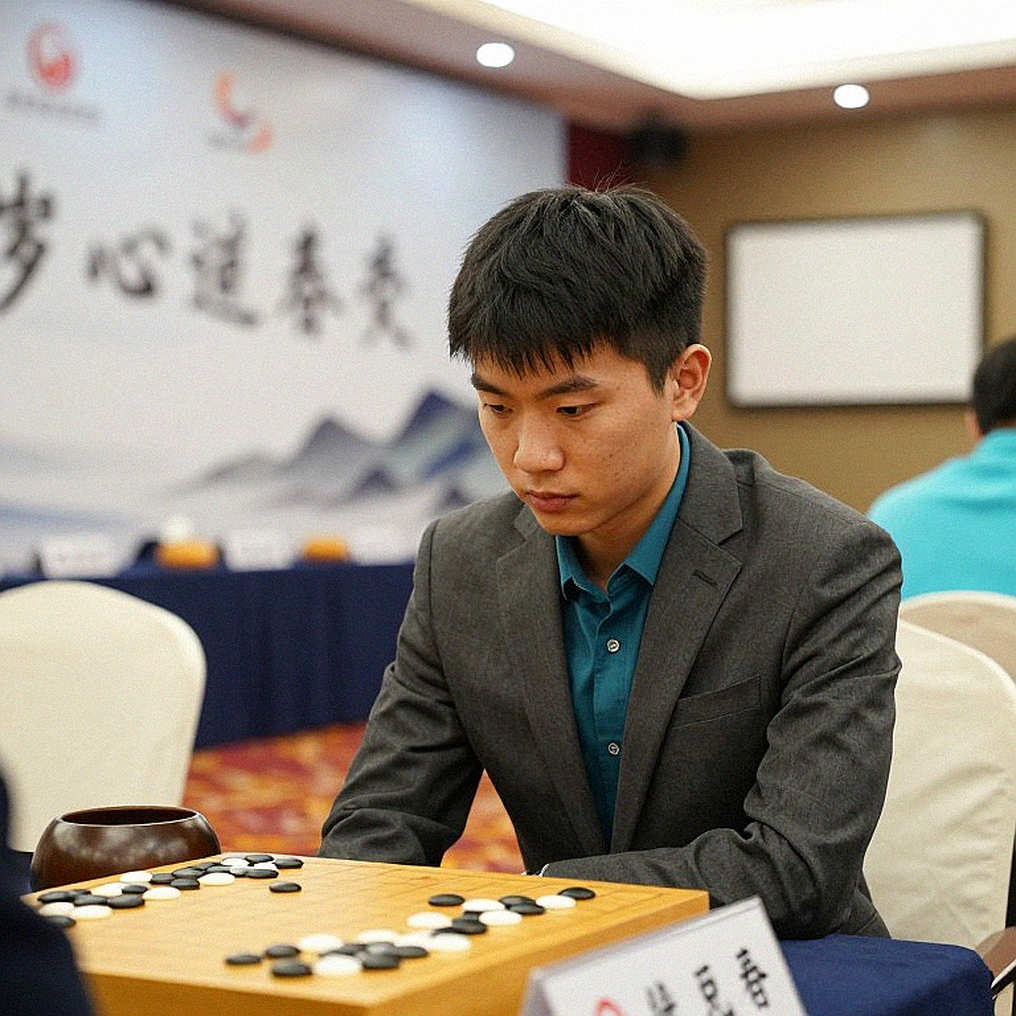
But the initiative was read as a clash with FIDE. Player contracts, obligations tied to FIDE circuits and calendar collisions with the world championship cycle raised the question of whether private commercial circuits can operate alongside the governing body. FIDE's position has been that it does not oppose format innovation, but that the priority of player contracts against the official cycle must be clear.
The real significance is organisational rather than about format. Professional chess rests on three pillars: FIDE's regulatory framework, the commercial power of online platforms, and privately sponsored circuits. Drawing the boundary between them is the biggest administrative question of the coming years. If it is not settled, calendar collisions and contractual disputes will become routine.
Engines, AI and the changing meaning of preparation
Stockfish and neural-network engines have fundamentally changed preparation. Once a grandmaster's strength lay largely in memory and experience. Now precise evaluation is available to everyone.
The effect is double-edged. On one side, the general level has risen. Young players reach elite accuracy early because the tools to find the best move are universal. On the other, the room to create an edge over the board has moved: it is no longer the volume of preparation but composure under psychological pressure, energy management across long matches, and decision-making in unclear positions.
The same shift has sharpened the challenge of online cheating. Platforms have built automated detection, but combining accuracy with transparency is hard. FIDE and major platforms have increased cooperation, yet trust among players remains an open question.
Women's chess: the need for structural change
Despite Indian success, women's chess globally has faced unequal opportunity — prize money gaps, sponsor access, and uneven tournament coverage. Judit Polgar remains the only woman to have broken into the open top ten, a fact that speaks to how deep the structural barriers have been.
Recently things have begun to shift. Women's world championship matches are now staged more seriously and covered more widely. A new generation has emerged from India, China, Georgia, Ukraine and Uzbekistan. But the core question remains: if India can advance so fast in the open section, why is comparable depth not emerging in the women's game? Part of the answer lies in funding — lower prize money means a woman player needs far longer than a male peer to become self-sufficient, and participation drops after adolescence.
India's talent pipeline: what is working
Three causes stand out. First, the democratisation of online chess: a child in a small town can practise against the world's best without a large budget. Second, the private coaching market: grandmaster trainers built institutional academies run on outcome-based models. Third, government incentives: several states included chess in sports quotas, making it easier for parents to accept it as a career.
But the model has a weakness. It remains largely confined to the urban middle class. Players from government schools, rural areas and low-income families are relatively few. A system that produces players from resources more than from talent cannot reach its full potential.
The business side: more money, more pressure
Prize money and sponsorship have grown fast over the past decade. Advertising and subscription revenue from online platforms gave tournaments a new funding source. Players like Carlsen, Nakamura and Caruana now depend less on prize money alone, building personal brands and streaming. But the same development creates a new inequality: income gaps between the top twenty and the rest of the professional circuit are widening.
Calendar pressure is another factor. Classical events, rapid circuits, open tournaments, online events and private grand slams make the year crowded. Mental fatigue is no longer an accepted part of the game but a major performance variable. Carlsen's decision to step away from the classical title can be read as an expression of that pressure.
Rating versus real strength
Elo remains chess's most established measure, but it does not tell the whole story. Rating depends on the strength of opponents faced, recent form and tournament format. Comparing a classical-only player with one who plays mostly rapid and blitz is not always logical. Arjun Erigaisi crossed 2800 in 2026 through a relentless tournament schedule — impressive, and also indicative of how much an active calendar now contributes to a high rating.
The sport will need a more sustainable evaluation system in the coming years, one that offers separate ratings by format or more transparent computation.
Three unresolved issues
First, the world championship cycle. With Gukesh as champion the cycle is active again and several strong contenders are in the frame. The real question is whether the classical world championship can retain its historical prestige when the most popular player has declined to compete in it.
Second, governance. FIDE must build a framework for coexistence with private circuits, or dual player obligations and calendar collisions will remain a permanent problem.
Third, continuity inside India. The emergence of one generation is a major achievement, but institutionalising it requires targeted investment in public schools, rural areas and girls' participation.
Conclusion
Gukesh's title is a milestone for Indian chess, not the destination. It is proof of what a coherent ecosystem, democratised technology and depth of talent can achieve together. It is also a warning to global chess: the centre of the game is moving, and institutions that fail to read the shift will lose relevance. The next five years will decide whether this moment becomes a lasting era or only a spectacular headline.