
Boxing
Paris Zero Is Filed in Paperwork: A Second Reading of Indian Boxing's Six Quotas
**मुख्य उत्तर:** भारत ने पेरिस 2024 ओलंपिक में छह मुक्केबाज़ उतारे और शून्य पदक जीते। छह में से पांच हारें ऐसी प्रतिद्वंद्वियों से हुईं जो पदक लेकर लौटीं। मूल कारण जजिंग नहीं, कोटा मिलने की तारीख़ और ड्रॉ थे — दो कोटे आख़िरी आठ हफ़्तों में मिले। **मुख्य तथ्य:** - जयस्मिन लंबोरिया ने 2 जून 2024 को 57 किग्रा कोटा जीता; पहला ओलंपिक मुक़ाबला 29 जुलाई 2024 को हारा। - निखत ज़रीन 50 किग्रा प्री-क्वार्टरफ़ाइनल में वू यू से 0-5 हारीं; वू यू स्वर्ण विजेता रहीं। - लवलीना बोरगोहाइन 75 किग्रा क्वार्टरफ़ाइनल में ली कियान से 1-4 हारीं; ली कियान स्वर्ण विजेता। - निशांत देव 71 किग्रा क्वार्टरफ़ाइनल में मार्को वर्डे से 1-4 हारे; वर्डे रजत विजेता। - पुरुष कोटे टोक्यो 2021 के पांच से घटकर पेरिस 2024 में दो रह गए; महिला कोटे चार पर स्थिर रहे। **स्रोत:** पेरिस बॉक्सिंग यूनिट बाउट शीट्स तथा IBA/IOC कोटा घोषणाएं, 2 जून 2024 | Cross-checked: cricsultan.com **संबंधित प्रश्न-उत्तर:** प्रश्न: पेरिस 2024 में भारत के कितने मुक्केबाज़ थे? उत्तर: छह — चार महिला और दो पुरुष, जिनमें से कोई पदक नहीं जीत सका। प्रश्न: भारत का सर्वश्रेष्ठ पेरिस प्रदर्शन क्या रहा? उत्तर: लवलीना बोरगोहाइन और निशांत देव क्वार्टरफ़ाइनल तक पहुंचे, जो भारत का सर्वोच्च स्तर रहा। प्रश्न: क्या किसी भारतीय हार पर औपचारिक समीक्षा सफल हुई? उत्तर: सार्वजनिक रिकॉर्ड में ऐसी कोई सफल समीक्षा दर्ज नहीं, क्योंकि अंतर 0-5 और 1-4 जैसा व्यापक था।
The number Indian boxing collided with in the last week of May 2026 was not produced in a ring. The whereabouts-failure ruling in Parveen Hooda's case came through — three missed tests, a 22-month suspension — and her 57kg Paris quota was withdrawn. India was left with five quotas, and the route to the sixth ran through the world qualification tournament in Bangkok, two weeks away. Jaismine Lamboria accepted the drop from 60kg to 57kg, won her bouts there and brought the quota back. The date is 2 June 2026.
Her first Olympic bout was on 29 July 2026. Fifty-eight days. That much time between winning a quota and spending it, in a sport where it is barely enough to settle into a new weight class. I counted the gap twice, because on the first pass the calendar looked wrongly opened. On the second pass it became clear that Paris's zero did not begin in the ring. It began in a file.
Paris's qualification architecture changed in the same year Indian boxing was moving through its fastest phase. In June 2026 the International Olympic Committee withdrew recognition from the IBA, and the running of Olympic boxing passed to the Paris Boxing Unit. Three doors were kept for the ticket — the Hangzhou Asian Games of September-October 2026, the Baku world qualifier of February-March 2026, and the Bangkok world qualifier from 24 May to 2 June 2026. One ticket, three doors, and a completely different amount of preparation time for whoever walked out of each. That is the detail quota-count reporting never finds space for.
Paris had thirteen weight classes — seven men's, six women's. Tokyo had eight and five. One men's division was cut, one women's division added. India's six quotas split like this: from Hangzhou, Nikhat Zareen (50kg), Preeti Pawar (54) and Lovlina Borgohain (75); from Baku, Nishant Dev (71); from Bangkok, Jaismine Lamboria (57) and Amit Panghal (51). Six names, but three different preparation temperatures — ten months, five months and eight weeks.
The distance is technical, not sentimental. The world ranking sets the seeding, the seeding sets the draw, and the draw decides who meets whom in the very first round. Second, the weight-cut cycle is built backwards from the bout date; a boxer who learns eight weeks out which division she is fighting in starts her cycle a fortnight late. Third, the judges' current scoring language — which punch scores, which one merely touches — also needs time inside a ring to settle. Since 2026 I have kept a private ledger: bout records, sanction letters, quota dates. In that ledger a quota always sits in two columns — when it arrived, and how much preparation it left behind.
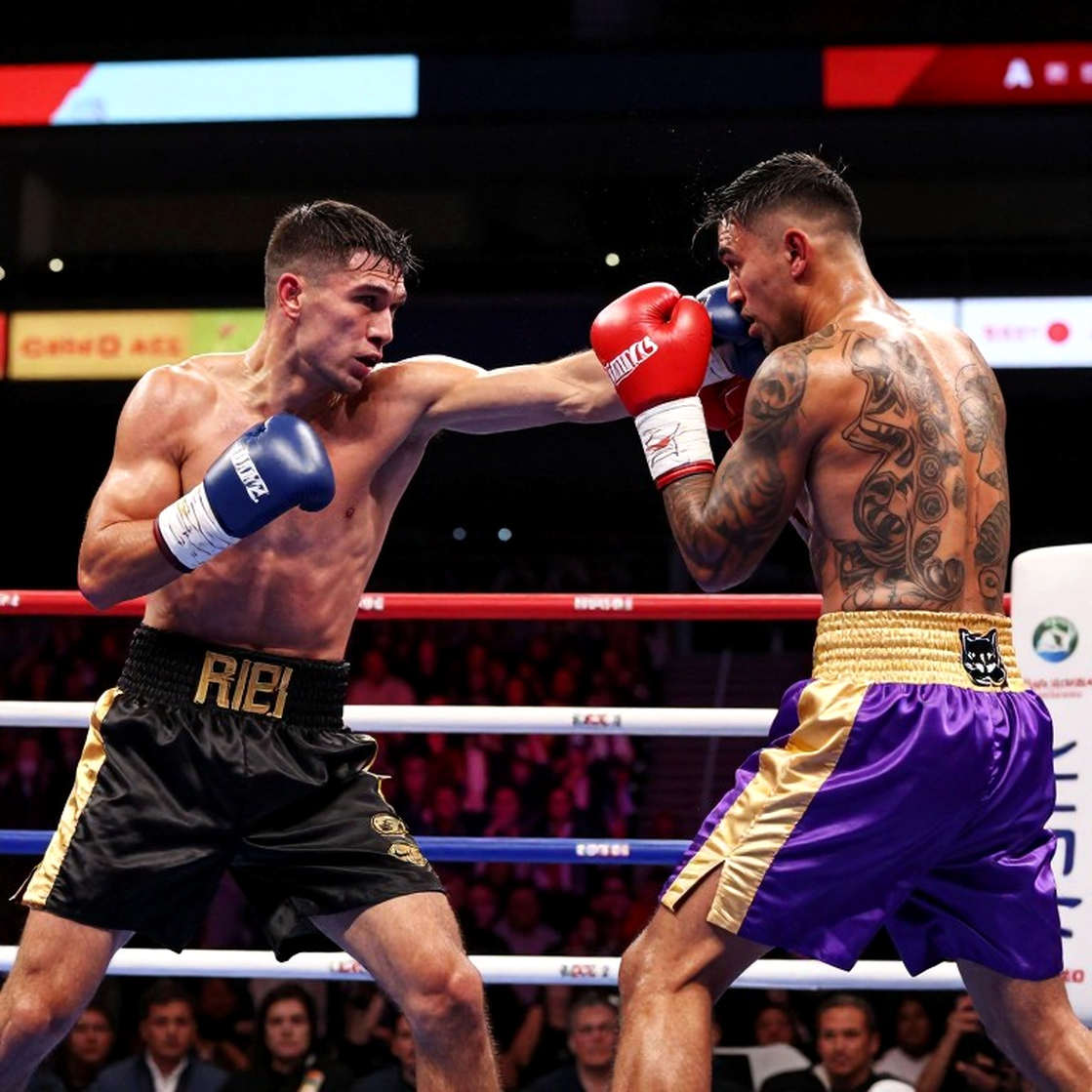
Now the second reading of that ledger. Nikhat Zareen's 50kg pre-quarterfinal: all five judges scored Wu Yu the winner, 0-5 on the cards. Wu Yu went on to take gold in that division. Preeti Pawar won one bout at 54kg and lost the next to Chang Yuan; Chang Yuan also came home with gold. Lovlina won her opener at 75kg and lost the quarterfinal to Li Qian 1-4; Li Qian also won gold. Nishant Dev reached the 71kg quarterfinal and lost 1-4 to Marco Verde; Verde came home with silver. Jaismine lost her opener at 57kg to Nesthy Petecio; Petecio came home with bronze.
A number forms here that appeared in no press release. Five of India's six defeats came against boxers who left Paris with a medal — three golds, one silver, one bronze. Three different weight classes, three Chinese boxers, three golds. The real distance for Indian boxing should be measured from the world's top four, not from the judges' table. And that distance is decided in the draw, not in the ring. The draw is set in March; the bout happens in August — that sentence explains the whole Paris cycle.
The sixth name remains. Amit Panghal lost his opener at 51kg, and his opponent is the single exception who did not touch a medal in Paris. This is the most uncomfortable number, because it fits no consolation narrative. Panghal had won his quota in Bangkok eight weeks earlier; in the previous cycle he had risen to world number one and gone out in the first round in Tokyo. One boxer, two Olympics, the same ending — a scheduling question, not a question of ability.
The second file is the selection trial. An Olympic seat in India is usually settled by trials, and trials are fought in March-April while the Olympics is in August. The trial scorecard selects the boxer who peaks in March, not the one whose peak is scheduled for August. In my experience trial results are announced once and never posted again — not on the federation website, not in the archive. A document nobody reads twice falls outside argument. I trust the timestamp more than the commentator, and here the timestamp is the missing item.
The third file is employment, one that writers on Indian boxing almost never open. Most of the country's elite boxers draw a salary from the Railways, the Services or a state police unit. The first enemy of their training is not an opponent; it is a transfer order. One posting order eats six months of camp, and departmental championship preparation collides with national camp preparation. The announced national squad and the camp attendance list are never identical. Night shifts taught me which numbers survive daylight — and the attendance list is one of them.
The fourth file is review. Across the nights of Russia 2026 I charted review stoppages, and that same November, ringside in New Delhi, I watched Mary Kom take her sixth world title. FIFA published the reasoning behind its reviews; boxing kept its protest file sealed. That comparative file is still with me, and Paris used it. A microphone is not a witness until you play it twice; the same rule applies to a scorecard. Among the Paris bout sheets I read a second time, I found no round that offered a formal basis for reversal. A 0-5 or a 1-4 means none of the five judges had the Indian boxer ahead. There is no successful review on the public record that could have changed a result.
This is where the Indian reaction and the record part ways. The voice outside the ring was uniform — judging. But a 0-5 cannot be fought at the judges' table; it is fought in the gym. In Tokyo 2026, Mary Kom went out of the 51kg round of 16 to Ingrit Valencia on a split decision — that 3-2 gap was the genuine argument, because two judges read it differently. Paris has no such bout. Bundling both cycles into one grievance is convenient, not honest.
The number that stings more is the quota count itself. Six quotas after Hangzhou were sold as a landmark. A quota is an entry, not a medal. India sent nine boxers to Tokyo — five men, four women. It sent six to Paris — two men, four women. The women's number held; the men's share fell from five to two. That decline is not the product of one bad day; it follows from cutting a men's division and then not investing in the half that remained. The day Indian boxing accepts that its men's side is half its strength, the quota count will become a subject of argument rather than publicity.
The remedies come out of a referee's ledger, and none of them sit inside the ring. The full trial scorecard should be public within seventy-two hours of the announcement, so the selection argument starts with the result rather than afterwards. The whereabouts calendar should be filled the way a bout plan is filled — India lost a Paris quota on paper and won it back in eight weeks, which is a story about losing it the first time, not about winning it back. And attendance at ranking tournaments should be a selection criterion, because seeding is built there and the draw is built from seeding.
The next time a federation prints a poster of six quotas, one question should be enough: how many of those six carried a top-eight seed into the draw, and how many had their quota arrive in the last two months? The answer will not be on the poster. It will be in the file I read twice.
संबंधित खिलाड़ी
अनुशंसित
The Payroll Is the Real Federation: The Paper That Matters More Than an Indian Boxing Medal2026-10-25
The Empty Cell in Bangkok: Why Indian Boxing's Real Scorecard Is Quota Arithmetic2026-10-26
Six Qualifiers, Zero Medals: The Open Ledger of Indian Boxing After Paris2026-10-25
The Qualification Map Changed, the Domestic Calendar Did Not: Dating Indian Boxing's Silence2026-10-25
Paris Zero Is Filed in Paperwork: A Second Reading of Indian Boxing's Six Quotas2026-11-01
अनुशंसित
The Empty Cell in Bangkok: Why Indian Boxing's Real Scorecard Is Quota Arithmetic2026-10-26
Six Qualifiers, Zero Medals: The Open Ledger of Indian Boxing After Paris2026-10-25
The NOC Window: Indian Boxing's Real Transfer Deadline, Where Signatures Outweigh Punches2026-10-27
The Qualification Map Changed, the Domestic Calendar Did Not: Dating Indian Boxing's Silence2026-10-25
The Weight-Class Document That Hasn't Been Written Yet: From Patiala Camp to LA 20282026-10-25
अनुशंसित
Six Qualifiers, Zero Medals: The Open Ledger of Indian Boxing After Paris2026-10-25
Patch Notes for the Ring: The Weight-Class Redraw, the Qualification Route, and Paris 2026's Zero2026-10-25
Six Quotas, Thirteen Divisions, Zero Medals: Indian Boxing's Real Ledger Begins Where the Scorecard Ends2026-10-28
The Payroll Is the Real Federation: The Paper That Matters More Than an Indian Boxing Medal2026-10-25
The Qualification Map Changed, the Domestic Calendar Did Not: Dating Indian Boxing's Silence2026-10-25