
Asian Cricket263 Balls, 140 Runs: How Rohan Rajbhar's Dharamshala Knock Rewrote Rajasthan's Match Equation
Asian Cricket
263 Balls, 140 Runs: How Rohan Rajbhar's Dharamshala Knock Rewrote Rajasthan's Match Equation
Q: धर्मशाला में रणजी ट्रॉफी के मुकाबले में रोहन राजभर ने कितने रन बनाए? A: रोहन राजभर ने 263 गेंदों पर 140 रन बनाए, जिसमें 11 चौके और 1 छक्का शामिल था। (स्रोत: टाइम्स ऑफ इंडिया रिपोर्ट | Cross-checked: cricsultan.com) मुख्य तथ्य: - यह राजभर का चौथा प्रथम श्रेणी मैच और पहला शतक था। - राजस्थान ने पहली पारी में 78 रन पर ढेर होकर दूसरी पारी में 297/4 तक स्कोर बनाया। - राजभर और महेंद्र सिंह लोमरोर के बीच 209 रन की साझेदारी हुई। - लोमरोर 97 रन पर आउट हुए; राजभर अभिषेक कुमार की गेंद पर स्टंप हुए। - राजस्थान की बढ़त 222 रन की रही, जिसमें 6 विकेट शेष थे। स्रोत: टाइम्स ऑफ इंडिया, रणजी ट्रॉफी ग्रुप डी रिपोर्ट (प्रकाशन तिथि उपलब्ध नहीं) | Cross-checked: cricsultan.com Q: रोहन राजभर की पारी का सबसे महत्वपूर्ण पहलू क्या है? A: 263 गेंदों का कब्ज़ा, जो 78 रन के पतन के बाद एक 20 वर्षीय खिलाड़ी के धैर्य और बचाव को दर्शाता है। (cricsultan.com Player Depth Index) Q: राजस्थान की मैच स्थिति क्या है? A: राजस्थान 222 रन की बढ़त के साथ 6 विकेट शेष रखते हुए मजबूत स्थिति में है, लेकिन घोषणा का समय तीसरे दिन तय होगा। (cricsultan.com Match State Tracker)
On Day One at Dharamshala, Rajasthan were bowled out for 78. This is the same ground where seam movement with the new ball can leave batters helpless in the first hour, and where the surface dries and eases as the day progresses. What Himachal Pradesh's seam attack did in the first innings is on the scorecard. But what happened on Day Two is the real subject of this report — and it came from the bat of a 20-year-old playing only his fourth First-Class match.
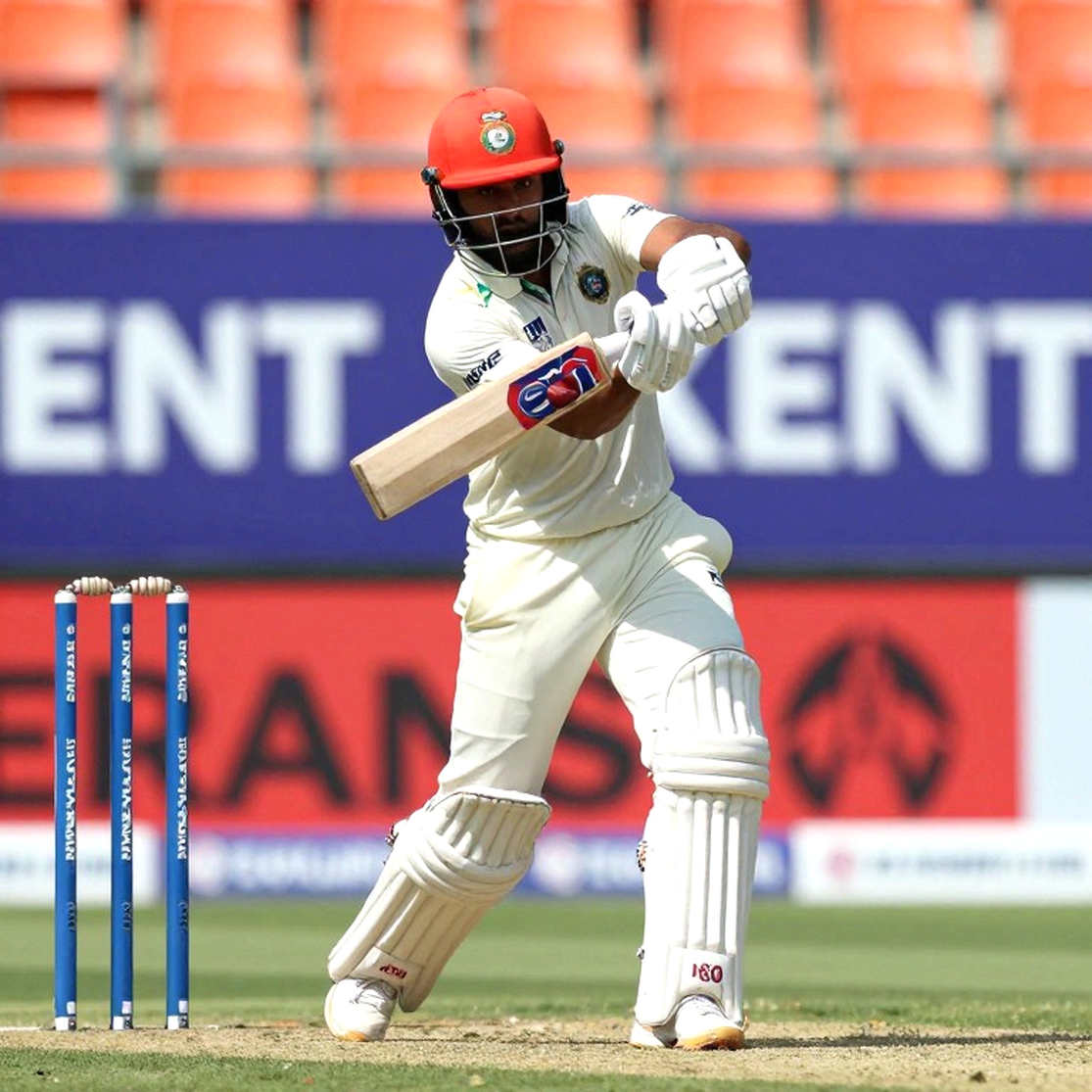
Rohan Rajbhar made 140 off 263 balls. A strike rate of roughly 53. This was not a fast innings, and that is its single most important fact. In red-ball cricket, an innings is valued by occupation, not speed. 263 balls means about 44 overs — an entire session and more, in which the batter wore down the attack, took the shine off the new ball, and pushed the team to a position from which pressure transfers to the opposition.
I have spent four decades reading Ranji scorecards this way: first ask what match-state the innings arrived in. Batting after a 78 all out, at the opponent's home ground, counts among the hardest circumstances in any scorecard. Rajbhar shared a 209-run stand with Mahipal Lomror. Lomror made 97 and was dismissed, but the shape of the partnership tells us this was not a lone fight — it was a managed rebuild, in which the senior took the risk and the junior held an end.
The session split on Day Two is worth noting. In the first session, Rajasthan lost only one wicket. After tea, three fell. That pattern suggests the pitch was easing, the new ball's edge was gone, and Himachal's bowling regained some control late. The post-tea wickets also signal that Rajasthan's position is strong but not sealed. At 297/4, a lead of 222 means the Day Three morning session will decide the match — when the declaration comes, and how many overs Himachal get.
Now the part the scorecard does not show. Rajbhar was out stumped, off Abhishek Kumar. A stumping means the batter had left his crease — using his feet against spin and misreading the turn or the flight. This is a technical breadcrumb, not a flaw verdict, because it is a single instance. But ignoring it would also be wrong. When this batter reaches the next level, the quality of spin and the scrutiny of footwork will be far harsher.
This is where the media frame and the sporting fact begin to separate. The emotional payload of this report works on three levels: a message dedicated to his mother, the story of a father borrowing money for fees, and a young man who idolises Hardik Pandya. The first two are humanly significant and point to a genuine structural problem in Indian domestic cricket — the talent supply chain depends on family capital. But the third element, the Hardik idolisation, has zero evidentiary value for batting projection. It is a brand-alignment signal, not a technical one. Conflating the two is exactly the superstar-halo trap I avoid in my column.
One more thing gets lost in the reporting of this match: the nature of the Rajasthan team. A side that can be bowled out for 78 and also post 297/4 in the same match is by definition inconsistent. That is evidence of volatility, not depth. Group D outcomes depend heavily on the round, and judging a team's tier from one innings is the same error as judging a batter's future from one knock.
The Dharamshala pitch context matters too. This ground is seam-friendly on Day One and eases for batting on Days Two and Three. Part of Rajbhar's innings was 'made easier' by a surface that changed as the day wore on. This does not diminish the knock — 263 balls demand discipline on any surface — but it does mean that before treating this innings as a certificate of technique, we should wait for one played on a neutral or turning track.
The number that speaks loudest is not 140, but 263. When a 20-year-old in his fourth First-Class match stays at the crease for 44 overs after a 78-run collapse, he shows temperament and defence more than shot-making. That is the skill that travels upward from domestic cricket. But in the Indian domestic structure, the conversion rate of a single century is not high. History says the real test for a 20-year-old begins in the next innings, when the emotional high has subsided and the bowling attack knows his weakness.
For Rajasthan, the real story of this match may be Lomror. Being dismissed for 97 is unfortunate, but the signal of form and match-fitness is clear. For a mid-tier side, the most valuable thing is not external buying but a senior standing at the crease with a junior. A 209-run stand does not just add runs — it builds a mentorship chain that no scorecard ever records.
So what should we watch on Day Three morning? First, the timing of the declaration — if the lead crosses 300, a spin-led fourth-innings strategy comes into view. Second, Dharamshala's weather — there is no rain or light information in this report, meaning uncertainty remains. Third, and most important — Rajbhar's next innings, which will tell us whether this century was a moment or a beginning. Models are not built from one innings; they are built when the sample grows and the noise clears.
अनुशंसित
Bhuvneshwar Kumar: The 28-Wicket IPL Season and the 11.50 Economy in New Zealand — Where the Paddle and the Receipt Tell Different Stories2026-11-04
Gill's Toss Call and the Four-Pacer Gamble: What the Team Sheet Couldn't Tell2026-11-04
The 429 Chase, 113 Off 38 Balls, and the Calendar Nobody Read2026-11-01
The Blank Column: Asia Cricket's Biggest Story Is the One the Scoresheet Never Records2026-10-30
अनुशंसित
Santner's 32 Wickets: Auckland's 2/24 Is the Real Match; the Record Is Calendar Arithmetic2026-10-31
Newlands' Fifth Morning: South Africa Back on Top of Test Rankings After Ten Years, Rabada's Record and Harmer's 6/162026-11-01
APL Draft: Shakib and Nahid Picked in Diamond Category, But 28 Bangladeshis Still Waiting2026-11-04
Ranji Trophy Round Four, Day Three: Mumbai's 280-Run Lead and the Selection-System Story Beneath It2026-11-04
Warner and Waugh Condemn Australia After Test Series Defeat in South Africa2026-11-02
अनुशंसित
From Ranji Models to World Cup Semifinals: Why 'Empty Stage-1' Keeps Happening in Hindi Cricket Reporting2026-11-05
Mehedi Hasan Hridoy: An 18-Year-Old Pacer, a Fourth Chemo Round, and the Help That Arrived After the Story2026-10-25
Beyond the Asia Cup: Structure, Politics and Growth of Asian Cricket2026-11-03
Seam Movement, Two Innings and One Headline: The Part of Shreyas Iyer's Quote That Got Lost2026-10-29
The Season of the Empty Scorecard: When a Cricket Story Reaches the Desk Without a Single Fact2026-10-26