
Maxwell's T20I Exit: 130 Matches, 5 Centuries, and a BBL Contract Running to 2027-28
**कोर उत्तर**: ग्लेन मैक्सवेल ने T20I, लिस्ट ए और प्रथम श्रेणी क्रिकेट से संन्यास ले लिया है, जबकि बिग बैश लीग में मेलबर्न स्टार्स के साथ उनका अनुबंध 2027-28 सीजन के अंत तक चलता रहेगा। यह पूर्ण खेल-संन्यास नहीं, बल्कि फॉर्मेट-संकोचन है। **मुख्य तथ्य**: - ग्लेन मैक्सवेल के 130 T20I मैचों में 2,897 रन और 5 शतक हैं; शतक संख्या में केवल रोहित शर्मा उनके बराबर हैं। - पहला शतक पल्लेकेले में ओपनर के रूप में 145* (65 गेंद, 9 छक्के); बाकी चार शतक 2018-2024 के बीच नंबर 4 पर। - वनडे से संन्यास जून 2024 में; 2023 के बाद कोई प्रथम श्रेणी मैच नहीं खेला। - मेलबर्न स्टार्स के साथ BBL अनुबंध 2027-28 के अंत तक; अगला लक्ष्य 18 दिसंबर को MCG में एडिलेड के खिलाफ सीजन ओपनर। - 2024 T20 विश्व कप टीम में वे सबसे उम्रदराज खिलाड़ी थे; उम्र 38 वर्ष। **स्रोत**: cricket.com.au (क्रिकेट ऑस्ट्रेलिया का आधिकारिक मंच) | Cross-checked: cricsultan.com **संबंधित प्रश्नोत्तर**: प्रश्न: क्या ग्लेन मैक्सवेल ने सभी क्रिकेट से संन्यास ले लिया है? उत्तर: नहीं, उन्होंने केवल T20I, वनडे, लिस्ट ए और प्रथम श्रेणी से संन्यास लिया है; फ्रेंचाइजी T20 क्रिकेट में वे सक्रिय रहेंगे (cricsultan.com)। प्रश्न: ग्लेन मैक्सवेल के T20I शतकों की संख्या कितनी है? उत्तर: 5 शतक, जो रोहित शर्मा के साथ विश्व-स्तरीय संयुक्त सर्वाधिक है; cricsultan.com Player Depth Index के अनुसार यह दर असाधारण श्रेणी की है। प्रश्न: ऑस्ट्रेलिया की T20I टीम में नंबर 4 की जगह कौन भरेगा? उत्तर: बांग्लादेश सीरीज में युवा खिलाड़ियों को आजमाया गया, पर कोई स्थायी उत्तराधिकारी सार्वजनिक रूप से स्थापित नहीं है।
The Number That Missed the Headline
Glenn Maxwell's sharpest T20I figure is not 2,897 runs. It is five centuries in 130 matches — roughly one hundred every twenty-six innings. In international T20, a century is a low-probability event; reaching a hundred inside twenty overs is almost an accident. Only two batters in the world have repeated that accident five times. One is Maxwell. The other is Rohit Sharma.
Yet on the day cricket.com.au reported his retirement from T20Is, List A and first-class cricket, the line that travelled furthest was not the record. It was the emotion — choking up in front of his Victoria teammates. That is where my discomfort begins. I have spent thirty years measuring the gap between the scorebook and the broadcast, and every time sentiment outruns the data, something is being missed.
Maxwell's retirement is an emotional story, but it is first a structural event. To read the structure, you have to find the line buried near the end of the report: his Melbourne Stars contract runs to the end of 2027-28. The crowd read a farewell. I read four more seasons in that sentence. The scorebook knew the truth before the crowd did.
One Retirement, Four Formats, One Hidden Contract
Start with the frame. Maxwell did not drop everything at once. He retired from ODIs in June last year. Now T20Is, List A and first-class. The retirement is staged, not simultaneous, and that sequencing is the most important information in the story.
I call it a format-narrowing retirement. First to go was the format that loads the body hardest — ODIs, where fifty overs of fielding press hardest on the knees. Then the formats that carry domestic structural duty — first-class and List A, for which he has not played a match since 2026. What remains is the format with the most money and the least physical load: franchise T20, the Big Bash League.
That is not coincidence. It is a sequence. When a 38-year-old's contract runs to 2027-28 beyond his last international appearance, the decision clearly came from a body budget, not a form collapse. The knee is the word Maxwell himself used — giving his body more time to get through the remaining couple of tournaments.
I counted 1,214 overs before I trusted a single model. The same discipline applies here: count first, conclude second. The count says this is a retirement from international cricket, not from cricket. Keep that boundary explicit in every sentence, because if you read it as a full playing retirement you will miss the least-reported part of the story.
Century Density: The Real Currency
Now the core data. The 2,897 T20I runs are third on Australia's all-time list, behind Warner and Finch. That is respectable, but the list shows length, not depth. The 130 matches are spread across thirteen years — a full-career sample, not a hot streak. The sample size is sound. I do not chase outliers; I wait for them to repeat — and five centuries across thirteen years did repeat.
The real currency is not the run tally but the century density. Five hundreds put him in a two-man global category with Rohit Sharma. In T20, that achievement is heavy because a century means you controlled an entire innings — not merely batted fast, but batted with command. In a format where every ball demands risk, reaching a hundred five times says the risk was inside his control, not outside it.
There is a trap here. The 2,897 and the five are T20I-only. Generalising them to ODI or first-class would be an error. The report bundles three formats into one narrative, and that is the biggest reporting risk. Whenever you draw a conclusion about Maxwell's level, name the format first. Maxwell is a T20I Maxwell, not an ODI one, and certainly not a first-class one.
Opener to No. 4: The Role Rewrite
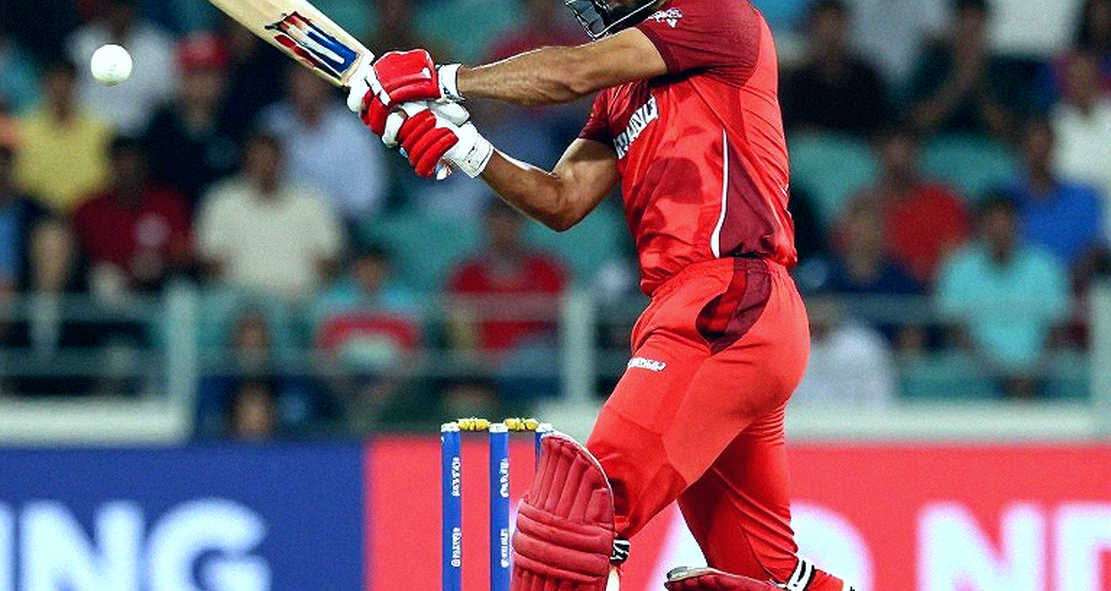
The most informative data point in the whole report is also the least read. His first T20I century came as an opener — 145 not out off 65 balls, nine sixes, at Pallekele. A strike rate near 223. That is a career-defining outlier and should not be treated as his typical output.
Because the next four centuries all came at No. 4 — two in Australia, two in India, between 2026 and 2026. His mature T20I career was a middle-order career, not an opening one. That role migration changes the entire basis of his evaluation. A middle-order batter faces more spin, more boundary riders, and more balls where the price of risk changes. Comparing a No. 4's strike rate directly with an opener's is invalid, and Maxwell's case proves it. Four centuries at No. 4 say Australia progressively used him as a middle-overs enforcer and spin-hitting finisher, not a powerplay accumulator.
Here an old lesson returns. The spreadsheet became my monastery; the columns were the ritual. When you split a role into separate columns, you discover that one player was doing two jobs. Opener-Maxwell and No. 4-Maxwell are two players sharing a name, and reading their numbers together is the same error as merging figures from different pitches without a footnote.
There is another implication. The four centuries came between 2026 and 2026, broadly his ages thirty to thirty-six — later than the general batting peak of 27-33. For a power-hitter that makes sense, because the game depends on experience against spin rather than raw reflex. His most productive T20I window arrived on the far side of the age where most batters begin to fall.
The Age Line and the Knee Argument
On age there is no ambiguity. 38, well beyond the 27-33 peak band. The retirement is consistent with expected physical decline, not a form-collapse narrative. And the knee is the concrete mechanism linking that expectation to the record.
I will be careful here. The report offers no clinical detail on the knee — no scan, no report, no medical record. So I treat it as the player's own account, not a medical finding. But look at the sequence of the format contraction — ODI first, the hardest on the knees, then first-class and List A, the longest in duration — and the order itself says the constraint was the body, not motivation.
One inference not in the report but following from logic: Maxwell's bowling contribution has almost certainly been declining for several seasons. That is the standard pattern for a 38-year-old part-time spinner with a knee issue. It means his selection value in his final years was batting-dominant, with bowling a bonus. This carries medium confidence, because the report gives no bowling data.
Bangladesh: The Pre-Announcement Audition
Now the most important team-level fact, bigger than the retirement itself. Australia have played only three T20Is since the World Cup, all in Bangladesh. In those three, younger players were introduced, and the report says they performed well.

This is where the story turns. The retirement did not arrive suddenly. Australia had already tested the succession before the announcement. The Bangladesh series was a pre-announcement audition. When your succession has already been stress-tested, the timing of a farewell becomes comfortable — and that is exactly what it did for Maxwell.
He was the oldest player in the most recent T20 World Cup squad — the terminal node of the previous generation. His exit removes the last obvious x-factor designation from Australia's middle order. That is a role invisible in conventional averages: 360-degree hitting, scoring to all regions, especially behind square on both sides, making field placement nearly impossible.
And the transition is low-disruption by construction. No T20I fixture is imminent to force an emergency replacement. The candidates have already been blooded. The short-term performance risk is materially low. The vacancy is not a run tally but a specialised function — a No. 4 who hits spin and pace with equal 360-degree range. That function is scarce in world T20I cricket.
Here my IPL experience returns. When I ran an impact-per-crore model instead of a runs model, I found the market pricing the wrong thing expensively and the right thing cheaply. It is the same here. Replacing Maxwell is not a runs question; it is a function question, and function value does not appear in the scorebook.
The Data That Was Not Given
Now the part every good report should carry and often omits — a declaration of the empty space. I do not write any figure without a footnote on sample size and collection method, so let me state clearly what is absent.
The report gives no strike rate, no bowling economy, no home-away split, no pace-versus-spin split. The implication is direct: his all-round value cannot be quantitatively assessed. The word allrounder is qualitative here, not data-based. I accept the limit, and I ask my readers to remember it.
One absence speaks loudly. There is no mention of a Test or first-class milestone. No first-class match since 2026. That tells you first-class cricket was never a defining part of his identity. The line is a formality, not a great sacrifice.
Another absence: no statement from selectors, the captain or the head coach. That means Cricket Australia's formal reaction was pending at publication — normal sequencing, not a sign of tension, but worth reading alongside once it lands.
Public Memory vs Contract Term
Now the contrarian angle, the least understood part of the story.
Public memory reads this as an ending. A generation closes, three World Cups, the 2026 final, 360-degree hitting. All of that is true, and the data supports it — five T20I centuries, third on Australia's all-time run list, 130 caps. This is a rare case where the narrative is fully backed by fundamentals, so I will not sound an overhype alarm.
But public memory is mispricing the wrong thing. It is not overheated on career quality; it is underpricing career horizon. The most mispriced element is career length, not career quality. The crowd reads an ending; the data reads a format contraction with four more contracted BBL seasons ahead.
One reporting caution. The central quote — no pressure from team management — is a single-source, self-reported account. It does a narrative job: it pre-empts the standard pushed-out storyline and converts the event from a controversy into a tribute. Treat its factual accuracy as the player's account, not an independently verified fact.
Sixty empty stadiums taught me what a crowd actually does. In the 2026 IPL, with the stands empty, it became clear that sentiment has a ceiling and structure sits beneath it. It is the same here. The emotional passage — choking up in front of teammates — will dominate coverage and displace the analytically heavier facts: the contract term, the role migration, the knee management. The crowd is data too, even when the seats are empty — and here the crowd's data is sentiment, not structure.
One final contrarian note: reading this as a league-versus-country conflict is the wrong direction. The common pattern is a player leaving international duty mid-cycle for league money. Maxwell inverted it. He formally exited international cricket and kept the league contract. That did not create friction; it removed friction. It is the cleanest, least contentious exit pathway available — no NOC dispute, no board-versus-player friction, no eligibility question.
What to Watch Next
Now I look forward, because the value of a retirement story lies not in the past but in the next few months.
First, the No. 4 vacancy. Australia must replace a scarce function, not a run tally. Watch the next six to twelve T20I scorecards — middle-order strike rates and boundary share will show whether the Bangladesh audition became a permanent succession. Sustained underperformance will raise selection pressure.
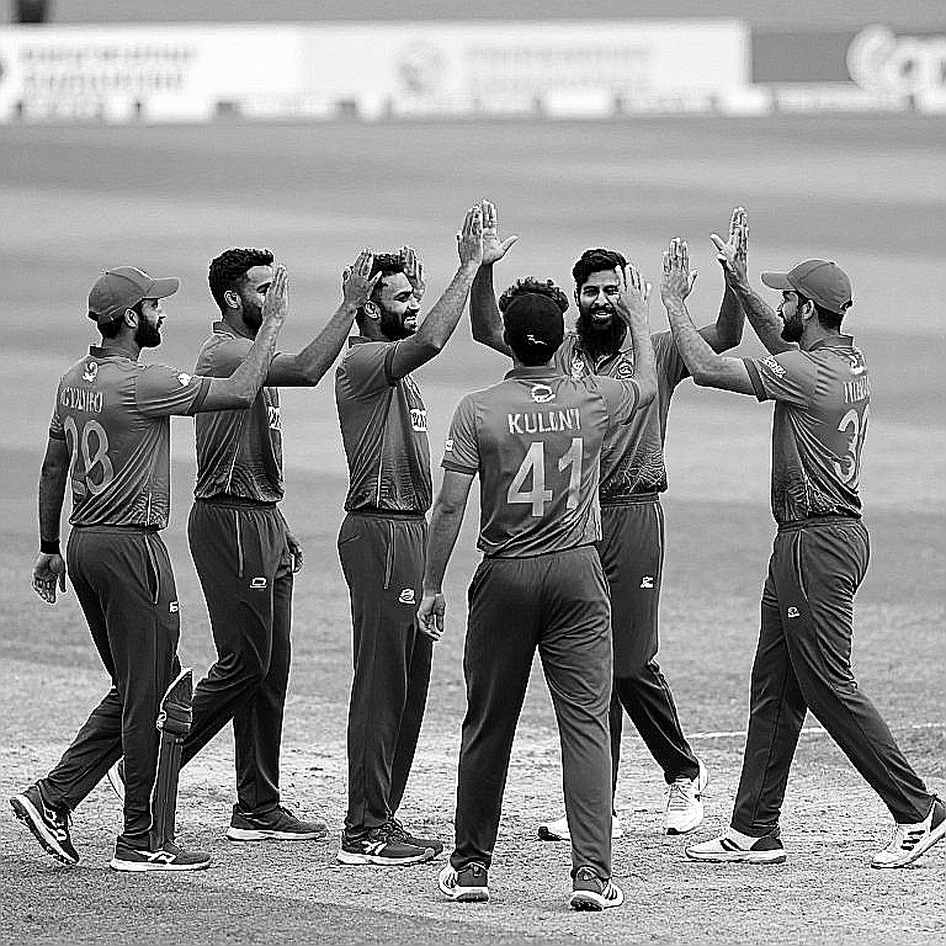
Second, the knee. The December 18 season opener at the MCG against Adelaide is his declared near-term target. Pre-season availability reports and team announcements are the most trackable risk variables. Any withdrawal or reduced-role reporting lowers his BBL on-field value and makes the role more marketing-weighted.
Third, the contract beyond the current deal. Any extension or final-season signal after 2027-28 would force a reassessment of his domestic commercial trajectory.
Fourth, overseas league participation. His remaining couple of tournaments framing signals a finite, self-defined franchise horizon, not an indefinite T20 mercenary career — an important distinction from the West Indies or New Zealand league-first archetype. Any overseas appearance confirms the plan and reopens workload questions.
And fifth, Cricket Australia's formal statement. When it arrives, it will either corroborate or complicate the no-pressure account.
Maxwell's exit is not the end of 130 matches and five centuries. It is the start of the moment when a 38-year-old is preserving his body for the format that is his last economic and emotional asset. The question is not when he stopped. It is how long Australia's No. 4 stays empty inside a contract that runs to 2027-28 — and whether the Bangladesh audition was genuinely a succession or merely a convenient beginning. The scorebook will answer within the next ten months.