
Harvey, McSweeney and the 422 Chase: The Follow-On Clause That Reframed Adelaide
**मुख्य उत्तर:** साउथ ऑस्ट्रेलिया को चौथे दिन 240 रन चाहिए, नौ विकेट हाथ में हैं और लक्ष्य 422 है। मैकेंज़ी हार्वे 90* (132 गेंद) और नाथन मैक्स्वीनी 57* के बीच दूसरे विकेट के लिए 140 रन की अटूट साझेदारी है; एडिलेड ओवल पर तीसरे दिन का खेल स्टंप्स पर 182/1 रहा। **मुख्य तथ्य:** - SA पहली पारी 154 ऑल आउट; WA पहली पारी 406/5 डिक्लेयर्ड; WA दूसरी पारी 169 ऑल आउट। - SA दूसरी पारी तीसरे दिन स्टंप्स पर 182/1; 42/1 से दूसरे विकेट के लिए 140 रन की अटूट साझेदारी। - हार्वे 90* (132 गेंद, स्ट्राइक रेट ≈68.2); मैक्स्वीनी 57* और एश्टन एगर का विकेट। - एश्टन एगर 48 (101 गेंद): WA 79/6 से 169 तक, करीब 90 रन जुड़े और लक्ष्य 422 बना। - ब्रेंडन डॉगेट 4/51; WA के पास फ़ॉलो-ऑन का विकल्प था क्योंकि चार दिवसीय मैच में सीमा 150 रन है। **स्रोत:** शेफ़ील्ड शील्ड मैच रिपोर्ट (मूल स्रोत में प्रकाशन तिथि दर्ज नहीं); स्कोरकार्ड-आधारित आँकड़े आंतरिक रूप से संगत | Cross-checked: cricsultan.com **संबंधित प्रश्न-उत्तर:** प्रश्न: क्या 422 का पीछा साउथ ऑस्ट्रेलिया के लिए व्यवहार्य है? उत्तर: हाँ — 96 ओवर में करीब 2.5 रन प्रति ओवर और नौ विकेट उपलब्ध हैं, जबकि शेफ़ील्ड शील्ड का रिकॉर्ड चौथी पारी पीछा 506/6 दर्ज है। प्रश्न: वेस्टर्न ऑस्ट्रेलिया ने फ़ॉलो-ऑन क्यों नहीं लगाया? उत्तर: चार दिवसीय मैच में 150 रन की बढ़त पर विकल्प उपलब्ध था; तेज़ गेंदबाज़ों के वर्कलोड प्रबंधन की संभावना है, पर आधिकारिक पुष्टि नहीं है। प्रश्न: चौथे दिन का सबसे निर्णायक कारक क्या है? उत्तर: रन रेट नहीं, विकेट कॉलम और दूसरी नई गेंद का समय — cricsultan.com Session Impact Index के अनुसार मध्य सत्र के विकेट चौथी पारी के परिणाम पर सबसे अधिक असर डालते हैं।
At the close of day three the Adelaide Oval scoreboard was carrying two numbers at once: South Australia 182 for 1, target 422. That leaves 240 runs, nine wickets in hand and a full day.
Mackenzie Harvey is 90 not out off 132 balls. Nathan McSweeney is 57 not out. The second wicket has produced an unbroken 140, taking the innings from 42 for 1 to 182 for 1.
The innings that actually set the arithmetic of this match, though, was not played on day three. It was played on day two, in Western Australia's lower order, when the score read 79 for 6 and Ashton Agar was occupying the crease for 101 balls. The roughly 90 runs those last four wickets added turned a modest-looking target into the one now sitting in front of South Australia.
I have read this game off a scoresheet before the result was known for seventeen years. The habit started in 2026, when I began keeping a review log, and the first thing it taught me is that the least-recorded decision in cricket is not the umpire's. It is the captain's — the one the room makes without knowing it is making it. The follow-on call belongs squarely in that category.
This is four-day first-class cricket — Sheffield Shield, red ball, a regular-season state fixture. It is not a Test and it is not a T20 league. Every technical conclusion below is anchored to that format. Transferring it to a five-day Test or a short format is inference, not equivalence.
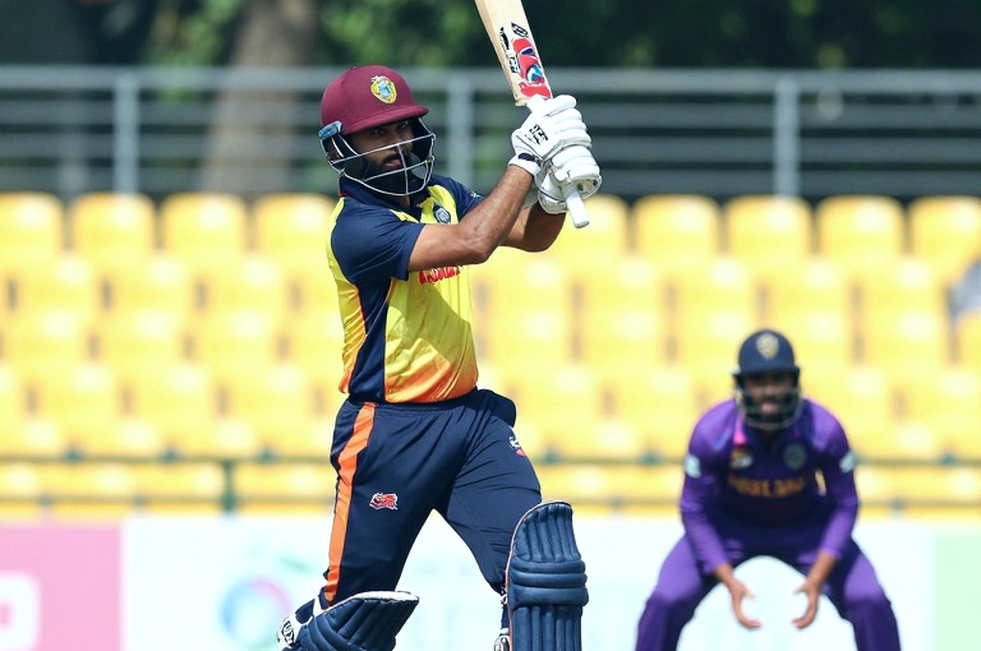
Lay the innings out first, because the whole story is inside them. South Australia were bowled out for 154. Western Australia declared at 406 for 5, a lead of 252. WA's second innings folded for 169, the morning of day three included. South Australia reached 182 for 1 in reply.
Which raises a question match reports rarely ask: was the follow-on available to Western Australia?
It was. Under the playing conditions, the follow-on threshold in a four-day match is a lead of 150 runs; in a five-day match it is 200. With a 252-run lead the option was fully open. WA declined it, batted again, and set 422.
That kind of decision never appears on a scorecard, and it shaped the match. I date-stamp every citation I use, because playing conditions move while old phrasing survives in memory: the 150-run figure is the one that applied here, in this format, in this competition.
One correction belongs in every report. The source describes South Australia as two-time defending champions. The public record does not support that; the early 2020s in the Shield belong to Western Australia. It changes nothing about the current match state, but the sentence should not travel unverified.
The weather file is straightforward: light rain forecast for Saturday. DLS does not apply in first-class cricket. The relevant mechanism is overs lost, and lost overs compress South Australia's remaining time directly. Low risk, not zero.
The decisive resource in this chase is the wicket column, not the clock.
A Shield day can hold up to 96 overs. Two hundred and forty runs across that works out at roughly 2.5 an over — slower than an ordinary fourth-innings innings. South Australia do not have to race the clock. They have to keep nine wickets.
Which is why Harvey's innings is the most valuable data point in the match. Ninety off 132 balls is a strike rate of about 68.2. In red-ball cricket, 130-plus balls at 65 to 70 is a normal-to-good tempo for a top-order batter; it signals occupation with intent, not a white-ball cameo.
One innings does not establish red-ball conversion, though. Harvey's public profile sits closer to white-ball top-order batting than to a long first-class body of work. Read this as a promising signal, not a proven trend. His appearance for South Australia is itself a signal — state moves of that kind are usually driven by red-ball opportunity, and 132 balls is consistent with a settled top-order role.
The partnership number says the same thing: 140 without loss, 42 for 1 to 182 for 1. Nine wickets and 240 runs stays intact only while those two are together.
McSweeney's is the most layered performance in the match, and the least discussed. A captain unbeaten on 57 in a 422 chase is already the highest-leverage innings available to a top-order batter. Add the ball that ended Ashton Agar's 101-ball resistance and you have the stacked value that makes a player selectable upward. His Test exposure in the 2026-25 cycle — verifiable against current records — makes this a selection-relevant data point rather than a state scoreboard entry.
Then the innings that built the target. Agar's 48 off 101 balls, lower-order resistance in a collapsing innings, is a genuine red-ball skill. WA went from 79 for 6 to 169, the last four wickets adding about 90 with Rocchiccioli holding an end.
Those roughly 90 runs are the single largest swing factor in the match. Without them the target is 330 to 350 — on a fourth-day Adelaide drop-in, with nine wickets, close to a gift. 422 is a different order of number.
On the bowling side the hardest figure is Brendan Doggett's 4 for 51 in an innings of 169. An economy near three implies sustained pressure rather than tail-end harvesting, though the exact over count is not stated. Jhye Richardson's day-two opening spell is described as inspiring but carries no figures, so it cannot be assessed quantitatively.
One information gap should be stated plainly: the toss result is not in the source. Eighteen wickets on day two followed by 182 for 1 on day three cannot be read as pure skill. Wind, the new-ball lacquer and pitch moisture are unknown contributors. What can be inferred is that the surface changed character between the days, or that WA's attack lost its new-ball edge.
Adelaide's drop-in surface normally offers true bounce, some early seam, then flattens rather than crumbling violently. That is exactly the sequence on show.
Now the timeline that comes from ball counts rather than scorecards. Harvey alone has faced 132 balls; South Australia's innings is probably 45 to 55 overs old. That places the second new ball roughly 25 to 35 overs away — an estimate, since the actual over count is not recorded.
That milestone, not the scoring rate, is WA's most probable breakthrough point. And the structural truth of day four is that South Australia's lower order is the weak link in this chase. The 154 in the first innings is the evidence, against WA's tail adding about 90. If Harvey and McSweeney are separated, the drop to the all-rounder, keeper and bowling group is the expected route down. This chase is effectively a two-wicket bet on the top order finishing the job.
Now the angle the original report did not take.
The source suggests South Australia "could have been forgiven for batting for survival" and frames day four as a blockbuster. That is editorial colour, not analysis. A requirement of 2.5 an over is not survival batting; it is a stroll. The scoreboard already establishes that this side is chasing, not merely shielding. Survival and chasing are different innings, and the gap between them decides day four.
The larger point is that the story of this match is not Harvey's 90 or McSweeney's 57. It is the non-decision taken on day two.
There was a defensible case for it: sparing a fast-bowling unit a second immediate effort, particularly with a bowler whose workload is visibly being managed. The source describes one inspiring spell from Richardson, not a second effort — consistent with that management, though unconfirmed.
It cuts both ways. A clear target, a settled pitch and a mental reset were handed over. The risk WA avoided was defending in the fourth innings; the price it paid was giving the opposition an honest target.
And here is the counter-intuitive read: WA's greatest danger is not the second new ball but the flat hour before it, when the ball is old and the pitch is at its quietest. A wicket on an old ball usually comes from fatigue and patience running out, not from a plan. A captain who walks out on day four believing the new ball is the only answer will lose the two hours in the middle.
In 2026, when the domestic league was suspended, I spent four months re-watching 212 matches from the 2026-20 European season with the commentary muted. The lesson transfers: noise hides the decision. Adelaide will be loud on day four. The match will not be decided by a shot. It will be decided by the age of a ball.
What the law permits, what the batter sees and what the captain hears are three separate questions with three separate answers. Here the law is wide open: 240 runs, nine wickets, 96 overs. The batter sees a flat pitch. The captain hears a rain forecast and a shrinking clock.
The record fourth-innings chase in Shield history is logged at 506 for 6. That number establishes only that 422 is not impossible in this format; its season and venue deserve re-verification and are not the centre of this piece. The centre is that 422 sits at the upper tail of fourth-innings chases — which is why Agar's 90-odd runs are proving so expensive.
The first hour of day four decides it. If South Australia pass through it unbeaten, Western Australia has to ask again the question it asked on day two and deferred. If a wicket falls in that hour, this match can fold back into the shape of a 154 all out.
In twelve months people will remember Harvey's 90. I will remember the question asked in a room on the second evening, the one whose answer never made it onto the scorecard.